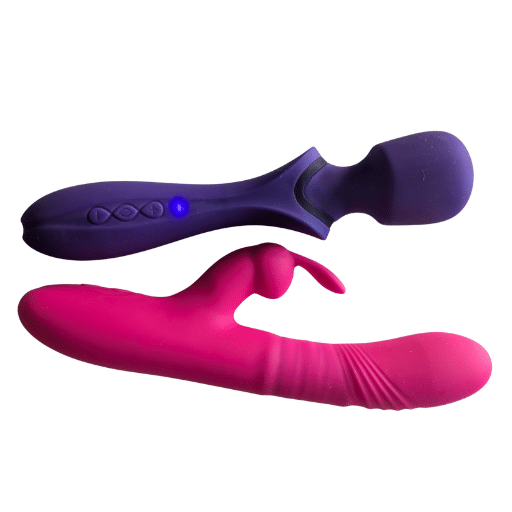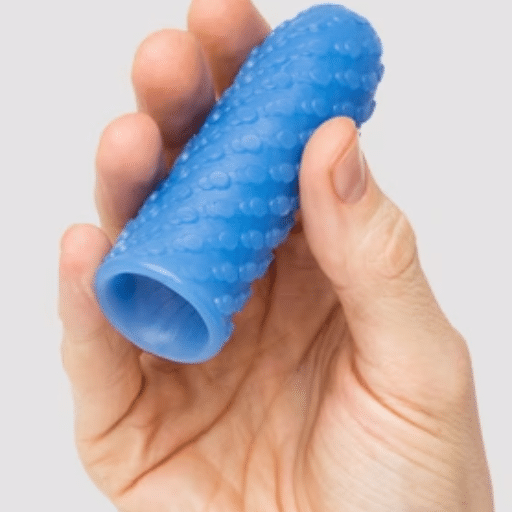

Silicone male masturbator manufacturing is the process of designing and producing stroker sleeves and powered masturbators in body-safe silicone. It covers sleeve geometry, silicone softness, internal texture, tooling, minimum order quantities, and certification. Done well, it turns a commodity product into a durable, hygienic, ownable brand asset.
Here’s the tension at the center of the category. Male masturbation devices and massagers make up over 80% of the male-adult-products market, and the category’s most popular material, TPE, is also its least hygienic. TPE is soft, stretchy, and cheap. That’s exactly why budget strokers use it. It’s also porous, so you can’t fully sanitize it, and it typically needs replacing every six to eighteen months.
Silicone solves the hygiene problem. It’s non-porous, odor-resistant, and lasts for years. The catch is that silicone is naturally firmer, so a good silicone stroker has to be engineered for softness rather than simply molded.
That engineering is what this guide covers. By the end, you’ll understand how silicone male masturbators are designed and manufactured, how silicone closes the feel gap with TPE, what a custom line costs and how long it takes, and how to brief and vet a factory. It’s written for brand owners, product developers, and buyers scoping a male-toy line, including emerging brands working with low minimum order quantities.
Key Takeaways
- TPE dominates the stroker category because it’s soft and cheap, but it’s porous, can’t be fully sanitized, and typically needs replacing every six to eighteen months. Silicone is non-porous and lasts for years.
- Silicone isn’t inherently too firm. Ultra-soft platinum-cured grades in the Shore 00-10 to 00-30 range deliver the squish strokers need.
- Sleeve geometry decides hygiene and durability: open-ended sleeves rinse and dry easily, while closed-ended sleeves create suction but trap moisture.
- Sharp internal edges and thin walls concentrate stress and are the leading cause of sleeve tears. Mold design, not just material, prevents them.
- Private-mold custom silicone sleeves require tooling and MOQs in the hundreds, while stock white-label sleeves can be bought in very small quantities. Don’t conflate the two.
What Is Silicone Male Masturbator Manufacturing?
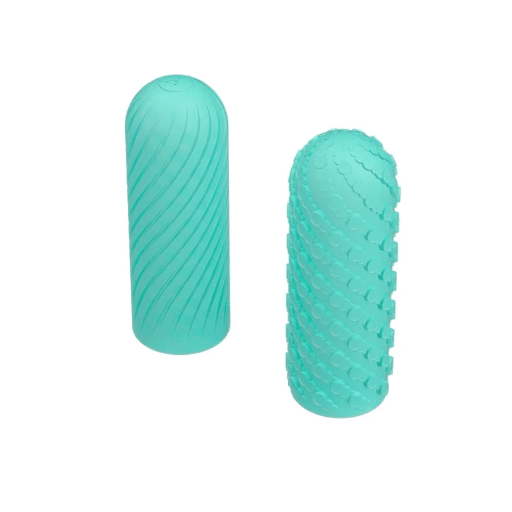
Silicone male masturbator manufacturing is the design and production of stroker sleeves and powered masturbators using body-safe silicone. It includes the sleeve itself, any firm housing or cup, and, for powered units, the motor, battery, and control electronics.
Most brands enter through one of four sourcing routes, and the right one depends on your budget, timeline, and how much of the design you want to own.
| Sourcing route | What you get | Typical MOQ | Design ownership |
|---|---|---|---|
| White label | Existing sleeve, your label | Very low (tens of pieces) | None |
| Private label | Catalog sleeve, your branding and packaging | Low (often from ~50) | None |
| ODM | Factory design customized to your brief | ~300–500 | Shared |
| Full custom OEM | Original sleeve design and exclusive mold | 500+ | Yours (per contract) |
The single most common error in this category is mixing up the first row and the last one. A stock white-label sleeve can be ordered in tiny quantities because nothing new is tooled. A private-mold custom sleeve requires tooling and a realistic minimum in the hundreds and up. They’re different products, different budgets, and different timelines.
If this is your first custom project, our guide to OEM vs. ODM manufacturing explains how each model affects cost, speed, and exclusivity. For the wider material picture, start with our guide to silicone sex toys.
Want to see how a male-toy line looks from concept to shelf? Request a sample and quote from Joyflick
Silicone vs. TPE for Male Toys: Why the Feel Trade-Off Decides Your Line
Most strokers on the market are TPE, and that’s a deliberate engineering choice, not an accident. Any silicone vs TPE stroker comparison comes down to four things: porosity, feel, service life, and unit cost. TPE and TPR are softer, stretch further, and cost less than silicone. For a budget product built around a low price point, TPE is the logical material.
The problem is what porosity means for the customer. A porous material can’t be fully sanitized, because microorganisms and moisture can sit inside the material itself, not just on the surface. TPE also absorbs oils, develops odor over time, and degrades, which is why brands and health sources alike put its replacement cycle at roughly six to eighteen months. The Safer Sex Toys reference from Southern Illinois University is a useful non-commercial source for the porous versus non-porous distinction.
Silicone is non-porous. It can be cleaned thoroughly, resists odor, and doesn’t degrade on the same timeline. That’s why it’s the preferred material for brands that want to sell on quality rather than price.
| Factor | TPE / TPR | Platinum-cured silicone |
|---|---|---|
| Porosity | Porous | Non-porous |
| Cleanability | Surface clean only | Can be washed thoroughly; boilable if no electronics |
| Feel | Softer and stretchier out of the mold | Firmer unless engineered for softness |
| Durability | Degrades; replacement every ~6–18 months | Lasts years |
| Odor | Absorbs oils and can develop odor | Odor-resistant |
| Lube compatibility | Water- and some silicone-based lubes | Water-based lube only |
| Relative cost | Lower | Higher |
| Best use case | Budget, high-turnover products | Premium, hygiene-led, durable lines |
For a deeper material breakdown, see our silicone vs. TPE for strokers comparison.
Are silicone male masturbators body-safe? Yes. Platinum-cured, non-porous silicone made to a medical-grade silicone raw-material specification is non-toxic, phthalate-free, and suitable for body contact. “Medical-grade” describes the raw material and its biocompatibility testing, not a regulatory device approval.
The Cost of Getting Material Wrong
When Owen launched his first stroker line in early 2026, he chose TPE to hit a low price point. He priced the sleeve at a level the market accepted, and early sales were healthy.
By month five, the reviews had turned. Buyers reported a smell that would not wash out and sleeves that felt different after a few weeks. His return rate climbed, and his repeat purchase rate fell. Owen relaunched the core SKU in ultra-soft silicone at a higher price, and the complaint volume dropped sharply. The lesson was not that TPE is unusable. It is that the material choice sets the product’s reputation for its entire life.
Sleeve Design Engineering: Anatomy of a Silicone Stroker
In silicone stroker manufacturing, the sleeve is where feel, hygiene, durability, and moldability all collide. Get the geometry wrong, and the product tears, harbors moisture, or simply doesn’t feel right. Three decisions drive most of the outcome.
Open-Ended vs. Closed-Ended vs. Double-Ended Sleeves
Sleeve type is a hygiene decision, not a cosmetic one. It determines how the product drains, dries, and behaves under suction.
| Sleeve type | Hygiene and drying | Suction behavior | Molding complexity | Best for |
|---|---|---|---|---|
| Open-ended (pass-through) | Easiest to rinse and dry | Minimal natural suction | Simpler | Hygiene-led lines, daily use |
| Closed-ended | Hardest to dry; needs care discipline | Strong vacuum feel | Moderate | Suction-focused products |
| Double-ended | Easy to rinse; two entries | Variable, entry-dependent | Higher | Versatile premium products |
As a rule, open and pass-through designs rinse and dry more easily, which matters because trapped moisture is the fastest route to a bad customer experience. Closed-ended designs deliver the suction sensation many buyers want, but they require deeper cleaning guidance on the insert card and often a drain or vent feature in the mold.
Internal Tunnel and Texture Design
The internal tunnel is where the product is felt, and it’s the category’s hardest engineering problem. Bumps, ridges, grooves, and nubs are molded into the inner surface, and every feature has to be designed so it releases cleanly from the mold without undercuts.
Texture is not just decoration. Too few features and the sleeve feels smooth and generic. Too many sharp features and the sleeve tears at the edges. Multiple tunnels or layered textures are the premium move, but they raise tooling cost because they demand multi-part or collapsible cores.
The manufacturing insight here is well documented. Doc Johnson, one of the oldest US manufacturers in the category, has described internal tunnel design as the central R&D constraint of the product, and its own evolution moved toward multiple openings, tunnels, and textures to differentiate. The takeaway for a brand is that tunnel design deserves the most attention in your brief, not the least.
Wall Thickness, Stretch, and Tear Resistance
Wall thickness and stretch ratio govern both feel and durability. A thinner wall feels softer and more pliable but tears more readily. A thicker wall lasts longer but feels firmer and less responsive.
Tears almost always start at a stress concentration: a sharp internal edge, a nick from a worn mold, or a thin section where the wall narrows. Silicone tears more readily than TPE once it’s nicked, so the mold design has to prevent the nick from happening in the first place. That means radiused fillets at every internal transition, smooth flow into the channel, and no undercuts that force the sleeve to be stretched off the core.
This is a design problem before it’s a material problem. A factory that quotes a sleeve without discussing fillets and wall transitions is quoting a product that will generate returns.
A Tear That Cost a Launch
Hana’s team designed a closed-ended sleeve with sharp, deep ridges because the render looked striking. The first production run shipped on schedule. Within three months, a meaningful share of buyers reported tears at the base of one ridge, exactly where the wall thinned against a sharp internal edge.
The fix was straightforward: radius the ridge roots and add 0.8mm to the wall at that transition. It cost a mold revision and a re-run. Had the factory flagged the stress point at the design review, the launch would have shipped once, not twice.
Hitting the Right Feel: Ultra-Soft Silicone and Dual-Density
The most persistent myth in this category is that silicone is too firm for a stroker. That myth comes from confusing two different grades.
The firm figure people quote, roughly 50 to 80 on the Shore A scale, describes firmer silicone used for structural parts. Stroker sleeves live on a different scale entirely. Ultra-soft platinum-cured silicone in the Shore 00-10 to 00-30 range delivers the soft, pliable feel the category demands. The scale matters: 00 and A aren’t interchangeable, and a rating without its scale is meaningless.
For the full breakdown of grades and how to specify them, see our guide to choosing silicone hardness for strokers.
When softness alone is not enough, dual-density construction solves the rest. A dual-density stroker pairs a soft inner layer, which is the sensation surface, with a firmer outer shell that provides structure and grip. This is the inverse of a realistic dildo, where the soft layer sits outside (see custom silicone dildo manufacturing for the outward-facing version). For a stroker, the sensation surface is inside, so the layering flips. We cover the construction detail in our article on dual-density silicone construction.
What is the best silicone hardness for a stroker sleeve? Most stroker sleeves sit between Shore 00-10 and Shore 00-30 for the sensation layer, with a firmer 10A to 30A outer shell if a dual-density build is used. Confirm the exact target with your factory against a physical sample card.
Surface finish matters too. A matte or soft-touch finish changes how the sleeve feels against the hand and how lube behaves on the surface. It’s a small spec line with a large effect on perceived quality, so include it in your brief.
How Silicone Male Masturbators Are Made, Step by Step
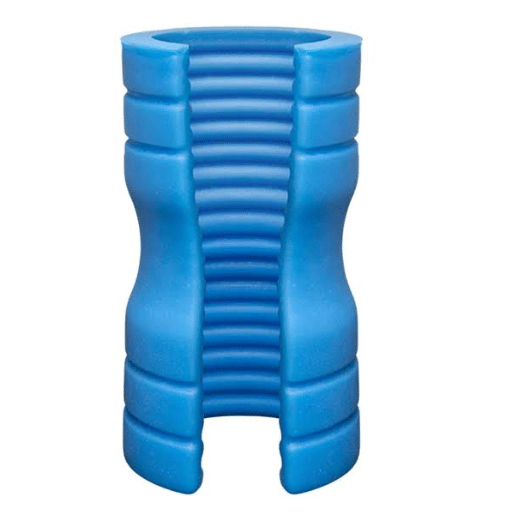
The production path is consistent across the category, whether the product is a simple manual sleeve or a powered unit.
- Design and requirements brief. Define the sleeve type, channel dimensions, texture pattern, target softness, and any power or warming features.
- 3D modeling and digital prototyping. Check demoldability, wall thickness, fillets, texture placement, and drain or vent design before committing to steel.
- Physical prototype and approval. Produce a 3D-printed or CNC master, or a cast soft sample, and get client sign-off.
- Production tooling. Build the sleeve cavity mold, using compression or LSR injection molding, with multi-part or collapsible cores for complex tunnels. Powered products add a housing mold. Then run a golden sample or first-article check.
- Molding and casting. Mold or cast the sleeve, degas to remove bubbles, and add pigment for solid, gradient, or skin-tone color.
- Housing and electronics assembly. For powered units, fit the motor or mechanism, battery, charging system, and any warming element, then seal the assembly.
- Finishing, QC, and packaging. Inspect, then pack with a care insert in body-safe, discreet packaging.
One clarification that matters for budgeting: a professional production mold is a four-to-five-figure investment, while a DIY 3D-printed sleeve mold costs a few dollars. They aren’t the same tool, and the article uses “tooling” to mean the industrial version throughout.
Motor selection, waterproofing, and leak-testing for powered units are covered in depth in our guide to powered silicone toy engineering.
Types of Silicone Male Masturbators You Can Manufacture
The category splits into three product families, and each carries different tooling, cost, and QC implications.
Manual Strokers and Sleeves
Manual products are the entry point for most new brands. They include closed, open, and double-ended sleeves, plus cup-style products built around a firm housing. Tooling is the simplest in the category, the bill of materials is light, and the product is a good first step for validating demand before investing in electronics.
Automatic and Powered Masturbators
Powered masturbators combine a silicone sleeve with a mechanism. Each mechanism is a distinct feature with its own motor, tooling, and QC requirements.
| Feature | Mechanism | Design implication |
|---|---|---|
| Stroke (linear) | Linear actuator or motor-driven carriage | Robotic housing; travel range and speed control |
| Rotation | Geared motor | Rotation coupling to the sleeve; bearing wear |
| Vacuum / suction | Air pump and valve | Sealed chamber; pressure control and venting |
| Vibration | Eccentric or linear vibration motor | Mounting and damping to control noise |
| Warming | Resistive heating element | Temperature control and cut-off; material compatibility |
When you vet an automatic male masturbator manufacturer, ask for mechanism and leak-test evidence, not just a unit price. Keep the powered product’s engineering scope realistic. Mechanism selection, ingress protection, and leak testing belong in the powered-toy guide linked above, not in a sleeve brief.
Replaceable-Sleeve Systems
A replaceable-sleeve system makes the sleeve removable so it can be cleaned or replaced independently of the housing. It solves hygiene directly and creates a recurring aftermarket revenue stream, because customers buy replacement sleeves.
It also adds an engineering requirement. The sleeve must be held securely in use, seal properly for suction, and release without tearing, which makes fit tolerance a critical spec. If you want the recurring-revenue model, plan the retention and sealing features into the mold from the start rather than adding them later.
Costs, Tooling, MOQs, and Lead Times for Silicone Male Masturbators
Custom stroker cost starts with tooling, and tooling depends on the molding route and the complexity of the internal tunnel.
| Tooling route | Typical cost | Notes |
|---|---|---|
| Simple silicone compression mold | ~2,000–2,000–5,000 | Basic geometries; shorter tool life |
| Full custom adult-toy tooling | ~15,000–15,000–50,000 | Complex tunnels and multi-part cores push to the upper range |
| LSR injection tooling | $50,000+ | Best tolerances and throughput at high volume |
Powered products add a housing mold plus an electronics bill of materials on top of the sleeve tooling. Per-unit cost then depends on softness, whether the build is dual-density, product size, features, and order volume. Marketplace pricing for reference only runs from roughly 1to1to4 for basic manual strokers at low volume, around 9to9to10 for mid-range products, and 14to14to21 and up for automatic, rechargeable units. Ranges vary widely by factory, geometry, and volume, so treat any figure as a starting point and request real quotes.
Set your budget 30% to 50% above the initial tooling quote. Certification, revisions, and setup fees are normal, not exceptional. Our guide to adult toy manufacturing costs breaks down the full budget.
Male masturbator MOQ and lead time are set by the sourcing route, not by the product name.
| Route | Typical MOQ | Typical lead time |
|---|---|---|
| Stock white-label sleeve | Tens of pieces | Days |
| Private label (custom packaging/logo) | Often from ~50 | 1–3 weeks |
| ODM customization | ~300–500 | 3–5 weeks |
| Full custom OEM (new tooling) | 500+ | 15–30 days after sample approval, plus tooling time |
What is the MOQ for custom silicone male masturbators? It depends on the route. Stock white-label sleeves can be ordered in very small quantities. Private-mold custom sleeves typically start at 500 units or more because of tooling. Low-MOQ manufacturers offer trial runs from 300 units.
How much does it cost to manufacture a custom male masturbator? Tooling is the main upfront cost, from roughly 2,000forasimplesiliconemoldto2,000forasimplesiliconemoldto50,000 and up for LSR injection. Add per-unit material and assembly, then a 30% to 50% buffer, and request a quote for your specific geometry.
Payments typically run 30% deposit with the balance before shipment, and a signed NDA should precede any design sharing. If MOQ is your main constraint, our guide to low-MOQ adult toy manufacturing covers the negotiation levers.
Why the Buffer Matters
When Leo, a two-person brand founder, planned his first full custom OEM launch in 2026, his factory quoted $17,000 for tooling. He added 40% for certification and revisions, and it proved necessary: the first cavity needed a texture adjustment that added weeks and a re-quote. The buffer absorbed it. A founder in his accelerator network skipped the buffer and pushed her launch into the following quarter.
Certifications and Body-Safety Compliance for Silicone Male Toys
Certifications are a commercial asset in this category, because marketplaces and distributors ask for them.
- Material biocompatibility: ISO 10993, USP Class VI, and FDA 21 CFR 177.2600 cover a raw material’s suitability for body contact.
- Product design safety: ISO 3533:2021, the first international safety standard for adult toys, covers design requirements including smooth surfaces free of burrs and sharp edges, secure fastening of moving and removable parts, surface temperature limits, and electrical safety covering the charger.
- Surface temperature for warming products: the standard sets a target not exceeding 41 °C, with a hard ceiling of 48 °C that must be enforced by an automatic cut-off. This matters directly for the 2026 warming trend, where competitors list a temperature as a feature with no safety frame.
- Market and electrical: CE (covering LVD and EMC), RoHS, REACH, and POPs for the EU, plus FCC for wireless and Bluetooth control.
- US nuance: many male toys are sold as “novelties” in the United States, and an adult toy is never an FDA-approved medical device.
The ISO 3533:2021 standard page and the SGS summary of ISO 3533 give both brand and factory shared language when you specify requirements. Our guide to silicone sex toy certifications explains which documents matter for which market.
How to Choose a Silicone Male Masturbator Manufacturer
Vet a partner on documentation, not on claims. This checklist covers the essentials.
- Confirm you are dealing with a factory, not a trading company.
- Request ISO 9001 certification, and ISO 13485 where it is claimed.
- Ask for third-party material test reports from SGS, TUV, or an equivalent lab.
- Request CE and RoHS evidence for electrical products.
- Review prototypes and a golden sample, and ask for a softness sample card at your target Shore grade.
- Confirm tear and stretch testing, plus the inspection standard, typically AQL.
- For powered units, require leak and functional test reports and UN38.3 compliance for lithium batteries.
- Lock mold ownership, exclusivity, and IP terms in writing, and sign an NDA before sharing designs.
- Confirm hygiene protocols and that the sleeve can be fully cleaned and dried.
- Check discreet, unbranded packaging capability and mold storage terms.
How to Brief a Factory for Your First Custom Male Masturbator
A precise brief is the difference between one quote and three. Include the following in your RFQ.
- Form factor: manual sleeve, cup-style, or powered
- Sleeve type: open-ended, closed-ended, or double-ended
- Channel dimensions and insertable depth
- Texture pattern intent
- Target softness, with its scale (for example, Shore 00-20)
- Single-density or dual-density construction
- Features: stroke, rotation, suction, vibration, warming, app control
- Housing material, color, and surface finish
- Branding and packaging requirements
- Target unit price, order volume, and launch date
A one-page brief with these fields gives your factory what it needs to flag a design risk before tooling, which is exactly when you want to hear it. Our complete guide to custom adult toy manufacturing covers the full sourcing process.
Care, Lube, and Lifetime: What Brands Must Communicate
Care guidance is a brand responsibility, because poor care drives returns. Put it on the insert card, not just on your website.
Use water-based lubricant only with silicone sleeves. Silicone-based lubricant can degrade silicone over time. Wash the sleeve with warm water and mild soap, then dry it completely before storage, since trapped moisture is the main hygiene risk and open-ended sleeves dry faster. Finally, set expectations honestly: TPE sleeves need replacing on a shorter cycle, while silicone sleeves last for years with proper care. We cover the procedure in our guide to cleaning silicone masturbators.
Common Mistakes to Avoid When Ordering Custom Male Toys
- Selling a TPE sleeve as “premium silicone.” Buyers and reviewers catch this, and the reputational cost outweighs the margin.
- Specifying silicone without engineering softness, with no ultra-soft grade and no dual-density option.
- Ignoring tunnel-edge fillets and thin walls, which produces tear failures in the field.
- Choosing a closed-ended sleeve when hygiene and drying are the selling point.
- Forgetting the retention and sealing features on a replaceable-sleeve system.
- Skipping the powered product’s waterproofing, leak test, and certification scope.
- Leaving mold ownership and design IP out of the written agreement.
- Under-budgeting by forgetting the housing mold and the electronics bill of materials.
FAQ
What is a silicone male masturbator?
It is a stroker or masturbator with a body-safe silicone sleeve, either as a standalone sleeve or inside a firm housing. Silicone is non-porous, so it can be cleaned thoroughly and resists odor better than porous materials.
Is silicone or TPE better for a male masturbator?
TPE is softer and cheaper, but it’s porous, can’t be fully sanitized, and typically needs replacing every six to eighteen months. Silicone is non-porous, odor-resistant, and lasts for years, but requires engineering to achieve comparable softness.
What is the difference between an open-ended and closed-ended sleeve?
Open-ended, or pass-through, sleeves rinse and dry easily and offer minimal natural suction. Closed-ended sleeves create a stronger vacuum feel but trap moisture and need more disciplined cleaning, often with a drain or vent feature in the mold.
What is the best silicone hardness for a stroker sleeve?
Most stroker sleeves use a Shore 00-10 to 00-30 sensation layer, with a firmer 10A to 30A outer shell for dual-density builds. Confirm the exact target against a physical sample card.
What is the MOQ for custom silicone male masturbators?
It depends on the route. Stock white-label sleeves can be ordered in very small quantities. Private-mold custom sleeves typically start at 500 units or more, and low-MOQ manufacturers offer trial runs from 300 units.
What surface temperature limit applies to a warming masturbator?
ISO 3533:2021 sets a target not exceeding 41 °C and a hard ceiling of 48 °C, enforced by an automatic cut-off.
Building a Male-Toy Line That Sells on Quality
The decisions that shape a silicone male masturbator line all point the same direction. Choosing silicone over TPE trades a lower unit cost for hygiene, durability, and a product that stands behind a premium price. Matching sleeve geometry to the intended use keeps the product cleanable and durable. Engineering softness through ultra-soft grades and dual-density, rather than accepting that silicone is firm, delivers the feel the category expects. And budgeting for tooling, MOQ, and certification upfront keeps a launch on schedule.
A well-briefed line also protects the brand. Owen’s relaunch in silicone, Hana’s mold revision, and Leo’s budget buffer all trace back to decisions made at the design and briefing stage, before a single unit shipped.
If you are preparing to launch or extend a male-toy line, request a quote from Joyflick. We support custom sleeve geometry, private molding, dual-density construction, powered and app-connected designs, and low MOQs starting at 300 units, with ISO-certified production, a defect rate below 0.2%, and full export documentation including CE, RoHS, and FDA material-compliance paperwork.