
To verify medical-grade silicone, you can’t trust the label. “Medical grade” is not a regulated certification, and any supplier can print it. You verify it through evidence: lot-specific Certificates of Analysis (COAs), third-party test reports from accredited labs, simple physical tests, and factory audits. Work through all four and you can confirm whether a manufacturer is actually using real medical-grade silicone.
In early 2026, Priya ordered 3,000 custom silicone toys from a supplier who promised “100% medical-grade silicone.” The sales rep sent a one-page certificate with a clean logo and a recent date. Priya was ready to approve production. Then her quality lead noticed the product photo on the report showed a different toy, the batch number didn’t match the sample, and the lab wasn’t listed anywhere.
Priya asked for a fresh Certificate of Analysis tied to her actual batch. The supplier went silent for two weeks, then offered a “different” document with a new logo. She walked away and found a manufacturer who shared full reports on the first call. The first supplier later folded after an EU customs audit flagged its documentation.
This story repeats across the adult toy industry. Labels lie, certificates get photoshopped, and cheap material gets swapped for what you approved. If you run a brand or buy on behalf of one, “how to verify medical-grade silicone” is not a nice-to-have question. It’s the difference between a product line you can defend and a recall you can’t.
This playbook gives you a four-step framework to verify medical-grade silicone claims: documentation, physical tests, independent lab testing, and factory audits. You’ll learn exactly what to request, what to check, and what to do when a supplier fails the test. By the end, you’ll be able to audit any manufacturer with confidence.
Key Takeaways
- “Medical grade silicone” is an unregulated label. Only documented evidence proves the claim.
- A lot-specific Certificate of Analysis must match your batch number, product model, and test date. Anything else is suspect.
- The flame test is unreliable. FTIR spectroscopy is the professional standard for confirming silicone.
- Independent lab testing costs a fraction of a failed shipment. Budget for it on every new supplier.
- A 5-gram weight drop between your pilot batch and golden sample is an immediate red flag for material substitution.
Why “Medical-Grade Silicone” Demands Verification
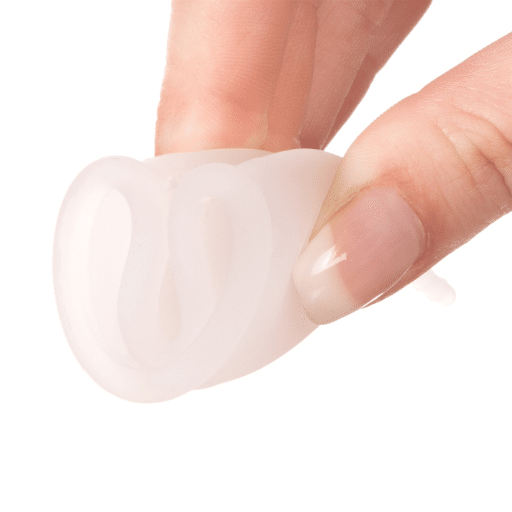
The phrase “medical grade silicone” appears everywhere: on datasheets, on Alibaba listings, on product boxes. It sounds official. It is not.
“Medical Grade” Is Not a Regulated Label
No government agency certifies a material as “medical grade.” The term has no single legal definition. What manufacturers usually mean is that the material passed tests against recognized standards, most often ISO 10993, USP Class VI, or FDA 21 CFR 177.2600.
A supplier can legally print “100% pure medical-grade silicone” on a product that is mostly TPE blended with fillers. There is no enforcement stopping them. The only thing that stops them is a buyer who demands proof.
What Unverified Claims Really Cost
The risk is not just a bad feel. A Swedish study of 44 imported sex toys found three contained phthalates and one contained cancer-linked chlorinated paraffins. A 2023 study by the German Federal Institute for Risk Assessment found 28 of 32 CE-marked vibrators exceeded phthalate limits.
Those products passed import checks. Their labels said nothing useful.
When a toy fails on the retail shelf, you absorb the cost: returns, chargebacks, customs delays, legal fees, and a damaged brand. One failed container can wipe out the savings from a “cheap” supplier several times over.
Step 1: Verify the Documentation
Documentation is the first and most important filter. A legitimate manufacturer should share complete reports without hesitation. Hesitation is your answer.
Documents to Request
Ask for these four, in writing:
- MSDS/SDS (Safety Data Sheet): Material composition, hazards, and handling.
- Certificate of Analysis (COA): Lot-specific proof that the material met its specifications.
- Third-party test reports: Biocompatibility and chemical tests from an accredited lab.
- Factory audit records: ISO 9001 or ISO 13485 certificates, and any recent audit reports.
If a supplier offers an “alternative” document, refuses to name the lab, or sends a PDF with no batch number, treat it as a fail.
How to Read a Certificate of Analysis
A COA is only as good as the fields on it. Check five things:
- Batch or lot number: Must match the material you’re buying.
- Product or model description: Must match your exact product.
- Test date: Must be current. A report from three years ago says nothing about today’s material.
- Test methods: Must list biological tests, not just physical ones. A report that only covers tensile strength or hardness proves strength, not safety.
- Issuing lab: Must be an accredited third party, not the supplier’s in-house department.
Match Batch Numbers and Product Models
The most common verification failure is a mismatched report. A supplier shows you an ISO 10993 report for a different product, a different grade, or an old batch. The certificate is real. It just isn’t for what you’re buying.
Ask the supplier to produce a COA for your exact batch. Then confirm the batch number appears on the test report, the mill test report, and the finished product labeling. If they can’t connect those three, they can’t guarantee the material you receive.
How to Spot a Fake or Doctored Test Report
Fake reports are common enough that you should check every one. Look for:
- A product photo that doesn’t match your product.
- Dates that were edited or look inconsistent with the document format.
- No QR code or report number you can verify online.
- A certificate issued by the supplier’s own company, not a lab.
Genuine reports from labs like SGS, Intertek, and TUV Rheinland carry report numbers you can look up on the lab’s website. When Priya checked the report number on her first supplier’s certificate, it didn’t exist. That was the moment she stopped negotiating and started walking away.
Verify Third-Party Labs
Not all test reports are equal. The lab must hold ISO/IEC 17025 accreditation for the tests performed. Without it, the report has no legal weight.
Credible labs for material testing include SGS, Intertek, TUV Rheinland, Eurofins, NAMSA, and Nelson Labs. When you receive a report, visit the lab’s website and confirm the report number exists. This takes two minutes and catches most fakes.
Step 2: Run Simple Physical Tests (Quick Filters, Not Proof)
Physical tests are fast and free. They are also limited. Use them to screen suppliers before you spend money on lab testing, but never treat them as final proof.
The Stretch Test and Stress Whitening
Pinch a thin section of the toy and stretch it to about double its length. Pure, high-quality silicone stretches and returns to shape with little visible change. If the material turns white at the stretch point, that whitening indicates fillers. Heavy fillers mean the “silicone” is blended or extended with cheaper materials.
The Smell Test
Real medical-grade silicone is nearly odorless. A strong chemical, plastic, or rubber smell points to impurities, additives, or a cheap curing system. Fragrances are sometimes added to mask bad raw material odor, so a pleasant scent is not a good sign either.
The Boiling Test
Boil a small sample or a non-electronic toy for a few minutes. Real silicone survives boiling without melting, warping, or degrading. TPE and plastic blends deform or release an oily residue. Never do this with motorized or non-waterproof products.
Why the Flame Test Is Unreliable
The flame test is the most quoted method for checking silicone, and it’s also the easiest to fool. Yes, pure silicone produces white ash and self-extinguishes while plastic drips black oil. But fillers and blends can mimic that behavior well enough to fool an untrained eye. You also destroy the product, which matters when you only have a few samples.
Use the flame test as a rough screen at most. For a real answer, skip to lab testing.
What Home Tests Can and Cannot Confirm
These tests confirm basic red flags: fillers, contamination, and wrong material families. They can’t confirm biocompatibility, phthalate content, or whether a material passed ISO 10993. Only accredited lab testing can do that. For a fuller list of consumer-side checks, this guide on telling if a sex toy is really silicone is a useful reference.
Step 3: Commission Independent Lab Testing
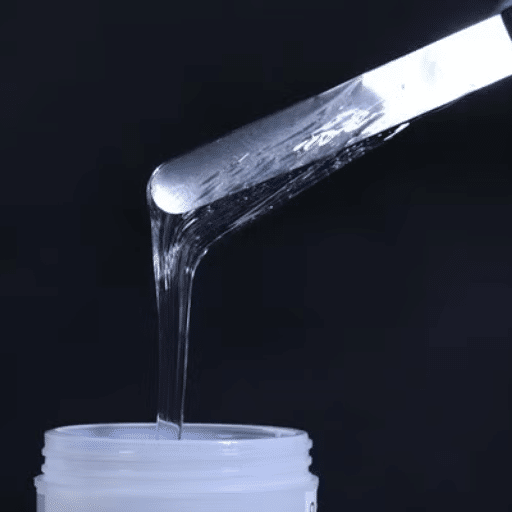
When you’re about to commit to a large order or a new supplier, independent lab testing is the insurance policy you can’t skip. It costs a fraction of one failed shipment.
FTIR Spectroscopy: The Definitive Material Test
Fourier Transform Infrared (FTIR) spectroscopy identifies the chemical structure of a material. For silicone, the spectrum shows characteristic peaks around 800, 1020, 1090, and 1260 cm⁻¹, reflecting the silicon-oxygen and silicon-carbon bonds.
FTIR is how you catch a blend. One brand owner sent samples that passed a burn test and felt like silicone. The FTIR spectrum revealed a silicone-TPE blend with unexpected filler peaks.
The supplier had quietly changed the formula after the pilot. FTIR caught it in days, instead of after a retail complaint.
Biocompatibility Testing
For a medical-grade claim, request the key ISO 10993 tests:
- ISO 10993-5 (Cytotoxicity): Material extracts must not kill cells. Cell survival above 70% is the pass threshold.
- ISO 10993-10 (Sensitization and Irritation): Material must show no allergic reaction or inflammation potential.
These are the tests that prove a material is safe for prolonged body contact. A medical-grade silicone claim without them is just a slogan.
Phthalate and Additive Screening
Ask for phthalate screening covering the six common phthalates: DEHP, DBP, BBP, DINP, DIDP, and DNOP. The pass result is “Not Detected” or below 0.1% (1,000 ppm). Also check for BPA and heavy metals. Base material can be safe while pigments and additives introduced in your batch are not.
Verification Costs and Timelines
Here is what independent testing typically runs:
| Test | What It Proves | Typical Cost | Timeline |
|---|---|---|---|
| FTIR spectroscopy | Material identity and fillers | 200−200−500 | 3-7 days |
| ISO 10993-5 (cytotoxicity) | Cell safety | 800−800−2,000 | 2-4 weeks |
| ISO 10993-10 (irritation) | Skin reaction safety | 800−800−2,000 | 2-4 weeks |
| Phthalate screening | Chemical compliance | 300−300−800 | 5-10 days |
Compare that to a single failed container, which can cost tens of thousands of dollars in product, freight, and fees. The math is not close.
How to Choose an Accredited Test Lab
Use a lab with ISO/IEC 17025 accreditation and experience testing silicone for body contact. Ask the lab what standards it can test against and whether it works with adult product manufacturers. If you already have reports from a supplier, you can also have the lab verify a small sample against the claimed results.
Step 4: Audit the Factory
Documentation and lab tests prove what a material is. A factory audit proves whether the manufacturer can consistently deliver it. If you’re placing a serious order, schedule a physical or virtual audit.
What to Verify On-Site
Walk the floor with a checklist. Confirm the raw silicone drums are labeled with the grades you approved. Watch how material is weighed, mixed, and cured.
Check that the production area matches what the compliance documents describe. The fastest way to catch a problem is to ask the QC manager to show you the current batch records and explain them without reading from a script.
Cleanroom and Production Environment Checks
Genuine medical-grade silicone is produced in controlled environments to avoid contamination. Ask whether the production line runs in a cleanroom and request the ISO 14644-1 classification. Cross-contamination from a standard factory floor is a real risk, especially when the same facility also molds TPE or other materials.
Batch Traceability and Raw Material Records
Traceability is the backbone of verification. The manufacturer should trace a finished product back to the specific raw material lot, the curing batch, and the test records for that batch. Ask to see the material traceability system. If they can’t walk you from finished part to raw drum, you have no way to guarantee grade consistency across production runs.
Golden Samples and Pilot Batches
Before approving mass production, lock a physical “golden sample.” Define your quality criteria against it and sign it with the factory. Then run a pilot batch and weigh it against the golden sample.
A 5-gram drop in a molded part is an immediate red flag that the factory swapped resins or reduced material. One buyer caught a supplier this way: the pilot batch felt lighter, the scale confirmed it, and the audit found cheaper TPE in the hopper.
Factory Audit Red Flags
Watch for these signs during any audit:
- Compliance documents that don’t match the actual production floor.
- Hesitation or vague answers when you ask about material sourcing.
- Test reports that cover a different product or carry edited dates.
- No batch numbers on raw material or finished goods.
- Pricing that is dramatically below market. Tested, safe materials cost more.
- A factory that can’t name its own upstream raw material suppliers.
A good manufacturer welcomes verification. It costs them nothing to show proof, because they already have it. For more on factory quality systems and inspection standards, see our guide to quality control in adult toy manufacturing.
The Medical-Grade Silicone Verification Checklist
Use this checklist with every new supplier, before you approve production:
- Supplier shared MSDS/SDS, COA, third-party test reports, and audit records without hesitation.
- COA batch number matches your exact material and product.
- Test date is current, within the last 12 months.
- Report includes biological tests (cytotoxicity, irritation, sensitization), not just physical tests.
- Report comes from an ISO/IEC 17025-accredited lab with a verifiable report number.
- Phthalate screening shows “Not Detected” or under 0.1%.
- Material is platinum-cured (addition cure), confirmed in writing.
- Production runs in a cleanroom or controlled environment.
- Factory has batch traceability from raw material to finished product.
- Pilot batch matches the golden sample in weight and feel.
- You have budgeted for independent FTIR and biocompatibility testing.
- Supplier passed your physical tests: stretch, smell, and boil.
What If Your Manufacturer Fails Verification?
A failed verification is not always the end. Sometimes the material is fine and the process is wrong.
Negotiate Corrections
If the material fails migration or VOC limits, a manufacturer may be able to fix it through post-curing, which drives out residual volatiles. Ask what corrective action they propose, get it in writing, and re-test the corrected batch. Some failures, like wrong material grade or missing traceability, are not fixable.
Escalate with Contracts
If the supplier agrees to corrective action, lock it into the contract. Include a clause that ties payment to passing independent testing on the shipped batch. Define the golden sample in the agreement. That gives you real leverage if the factory “forgets” the agreement at production time.
When to Walk Away
Walk away when the supplier hesitates on documentation, can’t match batch numbers, or resists independent testing. In Priya’s case, two weeks of silence after a verification request was all the answer she needed. A supplier with real medical-grade silicone is proud to show evidence. The rest will waste your time.
How Joyflick Verifies Medical-Grade Silicone
At Joyflick, verification is built into production, not bolted on after a request. We use platinum-cured silicone as our standard material and document every lot. Every order comes with a Certificate of Analysis tied to the actual batch, and we test materials in-house and with accredited third-party partners like SGS and TUV.
Our ISO-certified production runs batch-level traceability from raw material to finished product, with post-curing and six-stage inspection holding the defect rate below 0.2%. We provide the export documentation and test reports you need to defend your product line in any market.
Want to verify our silicone before you commit? Request a material consultation and we’ll share our test reports and a sample for independent testing. Start with a low-MOQ trial order from 300 units, no inventory risk required.
FAQ
How do I know if my sex toy is real silicone?
Check the documentation first, then run physical tests: real silicone is nearly odorless, stretches without turning white, and survives boiling. For a definitive answer, request FTIR spectroscopy from an accredited lab.
Is “medical grade” silicone a regulated term?
No. “Medical grade” is a marketing descriptor with no single legal definition. It only means something when backed by test reports for standards like ISO 10993 or USP Class VI.
Can I test silicone at home?
You can run quick filters like the stretch, smell, and boil tests. They catch major red flags but cannot prove biocompatibility or phthalate safety. Only accredited lab testing can do that.
What is a Certificate of Analysis?
A COA is a lot-specific document showing that a material batch met its specifications. It should include the batch number, product description, test date, test methods, and the issuing lab.
Why is the flame test unreliable for silicone?
Fillers and blends can mimic pure silicone’s burn behavior well enough to fool you. The flame test also destroys the product. Use FTIR spectroscopy for a reliable answer.
What labs can test silicone for me?
Look for ISO/IEC 17025-accredited labs like SGS, Intertek, TUV Rheinland, Eurofins, NAMSA, or Nelson Labs. Confirm the lab can test against ISO 10993 and phthalate standards.
How do I check batch traceability?
Ask the manufacturer to trace a finished product back to the raw material lot, curing batch, and test records. If they can’t, they can’t guarantee material consistency.
Conclusion
You now know how to verify medical grade silicone: demand lot-specific documentation, run physical tests as a quick filter, commission independent lab testing for a real answer, and audit the factory to confirm consistency. Five checks matter most: match the batch number, confirm the test date is current, require biological tests from an accredited lab, lock a golden sample, and budget for independent testing.
The best verification news is this: a legitimate manufacturer makes this easy. They share reports on the first call, welcome lab testing, and let you audit their floor. The suppliers who resist are telling you everything you need to know.
Ready to build with a manufacturer that opens its books? Contact Joyflick to request material reports and start your product line with confidence.