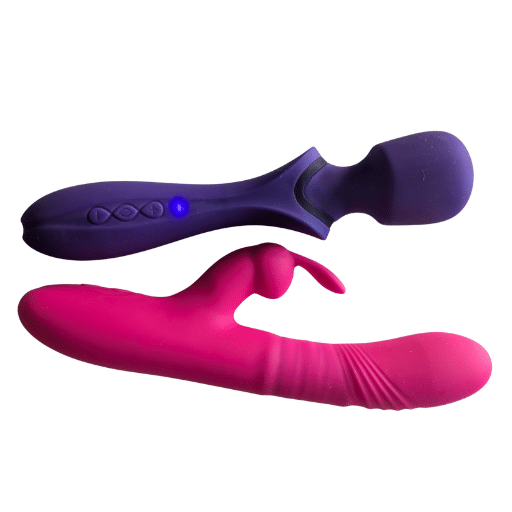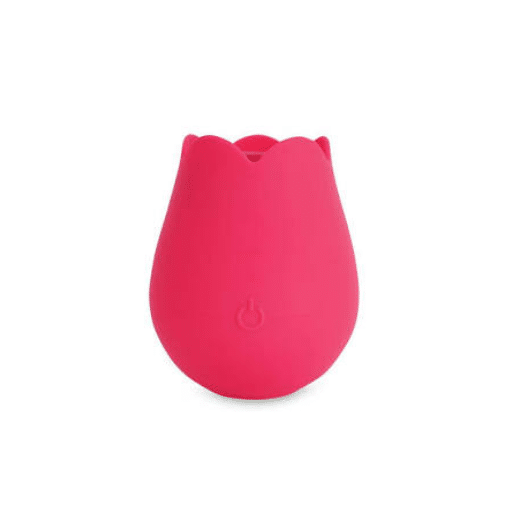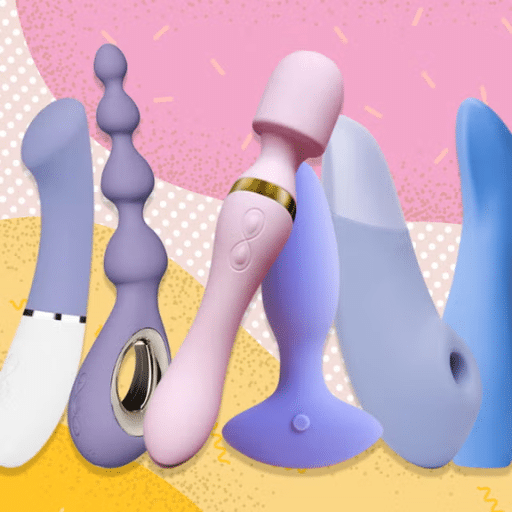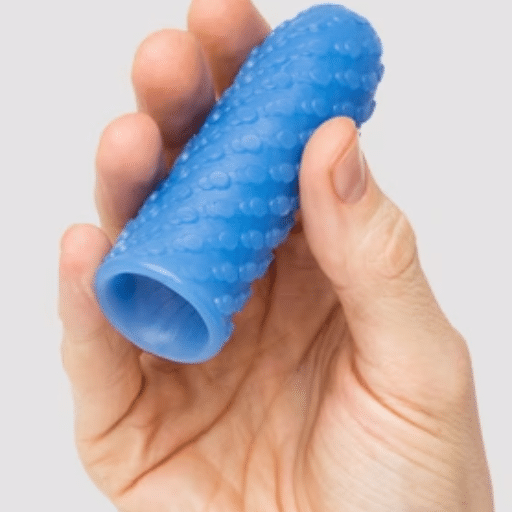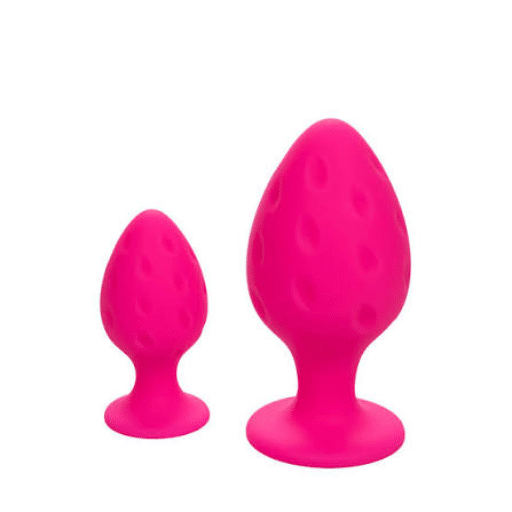
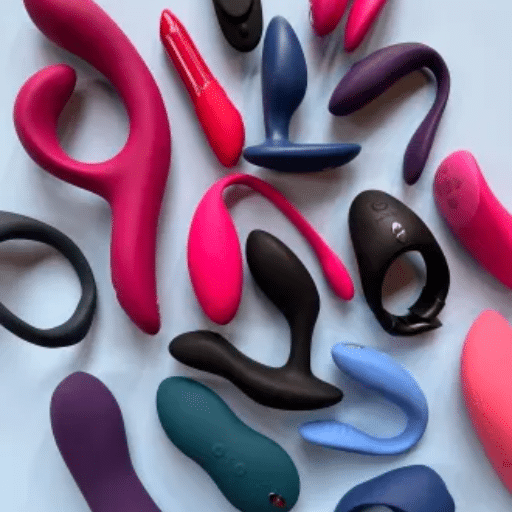
Custom silicone colors for sex toys come from mixing a body-safe pigment paste into platinum-cure silicone before it cures, then matching the finished parts to your target color within a measured tolerance. You can match a Pantone code, build a skin-tone range, or specify a matte, satin, or glossy finish. The catch is that color is a specification, not a favor, and it carries a safety ruleset, an order minimum per color, and a quality-control process. If you searched for “custom silicone colors sex toys,” that is the short answer: it is a measurable, batch-controlled specification, not a swatch choice.
Here is what most brand owners get wrong. They treat color as the last line of the brief, something to settle at sampling once the shape and the motor are done. Then the second production run arrives and the pink is not the pink anymore.
Ask Nadia, who runs a boutique label out of Rotterdam. She approved a dusky rose on a single sample in March 2026, placed 2,000 units, and sold out in six weeks.
Her reorder came back noticeably warmer. The factory hadn’t changed anything on purpose. It had simply mixed a fresh pigment batch without a retained standard to check against, and nobody noticed because nobody had defined what “matching” meant. Nadia lost three weeks and a chunk of margin explaining the shift to retailers.
This guide exists so that does not happen to you. You will learn how silicone is colored, what “safe pigment” actually means for a product that touches mucous membranes, how to specify a color you can hold a factory to, what it costs per color, and how to keep every run identical.
New to the category and want the material basics first? Start with our guide to silicone sex toys.
Planning a color range and want a factory’s read on it? Send us a Pantone code or a physical sample for a color plaque and a quote.
Key Takeaways
- Custom silicone color is a measurable specification. Ask for a molded color plaque, an agreed ΔE tolerance, and a retained standard sample before you commit to a run.
- Addition-cure silicone is easily poisoned by colorant. Sulfur, amines, and heavy metals inhibit the platinum catalyst and leave the toy sticky or under-cured.
- Per-color order minimums exist because every color is a separate compounding batch. Standard colors often start near 100 units per color; a brand-new matched color usually needs 300 to 500 or more.
- Color matching runs about 500to500to1,500 per new color, and darker, high-concentration Pantone shades can cost 10% to 20% more per unit than standard colors.
- Independent testing has flagged a detachable glitter component on an insertable toy as a safety defect. Embedded glitter is defensible; surface decoration on an insertable product is not.
Why Custom Silicone Colors Matter for Your Brand
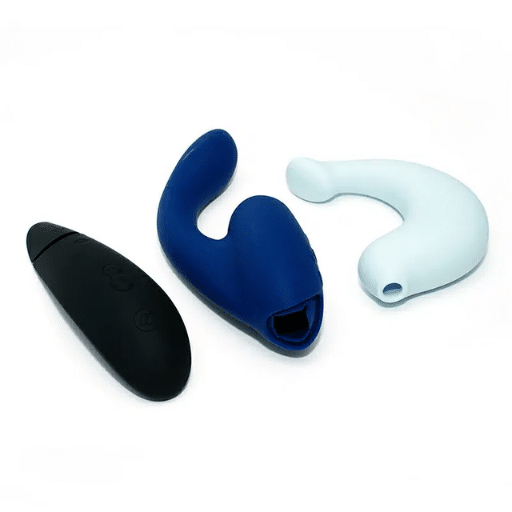
Color is the single most polarizing decision in adult toy design. Roughly half of customers don’t care much about shape, but most have strong opinions about color, and those opinions split sharply into love and dislike. That’s not a marketing claim, it’s an observation from the founders of Dame Products, who ship their vibrators in paired warm and cool shades for exactly this reason.
That polarity has a direct commercial consequence. If you bet your line on one shade, you are betting on the half of the market that agrees with you. If you ship a warm and a cool variant of the same product, you hedge the same tooling investment across two audiences.
Color also matters for a slower, quieter reason. A documented brand palette is a repeatable asset. It’s the thing that makes your dildo, your plug, and your vibrator look like they came from the same company instead of three different ones.
A one-off “nice color” chosen at sampling isn’t an asset. It’s a decision you can’t reproduce.
The 2026 palette is splitting in two
Two directions are pulling at once right now, and your range has to pick a side or deliberately straddle both.
On one side, pastels, soft neutrals, and expanded skin tones remain the core of the self-care and femtech positioning. Pale pink, beige, powder tones, and nature-inspired shades still sell, and they read as gentle and accessible rather than clinical.
In contrast, a premium and deliberately gender-neutral direction has gained real momentum. Matte black, deep plum, oxblood, and midnight blue with stone-like finishes now signal quality and discretion. The logic is practical: muted and dark tones hide wear, read as premium across cultures, and stop the category from being locked to one audience.
For the full read on where the market is heading, see our silicone sex toy trends breakdown. For this article, the point is narrower. Color is a positioning decision with a manufacturing cost, and both halves of that sentence deserve your attention.
How Custom Silicone Colors Are Added to Sex Toys
Coloring happens one of two ways, and only one of them belongs on an insertable product.
Intrinsic coloring mixes pigment into the silicone before it cures, so the color is part of the material all the way through. Surface coloring coats color onto a finished part. Surface color can wear, flake, or chip, and on a body-contact product that is a defect waiting to happen. Intrinsic coloring is the default for anything insertable, and it is what “colored silicone” should mean when a supplier says it.
The practical benefit is simple. A toy colored throughout has no coating to fail. Scratch it, boil it, clean it with soap, and the color is still there because it was never a layer in the first place.
Pigment paste vs color masterbatch
Both routes start the same way: pigment is pre-dispersed into a silicone carrier so it can be dosed accurately. The difference is the carrier and how it bonds.
A color paste is pigment dispersed in a reactive silicone polymer, ready to be weighed into the mix. A color masterbatch is the same idea at a higher pigment concentration, designed to be let down during compounding.
The variable that separates a good factory from a cheap one is dispersion quality. Pigment that is not broken down finely enough produces streaky, uneven color. Suppliers who control their process work to a dispersion particle size around 20 microns or finer, and that’s why their color looks even under a light instead of mottled.
Why platinum-cure silicone is picky about colorants
This is the most important technical point in the article, so it gets its own section.
Platinum-cure silicone, also called addition-cure, sets through a platinum catalyst. That catalyst is easy to poison. Sulfur, amines, and heavy metals inhibit it, and an inhibited catalyst doesn’t slow the cure down gracefully. It leaves the toy permanently sticky, tacky, or under-cured.
That means the only colorants you should accept are addition-cure compatible. Ask the question directly and ask for it in writing. A supplier who can’t answer it is a supplier who hasn’t run a cure-inhibition test.
There is a second layer here worth knowing. Some pigment masterbatches are engineered to bond covalently into the platinum-cured network rather than sitting inside it. When color is part of the cross-linked structure, it does not bleed out and it barely touches the physical properties of the finished part. That is the gold standard for a body-contact product, and it is worth asking whether your colorant is built that way.
How much pigment is too much
More pigment is not better. Every published system has a working range.
- General silicone color paste: around 0.5% of total silicone weight.
- At least one addition-cure pigment series: about 1% by weight at a Shore 10A hardness, with softer silicones needing less.
- A common pre-mix method doses pigment into Part B at 2%, with a hard ceiling of 5% of the total A plus B.
Above those limits you start losing mechanical performance. Elasticity, tensile strength, and tear resistance all degrade, and there is a second effect most people do not expect: pigment load firms the material. Adding color makes the toy harder. If you are chasing a plush feel and a deep, saturated tone on the same product, those two goals fight each other, and the resolution is a hardness conversation, not more pigment.
Tomás found that out the hard way. His Barcelona studio ordered a set of deep espresso strokers that came back noticeably stiffer than the ivory version of the same mold. The difference wasn’t the silicone. It was the pigment load needed to reach that depth of brown.
The fix was re-specifying the base hardness for the dark SKU, which he would have caught upfront by asking a single question about pigment concentration.
If hardness is the variable you are working with, our guide to silicone shore hardness covers how durometer changes across a product line.
Pantone Color Matching: From Reference to Approved Sample
Color matching follows a short, repeatable path. You submit a reference, the factory formulates a recipe, casts a plaque, and presents it for approval under agreed lighting. That approved plaque is retained as the standard for every future run.
Miss any step and you lose your ability to hold anyone to anything.
What to send your manufacturer
You have two options, and one is better.
- A Pantone code. Useful, but state which book. Pantone C, U, and TPX behave differently in silicone, and a code without the book is an incomplete instruction.
- A physical sample. Usually the better brief. Send a swatch, a chip, or the competitor product you are chasing. A physical reference removes most of the translation error.
Never brief color from a screen. A phone photo, a monitor, and a printed catalog will all disagree, and none of them can be measured.
What ΔE actually means for your product
ΔE is the numeric distance between your target color and the color the factory produced. Lower is closer. The problem is that most suppliers quote a tolerance without telling you what it looks like, so here is the translation:
| ΔE value | What your customer actually sees |
|---|---|
| 1.0 or below | Invisible to the unaided eye. This is the standard for appearance-critical and body-contact parts |
| 1.0 to 2.0 | Visible only when two parts sit side by side. Acceptable for functional parts |
| 2.0 to 3.0 | Noticeable in direct comparison. Only appropriate for internal, non-visible components |
A workable specification to bring to your factory: ΔE of 1.0 or better for anything the customer sees or touches, 2.0 for functional parts, 3.0 for internal parts, and batch-to-batch variation of 1.0 or less measured against your retained standard.
Industry practice varies widely here. Some factories advertise ΔE of 1.5, one laboratory benchmark ties batch-to-batch variation to 0.8, and at least one color-matching vendor claims 0.2. Rather than accept whatever number a supplier offers, set the tolerance in your own spec and ask them to meet it.
Why the same Pantone code can look different in silicone
An identical pigment code can read as two different colors in two different parts, and the reasons are physical:
- Wall thickness. Thicker sections look deeper and more saturated than thin ones.
- Opacity. Translucent silicone lets light through, so the same pigment reads lighter than it does in an opaque part.
- Surface texture and finish. A matte surface scatters light and looks softer and lighter; a glossy surface looks deeper and richer.
- Lighting. Two parts that match under a factory lamp can disagree under a shop light.
- Metamerism. Some color pairs match under one light source and clash under another, because they are built from different pigments that happen to look alike in one condition.
This is precisely why color must be approved on a molded plaque in the final texture and finish, never on a flat chip. A chip approval is not a toy approval.
Body-Safe Colorants, Glitter, and Glow-in-the-Dark
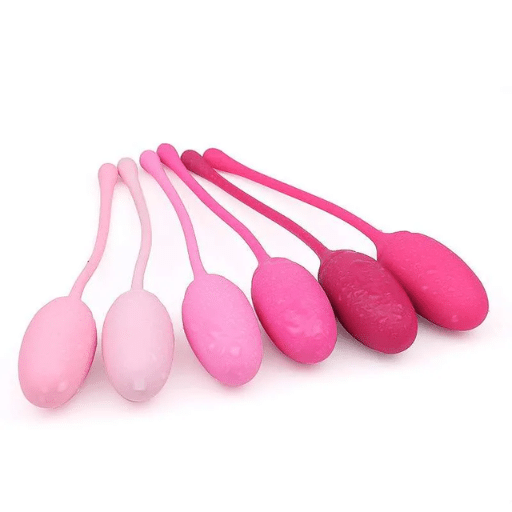
For a product that touches sensitive tissue, the question is not whether a custom silicone color is attractive. It is whether it stays locked in the silicone and whether it is permitted for body contact in the first place.
The ruleset, in plain terms
Colorants for food-contact materials and colorants for body-contacting medical devices come from different regulatory lists with different limits. In the United States, food-contact colorants for polymers fall under 21 CFR 178.3297, which permits specific substances under specific maximum loadings. Colorants intended for medical devices that contact the body live in a separate framework under 21 CFR Parts 73 and 74, and that list is shorter and more restrictive.
Here is the part the industry does not like to say out loud. Silicone sex toys are not regulated as medical devices in most markets. There is no approval body signing off on your pigment. That absence is exactly why the buyer has to carry the question.
The credible factory answer is a short list. Addition-cure compatible. Non-leaching. Migration tested. And where your market requires it, evaluated under ISO 10993 for biological compatibility. Realistic grading claims in this space are food-grade and LFGB compliance, RoHS, and REACH, backed by third-party test reports.
One phrase to strike from your vocabulary: “FDA approved.” The FDA does not approve sex toys or their colorants. Say “compliant with FDA food-contact regulation 21 CFR 178.3297” if that is what you mean, and do not overstate it.
Migration and bleed-through
Color that migrates is color that leaves the toy. Two situations matter most.
First, storage. Platinum silicone is stable, but pigments and surface residues are not always. Toys stored pressed against each other for long periods can transfer color, which is one reason care instructions matter as much as formulation.
Second, and more relevant to this article, multi-layer construction. In a dual-density toy, you have two different silicone formulations sharing a boundary. Pigment moving across that boundary produces a muddy seam and a product that no longer matches its own spec.
Ask for pigment migration testing on any multi-layer build, and treat undocumented colorants as a red flag rather than a shortcut. Test the finished sample after the pigments are added, never before.
Our guide to dual-density silicone toys covers how those layers are constructed and where the color risks sit.
Glitter, flakes, and glow-in-the-dark: the honest version
This is where most color content gets either vague or dishonest. Here is the manufacturer’s version.
Independent testing of adult toys has flagged a detachable decorative glitter component on an insertable toy as a safety defect. On a body-contact product, a loose component isn’t a cosmetic issue. It’s a retention risk, and independent testers scored it accordingly. One industrial source puts the mechanical concern plainly: large, sharp glitter particles can tear the silicone surface and compromise the product.
So the position that holds up is specific. Glitter is defensible only when it is fully wetted into the silicone matrix, with no part of any flake protruding at the surface, and with adhesion and abrasion tested on the finished part. Embedded glitter that is genuinely embedded is a texture. Glitter applied as decoration on an insertable surface is a hazard dressed up as a feature.
Glow-in-the-dark follows its own rules. Phosphorescent pigments have to be charged, and about 30 minutes of direct light is a reasonable rule of thumb. Orange charges quickly and glows strongly, while blue and violet need more light and glow less.
Two manufacturing notes come with the effect: reaching a strong glow usually means a higher pigment load, which pushes you toward the dosage ceiling, and some phosphorescent pigments carry a higher risk of interfering with the cure. Confirm addition-cure compatibility on glow pigments specifically.
Building a color line on a body-safe base? Tell us which market you are selling into, and we will map the colorant compliance and testing that applies. Materials and base safety are covered in depth in our body-safe materials guide for adult toys.
Skin Tones, Brand Palettes, and Inclusive Color Ranges
An inclusive range is a quality decision as much as a market one, and it is easier to build on a standard than on adjectives.
Building a real skin-tone range
Skip “light, medium, dark” and anchor your range to the published Monk Skin Tone Scale, which runs M1 through M10 from the lightest to the deepest tone. It gives you ten defined reference points instead of three vague ones, and it gives your supplier a shared language for what you are asking for.
Then respect the physics. Deeper tones need higher pigment load, and higher pigment load firms the silicone. So a deep tone on a plush toy is a formulation problem, not a swatch swap.
There are two honest answers: accept a slightly firmer part, or re-engineer the base silicone so the finished hardness still lands where you want it. Both are conversations you have before tooling, not after.
Custom hand-blended matching is available, but it affects both your order minimum and your lead time. Ask early.
Warm/cool hedging and range logic
Because reactions to color split sharply, offering paired options is a cheaper hedge than a bigger marketing budget. Ship a warm and a cool version of your bestseller and let the market sort itself. The evidence is not hypothetical. Dame shipped a coral shade that drew heavy criticism and underperformed badly enough that it had to be replaced, while the paired shade held.
Range logic matters too. Build tints and shades from your primary color before you add new colors. Three tones of one brand color read as a considered palette. Three unrelated colors read as three products from three companies.
Extending one color across a whole product line
Once you have an approved color, applying it across your dildos, plugs, and vibrators is the cheapest way to look established. It is mostly a documentation problem, not a formulation one. Your retained standard sample is what makes it possible, because every new product can be matched against the same physical reference instead of being reinterpreted from a code.
That same discipline scales across product types, whether you are building a custom silicone dildo or a custom silicone vibrator.
Textures and Finishes: Matte, Glossy, Satin, and Multi-Color Pours
Finish gets treated as decoration, but it is a functional specification with real consequences for how the toy performs and how your customer uses it.
Finish is engineered into the mold
A glossy finish comes from polished tool steel. A matte finish comes from a textured tool surface. Satin sits between the two. This is a tooling decision, made once, and it is expensive to change afterward.
It also changes the color. The same pigment on a matte surface reads softer and lighter than it does on a glossy one, because the surface scatters light differently. If you approve a color, approve it in the finish you intend to ship.
Choose finish for function, not looks
Finish changes how the toy behaves with lubricant, which is a user-experience decision you should make deliberately and put in the spec sheet. Tantus’s guide to feels and finishes is a useful consumer-side reference for how much that difference matters.
| Finish | Feel and lubricant behavior | Best for |
|---|---|---|
| Glossy | Polished and slick. Needs more lubricant and reapplies more often | Beginners, smooth-glide products |
| Matte | Grips lubricant better and holds a glide longer | Intermediate and advanced use |
| Satin | Soft and smooth. Moderate lubricant use | Broad appeal, all levels |
| Combination | Polished head with a matte shaft, which channels lubricant along the length | Realism-focused products |
That combination finish is worth understanding. A polished head with a matte shaft mimics the way natural lubrication behaves during use, and it keeps a glide going longer than either finish alone. It costs a more complex tool, so it belongs on your flagship, not your volume SKU.
Surface texture: veins, ribs, bumps
Texture is molded, not applied. Depth, density, and pattern determine the sensation, and they also determine how hard the product is to clean. Deeper texture means more crevices, and crevices are where residue hides. Whatever you specify, validate that your cleaning instructions still work on the finished geometry before the tool is cut.
Multi-color pours, and how many colors is too many
Multi-color silicone is a broad design language once you know the vocabulary:
- Solid. One color throughout.
- Marble. Two to four distinct colors mixed for a random, one-of-a-kind pattern.
- Marble spiral. Colors poured from the same container while the mold turns, producing a spiral.
- Marbled fade. One color at the tip, marbling through the middle, a second color at the base.
- Fade or ombre. A smooth gradient from one color to another.
- Split. One color for the shaft, a separate color for the base.
- Covered. A thinner outer color over an inner color, which shows through.
- Drip. Color running down from the tip without covering what is underneath.
Two manufacturing truths shape what you can promise. First, the practical ceiling is one to three colors. Beyond three, colors muddy and your yield drops, which means you pay for the fourth color in waste rather than in margin.
Second, hardness changes the pour. Soft silicone marbles loosely and merges; firm silicone holds crisper lines and more repeatable placement. If you want a sharp, consistent marble, you are choosing a firmer base or accepting variation.
And because multi-color work is often hand-poured, expect each unit to differ slightly. State that on the product page. Framed as craft, variation is a selling point. Left unexplained, it is a return.
Custom Color MOQ, Cost, Lead Time, and Batch Consistency
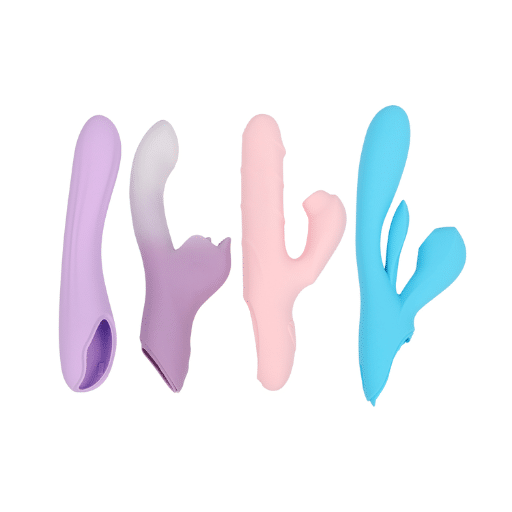
This is the section that decides whether your color range is a plan or a wish. It comes down to four numbers: minimum order per color, matching fee, unit cost, and lead time.
Why MOQ is set per color, not per order
Every color is a separate compounding batch, and each batch carries its own setup, equipment cleaning, color changeover, quality check, and material waste. The arithmetic is what makes per-color minimums make sense.
| Your order | Compounding batches | Extra steps you pay for |
|---|---|---|
| 2,000 units in 1 color | 1 | Baseline setup, cleaning, QC, waste |
| 2,000 units in 2 colors | 2 | Two changeovers, two cleanings, two QC gates |
| 2,000 units in 6 colors | 6 | Six changeovers, six cleanings, six QC gates, six waste streams |
As a result, the same piece count hides three very different production realities. That is why published market terms tend to land around 100 units per color for standard colors and 500 units per color for a brand-new custom color, and why your per-color minimum depends on how custom the color actually is:
- Stock or standard color: roughly 100 units per color.
- An existing color match, produced as ODM: roughly 300 to 500 units per color.
- A new matched color with a first-article plaque: 500 units or more per color.
Joyflick’s headline for brands testing the water is simpler. Our MOQ starts at 300 units, and color is negotiated per SKU rather than charged back to you as a batch penalty.
What custom color costs
Two costs, and they behave differently.
The matching fee is one-time. Formulation, plaque casting, and approval run about 500to500to1,500 per new custom color, and you pay it once per color rather than once per order.
The unit cost is ongoing and driven by concentration. Darker and high-concentration Pantone shades can run 10% to 20% above standard colors, because they consume more pigment and take longer to disperse evenly. Color count also raises unit cost more than piece count does, which is the practical argument for launching with two or three colors instead of eight.
Lead times and how to plan a rollout
Plan around two clocks. A color match and sample plaque typically takes 7 to 15 working days. Production after approval typically runs 15 to 35 working days depending on volume and scheduling.
The planning rule that saves the most money: approve every color before the run starts. A color approved mid-production restarts the changeover cost and the quality gate you were trying to avoid.
Keeping color identical across production runs
Consistency is a process, not a promise, and it has five parts.
- Retain a standard. Keep a molded plaque in the final texture, approved under agreed lighting, in controlled storage. Never approve from a photo, and never discard the standard.
- Measure, do not eyeball. Use a spectrophotometer reading in CIE 1976 under fixed conditions, such as D65 at 10 degrees with a d/8 geometry, so every batch is judged against the same numbers.
- Set a changeover gate. At every color changeover, the batch is accepted only when the measured ΔE against your retained standard is inside the tolerance you set, typically 1.0 or less.
- Control the inputs. Batch-to-batch drift usually starts upstream: masterbatch dispersion quality, dosing accuracy (automated systems hold around plus or minus 0.5%), curing temperature (solid silicone typically locked around 160 to 180 degrees Celsius within a tight band), and balanced mold fill.
- Document every batch. A batch record with its measured color values is what lets you investigate a complaint instead of guessing.
Marta, who runs a mid-size label in Warsaw, added exactly one step after her first scare: she asked her factory to hold a retained plaque and record the ΔE on every run. Eighteen months and six production runs later, zero color complaints, and she could prove the match on paper when a distributor asked.
Color consistency is one output of a broader system. Our guide to quality control in adult toy manufacturing covers how the other checks fit together.
Frequently Asked Questions About Custom Silicone Colors
Can silicone sex toys be custom colored?
Yes. Pigment paste is mixed into platinum-cure silicone before it cures, so the color runs through the whole part rather than sitting on the surface. You can match a Pantone code or a physical sample, and you approve the result on a molded plaque. Expect a per-color order minimum and a one-time matching fee.
What pigment is safe for silicone sex toys?
Use addition-cure compatible pigments that are free of sulfur, amines, and heavy metals, because those inhibit the platinum catalyst and leave the silicone sticky or under-cured. Credible colorants are non-leaching and migration-tested, and are evaluated under ISO 10993 where your market requires it. Avoid craft paints, solvent dyes, and acrylic colorants entirely.
Can you match an exact Pantone color in silicone?
You can match it closely, but never exactly, and no honest factory will promise exactness. Set a measured tolerance instead, such as ΔE of 1.0 or better for visible parts. Thickness, translucency, surface texture, finish, and lighting all shift how the same pigment reads, so approve the color on a molded plaque in its final finish.
What is the MOQ for a custom color silicone toy?
Minimums are set per color, not per order. Stock colors often start near 100 units per color, an existing color match produced as ODM runs about 300 to 500, and a brand-new matched color usually needs 500 or more. Joyflick’s overall MOQ starts at 300 units with color negotiated per SKU.
Why do custom colors cost more than stock colors?
Three reasons. You pay a one-time matching fee of roughly 500to500to1,500 per new color. Each color is a separate compounding batch with its own setup, cleaning, changeover, and waste. And darker, high-concentration shades consume more pigment, adding 10% to 20% to the unit cost.
Does silicone color fade, bleed, or migrate over time?
Properly formulated platinum-cure color is stable under normal use and cleaning. The real risks are transfer during long-term storage against other toys, and bleed-through at a boundary in multi-layer construction. Ask for pigment migration testing on dual-density builds, and test the finished part after pigments are added rather than before.
Are glitter and glow-in-the-dark sex toys safe?
Embedded glitter is defensible only when it is fully wetted into the silicone with nothing protruding and adhesion is tested. Independent testing has flagged a detachable glitter component on an insertable toy as a safety defect, so surface glitter on an insertable product should be avoided. Glow pigments need charging, raise the pigment load, and should be confirmed addition-cure compatible.
What is the difference between matte and glossy silicone toys?
Matte finishes grip lubricant better and hold a glide longer, while glossy finishes are polished and slick but need more frequent lubricant. Satin sits between the two. Finish also comes from tooling, since a glossy surface is polished tool steel and a matte surface is a textured mold, and the same color reads lighter on matte.
Bringing Your Color Range to Production
Custom silicone colors for sex toys are achievable at nearly any scale, but only when you treat color as a specification. The pigment has to be addition-cure compatible and within its dosage limits. The match has to be approved on a molded plaque in its final finish, against a ΔE tolerance you set rather than one you accept.
The order minimum has to be planned per color, not per unit. And the retained standard has to exist, or consistency is luck.
Get those four things right, and a color range stops being risky. It becomes the cheapest brand asset you own, one that carries across every product you launch and survives every reorder.
If you already have a color in mind, we can move quickly. Send Joyflick a Pantone code or a physical sample, and we will return a color plaque, a per-color quote, and a production timeline. Our MOQ starts at 300 units; our production is ISO 9001 certified with a defect rate under 0.2%; and color is negotiated per SKU so a small launch does not incur a large-order penalty.