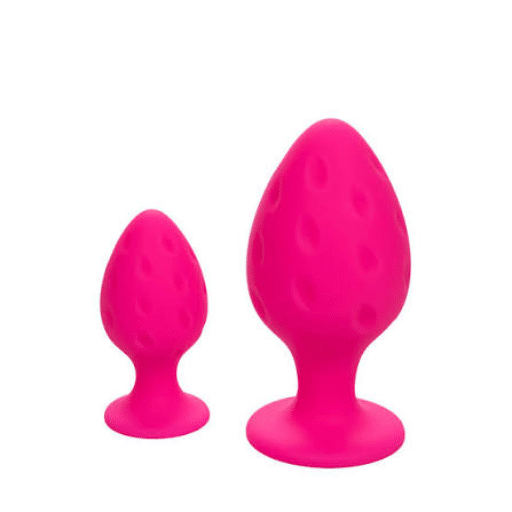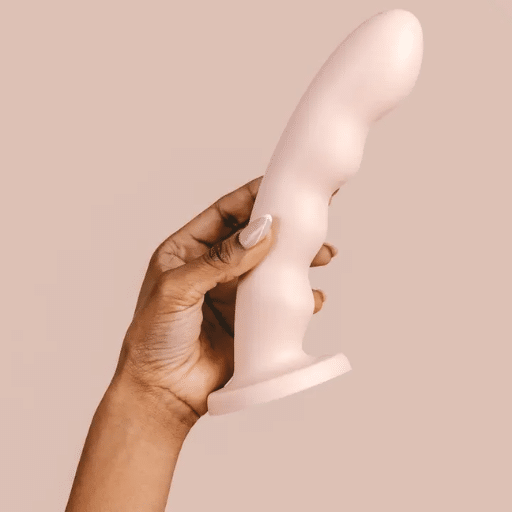

Custom silicone butt plugs are anal toys manufactured to your own design in body-safe silicone, with a base built so the product cannot be retained inside the body. Building them well means getting three things right: the base geometry, the silicone hardness, and the manufacturing partner you choose.
Here’s the problem no listing page will tell you. Butt plugs are one of the fastest-growing segments of the adult toy market, and the search results are packed with factory profiles quoting a unit price and an MOQ. What they don’t explain is why one plug design is safe and another is a medical emergency waiting to happen.
They don’t tell you that a T-bar base and a round base solve different problems. And they rarely break down what tooling actually costs.
That gap matters because anal toy design has a safety floor that other product categories don’t. If a vibrator is poorly designed, it disappoints a customer. If a butt plug is poorly designed, it can migrate past the sphincter and require surgical removal. As a manufacturer, that reality should shape every decision from the neck diameter to the packaging insert.
This guide walks through how custom silicone butt plugs are designed and manufactured, what they cost, how long they take, and how to brief and vet a factory. It’s written for brand owners, product developers, and buyers who want a line that is both safe and sellable, including emerging brands working with low minimum order quantities.
Key Takeaways
- Every anal toy needs a base that physically cannot pass the sphincter. ISO 3533:2021 §5.2.1 codifies this as “prevention of retention.”
- Base type should follow intended wear time and use case, not aesthetics alone.
- Most custom silicone butt plugs sit between Shore 00-30 and 00-50, with firmer 10A–20A grades reserved for structured or prostate-focused shapes.
- Compression tooling costs less and runs in 2–6 weeks. LSR injection tooling costs more, runs 8–16 weeks, and pays off at higher volumes.
- Low-MOQ partners starting at 300 units let new brands validate a plug line before committing to full custom tooling.
What Are Custom Silicone Butt Plugs?
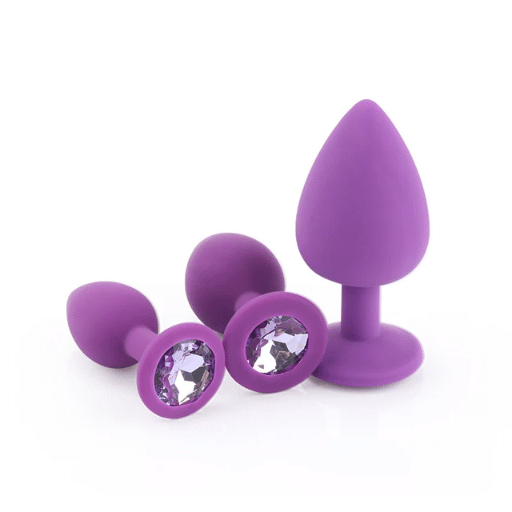
Custom silicone butt plugs are anal toys manufactured to a brand’s own specifications. That can mean an original shape and mold, a customized version of a factory design, or a rebranded catalog product. The “custom” element might be the form, the silicone hardness, the color, the base, or simply the packaging and logo.
Four sourcing routes cover almost every brand, and the right one depends on your budget, timeline, and how much of the design you want to own.
| Sourcing route | What you get | Typical MOQ | Design ownership |
|---|---|---|---|
| White label | Existing product, your label | Lowest | None |
| Private label | Catalog shape, your branding and packaging | Low | None |
| ODM | Factory design customized to your brief | ~300–500 | Shared |
| Full custom OEM | Original design and exclusive mold | 500+ | Yours (per contract) |
If you’re new to the distinction, our guide to OEM vs. ODM manufacturing explains how each model affects cost, speed, and exclusivity. For a wider view of the category, start with our silicone sex toys guide. Most new brands settle on a butt plug OEM partner that can scale from a trial run to full production on the same tooling, so the sourcing route and the manufacturer choice are really one decision.
Want to see how a plug line looks from concept to shelf? Request a sample and quote from Joyflick
Butt Plug Safety Is a Design Decision, Not a Label
Most “safe anal toy” content tells readers to look for a flared base. That advice is correct, but it skips the engineering. Here’s what’s actually happening.
The anal sphincter is a muscular ring that can contract around an object and draw it inward. Unlike the vagina, the rectum has no natural stopping point that prevents an object from moving deeper. A base exists because the product must be physically incapable of passing through the sphincter, regardless of angle or force.
This isn’t a marketing feature. It’s the reason the product takes the shape it does, and it’s now written into international standards.
What ISO 3533:2021 Requires
ISO 3533:2021 is the first international safety standard for adult toys, published in September 2021. It includes a dedicated section for anal-use products and a mechanical hazard clause titled “prevention of retention” (§5.2.1), which addresses exactly this risk. The standard also covers surface quality (smooth, free from burrs and sharp edges), surface temperature limits, and the user information that must ship with the product.
For a brand, this translates into concrete design decisions:
- Base diameter must exceed the maximum body diameter of the insertable portion.
- The neck should be long enough and narrow enough that the sphincter rests around it comfortably, not around the widest point.
- Every edge should be radiused. A mold that leaves a sharp parting line is a defective mold for this product category.
- Insertion and cleaning guidance belongs in and on the packaging, not just on your website.
The SGS summary of ISO 3533 is a useful reference when you brief a factory, because it gives both sides shared language for requirements that are otherwise easy to hand-wave.
A Lesson From the Sample Table
When Priya’s wellness brand ordered its first plug samples in early 2026, the factory sent a beautiful product with a sculpted, decorative base. It photographed well. It also had a base only marginally wider than the bulb. Her product developer flagged it immediately: under load, that base could deform enough to slip past the sphincter.
The redesign added 14mm of base diameter and cost her two weeks. It would have cost far more in returns, reviews, and liability had it reached market.
Choosing the Right Base Type
Base geometry is where safety and user experience meet, and it’s the decision most brands get wrong on the first sample. Four base types dominate the category, and each solves a different problem.
| Base type | Retention safety | Long-wear comfort | Comfort during partner sex | Best use case |
|---|---|---|---|---|
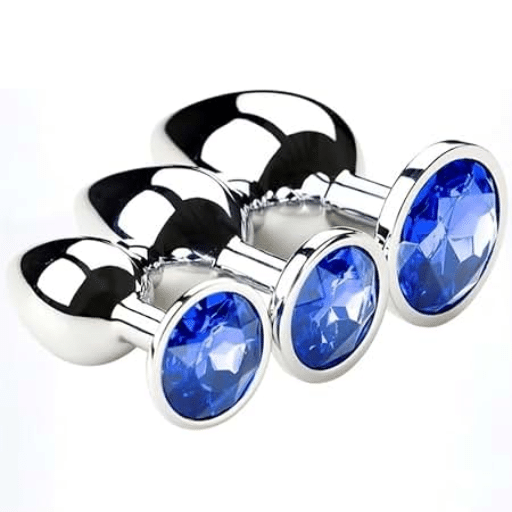
| Round/disc | High | Moderate | Lower (can rub) | Insertion-focused, aesthetic designs |
| T-bar | High | High | High (sits between cheeks) | Extended wear, training, everyday use |
| Anchor | High | High | Moderate | Ergonomic retention, minimalist shapes |
| Suction cup | High | Low | Low | Hands-free play |
Two practical notes from the factory floor. First, round bases are perfectly safe when sized correctly, but they tend to dig into the buttocks over time. That’s why long-wear products usually move to a T-bar.
Second, the T-bar advantage shrinks as plug size increases. On larger products, the base can become uncomfortable when sitting. That’s a design brief detail rather than a manufacturing limitation, so raise it early.
If you’re building a line rather than a single SKU, base type doubles as a merchandising decision. A brand can offer a round-base aesthetic hero product alongside a T-bar long-wear model and a suction-cup play variant, covering three distinct intents from one core tooling investment.
Types of Custom Silicone Anal Toys You Can Manufacture
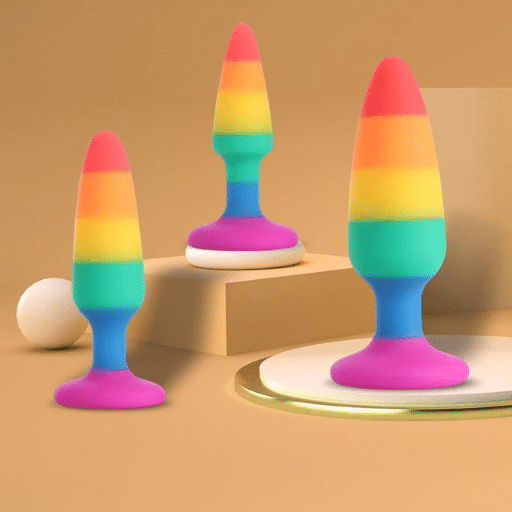
Butt plugs are one product within a broader anal category. Silicone anal toy manufacturing follows the same molding and finishing principles across all of them, so a single partner can usually cover the whole range. The most commercially successful lines span several of these products, sharing tooling where the geometry allows.
- Classic tapered plugs: the entry product, with simple geometry and the lowest tooling cost.
- Anal training kits: three to five graduated sizes sold as a set, which convert well for new brands because they answer the “which size do I start with?” question.
- Prostate massagers: a curved or angled tip paired with a bulbous body, designed to reach the prostate from inside. The flared base doubles as the handle.
- Vibrating plugs: silicone over an internal motor and battery, which adds waterproofing and electrical compliance requirements.
- App-connected plugs: the fastest-growing sub-segment, blending Bluetooth control with silicone bodies. Expect longer certification timelines.
- Beads and specialty shapes: novelty and aesthetic designs that extend a line without new core engineering.
Designing a Training Kit That Sells
A well-built training kit is a design exercise, not a bundle. The increments matter. A common structure is roughly 25mm, 33mm, and 40mm maximum body diameter across three SKUs, with matching neck diameters so the progression feels gradual. Brands that get this right often sell the kit as their flagship and use the middle size as the standalone hero product.
Interested in a graduated plug set or a prostate design? Talk to our R&D team about custom geometry
Silicone Hardness and Construction for Butt Plugs
For anal use, hardness is a comfort decision with a safety dimension. Too firm and the product is unforgiving. Too soft and the shape collapses on insertion.
Most custom silicone butt plugs fall between Shore 00-30 and Shore 00-50. That range gives a soft, yielding feel while holding its shape. Firmer grades in the 10A–20A range are typically reserved for structured forms that must hold under pressure, such as a contoured prostate massager. For the full breakdown of how the durometer scale maps to feel, see our guide to silicone shore hardness for sex toys.
Construction follows from there:
- Single density is one silicone pour at one hardness. It’s the cheapest route and works well for classic plugs.
- Dual density layers a softer outer skin over a firmer core, which produces a more realistic feel and more controlled insertion. It costs more and complicates demolding. We cover the technique in depth in our guide to dual-density silicone sex toys.
Are silicone butt plugs body-safe? Yes. Medical-grade silicone is non-porous, hypoallergenic, and phthalate-free, so it can be fully cleaned and doesn’t harbor bacteria the way porous materials can. That non-porous property is why silicone, borosilicate glass, and stainless steel are the standard anal-product materials, while jelly rubber, PVC, and latex are not.
One clarification worth stating plainly: “medical-grade silicone” describes the raw material grade and the biocompatibility testing behind it. It doesn’t mean an adult toy is an FDA-approved medical device. Anal toys are typically sold as novelties in the United States, and no manufacturer should suggest otherwise.
How Custom Silicone Butt Plugs Are Made, Step by Step
The production path is well established. What varies is how carefully the safety details are checked at each stage.
- Design and requirements brief. You provide a sketch, a 3D file, or reference dimensions, plus target size, hardness, base type, and features.
- 3D modeling and digital prototyping. The shape is modeled and checked for demoldability, neck-to-bulb ratio, and base geometry.
- Physical prototype. A 3D-printed or CNC-machined master model is produced for approval.
- Production tooling. A cavity mold is cut, then a golden sample or first-article run validates the tool.
- Mixing, degassing, and molding. Silicone is mixed under vacuum and poured or injected into the mold. Pigments and finishes are applied here.
- Finishing, inspection, and packaging. Parts are trimmed, inspected, and packed with the required user information.
Not all of this has to happen in your own facility. If you’re weighing whether to bring in a partner for a plug line while you focus on core products, our guide to custom adult toy manufacturing covers the full scope a partner can take on. If you’re still deciding between silicone and other materials, silicone vs. TPE is the place to start.
MOQs, Lead Times, and Costs for Custom Butt Plugs
This is where most brand plans live or die, so let’s be specific about the trade-offs.
First, a clarification that trips people up constantly. When a search result says “butt plug mold,” it may mean a $10 hobby mold you can 3D print at home. Industrial production tooling is a different category entirely, and it’s a four-to-five-figure investment depending on complexity and process.
| Route | Tooling cost | Tooling lead time | Tolerance |
|---|---|---|---|
| Compression molding | Lower | ~2–6 weeks | ±0.2–0.5 mm |
| LSR injection molding | Higher | ~8–16 weeks | ±0.05–0.1 mm |
Compression molding tooling is often 30% to 70% cheaper than equivalent LSR tooling, which makes it the usual starting point for a new plug line. LSR injection delivers a smoother finish, tighter tolerances, and higher material efficiency, and it typically becomes the better economic choice at higher annual volumes. Our comparison draws on published molding data from silicone manufacturers, including Newtop’s LSR vs. compression analysis.
Then there’s the timeline beyond tooling. Sampling usually takes one to two weeks. Mass production commonly runs 15 to 30 days after sample approval, which is the range Joyflick quotes for custom orders. A realistic concept-to-shelf timeline for a new plug is measured in weeks to a few months, not days.
MOQ depends on the route you choose and whether you’re changing the mold:
- White label and private label carry the lowest minimums, because nothing new is tooled.
- ODM customizations commonly start around 300 to 500 units.
- Full custom OEM with a new mold typically starts at 500 units or more.
Low-MOQ partners change the math for emerging brands. Joyflick’s MOQ starts at 300 units for trial orders, which lets a founder validate demand before committing to large-scale production. If MOQ is your main constraint, our guide to low-MOQ adult toy manufacturing covers the negotiation levers in detail.
When Daniel, a three-person brand founder, planned his first full custom OEM launch in 2026, his factory quoted $18,000 for tooling. He budgeted 40% on top for certification and revisions, which turned out to be the right call: a geometry fix on the first cavity added five weeks and a re-quote. The buffer covered it. Two founders in his accelerator had skipped the buffer and pushed their launches into the next quarter.
Finally, budget beyond the mold quote. A 30% to 50% buffer above the initial tooling figure is a realistic allowance for certification, revisions, and setup fees.
Certifications and Compliance for Silicone Anal Toys
Anal toys face scrutiny from buyers and marketplaces that other categories don’t, so certifications are a commercial asset rather than paperwork.
- Material biocompatibility: ISO 10993, USP Class VI, and FDA 21 CFR 177.2600 cover a raw material’s suitability for body contact.
- Product safety: ISO 3533:2021 provides the anal-use design requirements, including retention prevention, surface quality, and user information.
- Market and electrical: CE, RoHS, and REACH for the EU, plus FCC and UKCA where relevant for vibrating or app-connected versions.
- Chemical restrictions: a phthalate-free formulation and a documented restricted substance list.
Ask for the actual test reports rather than a certification badge on a website. Our guide to silicone sex toy certifications explains which documents matter for which market.
How to Choose a Manufacturer and Brief Them
Choosing a silicone butt plug manufacturer deserves more scrutiny than picking a partner for a generic product category, because errors carry consequences. Use this as your checklist.
- Confirm you’re dealing with a factory, not a trading company.
- Request ISO 9001, third-party material test reports (SGS or equivalent), and CE/RoHS documentation.
- Review prototypes and golden samples before tooling is committed.
- Confirm the inspection standard, typically AQL, and the hygiene protocol on the line.
- Lock mold ownership, exclusivity, and IP terms in writing, and sign an NDA before sharing designs.
- Verify discreet, unbranded packaging capability and mold storage terms.
Once a partner passes, brief them well. A single-page spec sheet is enough:
- Bulb diameter, insertable length, and neck diameter
- Base type and base diameter
- Target Shore hardness, or dual-density layering
- Features (vibration, remote, app connectivity)
- Color and surface finish
- Packaging and branding requirements
- Target unit price, volume, and launch date
A precise brief is the difference between three quote revisions and one. It also gives your factory the information they need to flag a safety issue before tooling, which is exactly when you want to hear it.
FAQ
What is the minimum order quantity for custom silicone butt plugs?
It depends on the route. White label and private label orders can start very low. ODM customizations commonly start around 300 to 500 units, and full custom OEM with a new mold typically starts at 500 units or more. Low-MOQ manufacturers offer trial runs from 300 units.
How much does it cost to manufacture a custom butt plug?
Tooling drives the upfront cost. Compression molding tooling is typically cheaper with a two-to-six week lead time, while LSR injection tooling costs more and takes eight to sixteen weeks but delivers tighter tolerances. Add per-unit material and labor, plus a 30% to 50% buffer for certification and revisions. Always request a quote for your specific geometry.
Are silicone butt plugs safer than other materials?
Silicone is non-porous, hypoallergenic, and phthalate-free, which makes it easier to clean thoroughly than porous materials. That’s why it’s a preferred material for anal products. Safety also depends on design, particularly the base.
What is the best silicone hardness for a butt plug?
Most plugs sit between Shore 00-30 and Shore 00-50 for a soft feel that holds its shape. Firmer 10A–20A grades suit structured shapes such as contoured prostate massagers.
Do I own the mold after paying for it?
Not automatically. Mold ownership is a contract term, not a default. Negotiate it in writing before tooling begins, along with exclusivity and storage terms.
How long does it take to manufacture custom silicone butt plugs?
Sampling usually takes one to two weeks. Tooling takes two to sixteen weeks depending on the process. Mass production typically runs 15 to 30 days after sample approval.
Building a Plug Line That’s Safe and Sellable
Custom silicone butt plugs are a category where design quality and commercial success point in the same direction. A base that cannot be retained is a base that satisfies the standard, passes buyer scrutiny, and earns customer trust. A hardness suited to the intended wear time is a hardness that earns five-star reviews instead of returns.
To recap the decisions that matter: get the base geometry right before anything else, choose hardness from the intended use case, pick a molding process that matches your volume and tolerance needs, and vet your partner on documentation rather than claims.
Marcus, a product developer who rebuilt his brand’s core plug in 2026, put it simply after his second sample round. He had started with a round base because it looked cleaner in renders. His testers asked for a T-bar within a week, and the redesign lifted his repeat purchase rate noticeably. The safety requirement and the customer preference pointed at the same answer.
If you’re preparing to launch or extend an anal line, request a quote from Joyflick. We support custom geometry, private molding, dual-density construction, and low MOQs starting at 300 units, with ISO-certified production and full export documentation for CE, FDA, and RoHS markets.