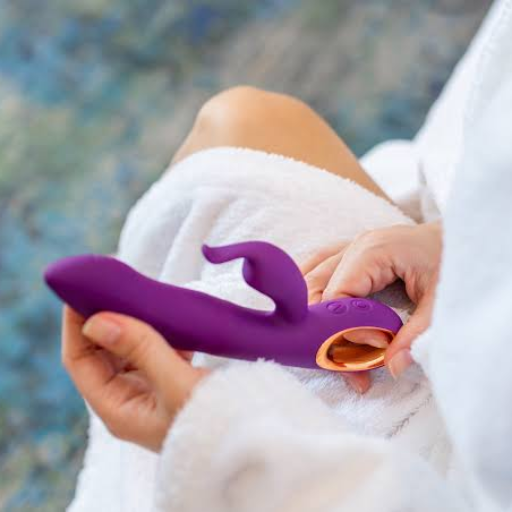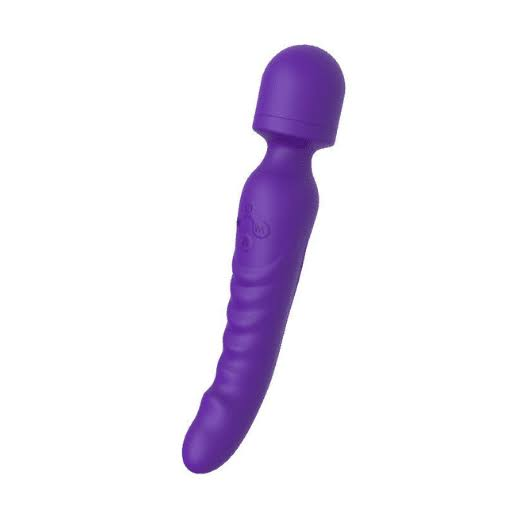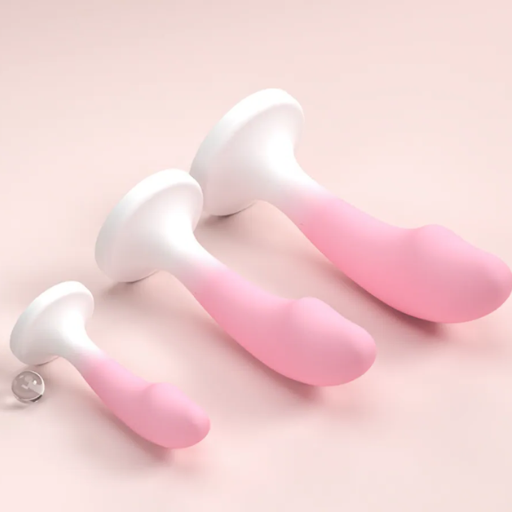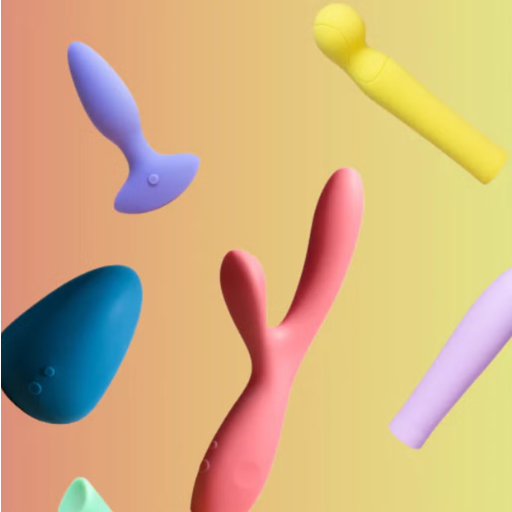
In terms of OEM and ODM manufacturing, it depends on the owner of the design. If one is using OEM, the client specifies the design, which the factory manufactures using their own design. ODM requires the factory to provide an existing design to be branded by the client. For adult toy companies, most of them need to begin with ODM first.
That sounds simple. It is not.
In 2023, a founder in Austin spent $15,000 on custom molds for a vibrator concept he was certain would sell. He chose OEM because he wanted full control. Nine months later, the product finally cleared certification. He had 500 units in a warehouse and zero confirmed customers. T
If you are researching OEM adult toy manufacturing or ODM adult toy solutions for your brand, you have probably seen the same generic comparison tables. OEM means control. ODM means speed. And what those charts don’t show you is how your decision will impact your certification expenses, IP security, and your capacity to change directions if the product fails.
This guide gives you the full picture. You will learn exactly what each model costs for adult toys, how certification responsibility shifts between you and the factory, the hidden risks of design theft, and a stage-based framework for choosing the right approach at every phase of your brand. We will start with definitions, move through real cost data, explore three brand stories, and end with a decision framework you can use today.
Key Takeaways
- OEM gives you full design control and IP ownership but costs 17,000−17,000−38,000 for a first product and takes 4-12 months.
- ODM lets you launch in 1-3 months for 3,700−3,700−6,900 using factory-owned designs with lower MOQs.
- Using OEM, you have to take the full responsibility for certifications (CE, FDA, REACH, FCC).
- Using ODM, the factory provides documentation already.
- Successful manufacturers follow this principle: ODM to confirm, MOOD to grow, OEM for main products.
What Is OEM and ODM?
What OEM and ODM Actually Mean
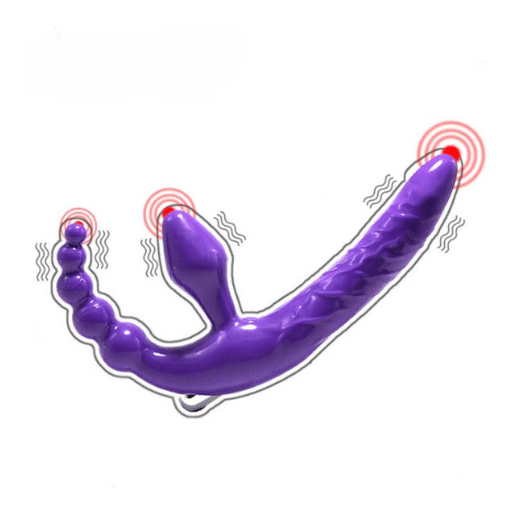
OEM: You Own Everything
OEM stands for Original Equipment Manufacturer. In this model, you provide complete design specifications. The factory manufactures to your exact requirements. You own the intellectual property, the molds, and the CAD files.
This is the model Apple uses with Foxconn. Apple designs the iPhone. Foxconn builds it. Apple owns every patent, every blueprint, every dimension. If Apple wants to switch factories, it takes its designs and moves.
For adult toys, OEM means you decide every curve, every motor specification, every material grade. You can specify medical-grade silicone with exact Shore hardness ratings. You can design proprietary vibration patterns. You can create shapes that do not exist in any factory catalog. You also pay for that privilege.
ODM: The Factory Owns the Design
ODM stands for Original Design Manufacturer. The factory has already designed, tooled, and tested a product. You choose from their catalog, add your branding, customize colors or packaging, and sell it under your label.
This is private label manufacturing. The factory owns the base design. They may sell variations of that same design to ten other brands. Your differentiation comes from branding, packaging, customer experience, and marketing rather than product uniqueness.
For emerging brands, ODM adult toy solutions offer the fastest path to market. You skip the design phase entirely. You avoid mold costs. You leverage the factory’s existing certification documentation. The trade-off is that your product is not truly unique.
The Hidden Third Option: Modified ODM
Most guides ignore Modified ODM, also called Joint Design Manufacturing or JDM. This is the smart middle ground that experienced brands increasingly prefer.
With Modified ODM, you start with a factory’s existing platform and customize it meaningfully. You might change the motor for a different vibration profile. You might add a proprietary silicone texture. You might redesign the handle for better ergonomics while keeping the internal mechanics unchanged.
You get more differentiation than pure ODM. You pay less than full OEM. And you share the design risk with a factory that already understands the base platform.
Side-by-Side Comparison: 12 Factors That Matter
| Factor | OEM | ODM | Modified ODM |
|---|---|---|---|
| Design Ownership | You own all IP | The factory owns the base IP | Shared/negotiated |
| Upfront Cost | 5,000−5,000−50,000+ | 500−500−5,000 | 2,000−2,000−15,000 |
| Tooling / Mold Cost | 250−250−5,000 | $0 | 500−500−2,000 |
| Time to Market | 4-12 months | 1-3 months | 2-6 months |
| MOQ (Adult Toys) | 500-2,000 units | 100-500 units | 300-1,000 units |
| Unit Cost at Scale | Lower | Higher | Medium |
| IP Protection | Strong | Weak | Moderate |
| Certification Burden | You manage everything | The factory often provides the docs | Shared |
| Customization Level | Unlimited | Limited to the catalog | Moderate |
| Differentiation | Maximum | Minimal | Strong |
| Risk if Product Fails | High (sunk costs) | Low | Medium |
| Best For | Unique concepts/scale | Startups / fast launch | Growth-stage brands |
The certification burden row deserves special attention. With OEM, you are the legal manufacturer in the eyes of regulators. You must manage CE marking for electronics, REACH compliance for materials, FCC certification for app-connected devices, and GPSR responsible person appointments in the EU.
With ODM, the factory has often already tested the base design. They may hold existing certification reports. You still need to verify compliance for your specific market, but your starting point is dramatically better.
The Certification Connection Nobody Talks About
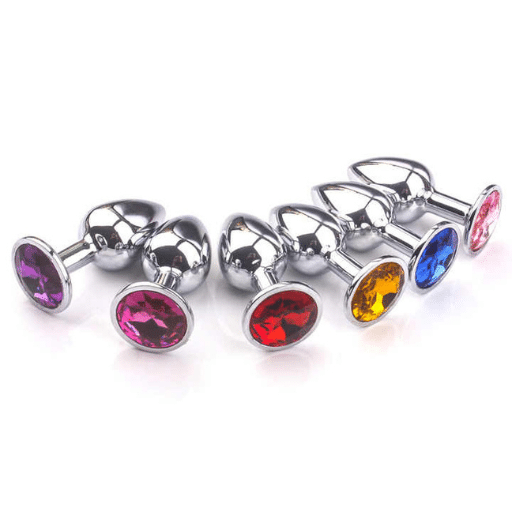
Every OEM vs ODM manufacturing guide covers cost and timeline. Almost none address who handles the paperwork that lets you sell legally.
With OEM, you are the responsible party. You must commission third-party testing. You must prepare technical documentation. You must appoint an EU responsible person under GPSR if you sell in Europe. For an electronic vibrator, certification costs alone can run 8,000to8,000to20,000 and add 2-4 months to your timeline.
With ODM, the factory has already invested in testing the base design. They often hold REACH reports, RoHS screenings, and material safety datasheets. If the product is electronic, they may already have CE marking under LVD and EMC directives. Your compliance cost drops to 500−500−2,000, mostly for verifying that the existing documentation covers your target markets.
This difference changes your total first-product investment by 7,500to7,500to18,000. It also changes your launch timeline by 2-4 months. For a startup testing its first product, that delay can mean missing a holiday sales window or burning through cash reserves.
| Certification | OEM Responsibility | ODM Responsibility |
|---|---|---|
| CE Marking (LVD/EMC/RED) | You manage all testing | Factory provides base docs |
| REACH / RoHS | You commission testing | Factory provides reports |
| FDA 21 CFR 177.2600 | You arrange material testing | Factory may have reports |
| FCC Part 15 | You handle US certification | Factory may have FCC ID |
| GPSR Responsible Person | You must appoint your own | Factory may already have one |
| ISO 3533:2021 | Your cost if pursuing | Factory may hold certification |
For a deeper dive into what each certification requires, see our complete guide to adult toy certifications.
Real Cost Breakdown for Adult Toys
Numbers without context are useless. Here is what each model actually costs for a typical mid-range vibrator in 2026.
OEM Budget Example: Custom Vibrator
Design and prototyping: 1,500−1,500−5,000. You pay engineers to create 3D models, refine ergonomics, and produce working prototypes.
Mold and tooling: 800−800−3,000. Simple silicone molds cost less. Complex shapes with internal motors cost more.
Certification: 8,000−8,000−20,000. Electronic toys need CE marking and FCC certification. All toys need REACH and material safety testing.
First production run: 6,000for500unitsatroughly6,000for500unitsatroughly12 per unit.
Packaging design: 500−500−2,000. Custom boxes, inserts, and branding.
Total first-product investment: 17,000−17,000−38,000.
ODM Budget Example: Rebranded Vibrator
Sample orders: 200−200−500. Test the factory’s existing design before committing.
Branding customization: 300−300−1,000. Logo printing, color changes, and minor packaging tweaks.
Certification verification: 500−500−2,000. Review existing factory documentation and fill gaps for your target markets.
First production run: 2,400for300unitsatroughly2,400for300unitsatroughly8 per unit.
Packaging: 300−300−1,000. Branded boxes and inserts.
Total first-product investment: 3,700−3,700−6,900.
Modified ODM Budget Example: Customized Platform Vibrator
Design modifications: 1,000−1,000−3,000. Custom motor, texture, or ergonomic changes.
Tooling for modifications: 500−500−1,500. New mold inserts or texture plates.
Certification: 2,000−2,000−5,000. Testing changes to the base design while leveraging existing reports.
First production run: 3,600for300unitsatroughly3,600for300unitsatroughly12 per unit.
Packaging: 500−500−1,500. Custom packaging to match your brand.
Total first-product investment: 7,600−7,600−14,600.
The gap between OEM and ODM is not just money. It is a risk. With ODM, you can validate demand for under 7,000. With OEM, you are betting 7,000. With OEM, you are betting 20,000 or more on an unproven design.
Sarah’s ODM Launch: Validating Before Betting Big
Sarah had $8,000 and a hunch. She believed women over forty were underserved in the wearable vibrator market. She had no engineering background. She had no existing audience. She had a survey of 200 potential customers and a brand name.
She chose ODM. In March 2024, she selected three factory catalog designs, ordered samples, and ran them past her survey group. One design scored 40% higher than the others. She placed a 300-unit order with custom colors and packaging.
Eight weeks later, she had product in her garage and a Shopify store live. She sold 80 units in her first month through Instagram and email marketing. By month six, she had reordered twice and built a 3,000-person email list.
Eighteen months after launch, Sarah took her best-selling design back to the factory. She added a proprietary texture, a custom vibration motor, and exclusive packaging. She transitioned to Modified ODM. Her total investment to reach that point was under 15,000.Herrevenuewas15,000.Herrevenuewas87,000.
Sarah did not start with OEM. She started with proof.
David’s OEM Gamble: Beautiful Design, Brutal Reality
David was a industrial designer with fifteen years of experience. He had sketched an ergonomic wand vibrator with a curved handle that he believed would revolutionize the category. It was genuinely innovative.
He chose OEM because he refused to compromise his vision. He spent 4,000onprototypingand4,000onprototypingand3,200 on molds. Then he discovered that his electronics supplier’s circuit board did not meet CE marking requirements under the new GPSR framework. He had to redesign the power system.
That redesign cost 2,800andaddedsixweeks.ThenhisREACHtestingrevealedthathisoriginalsiliconesupplier′sformulationcontainedaborderlinephthalatelevel.Heswitchedsuppliers.Another2,800andaddedsixweeks.ThenhisREACHtestingrevealedthathisoriginalsiliconesupplier′sformulationcontainedaborderlinephthalatelevel.Heswitchedsuppliers.Another1,500 and four weeks lost.
By the time his product cleared customs in Rotterdam, David had spent 22,000andninemonths.Hehad500unitsinawarehouseand22,000andninemonths.Hehad500unitsinawarehouseand3,000 left in his business account. His first-month sales were 47 units.
David’s product eventually succeeded. Reviews were outstanding. But he almost ran out of cash before finding his audience. His mistake was not choosing OEM. It was choosing OEM for his first product without validating demand first.
Priya’s Modified ODM Pivot: The Best of Both Worlds
Priya launched her brand in 2022 with pure ODM. She sold three catalog vibrators with custom colors and packaging. Revenue grew steadily. By 2024, she had a problem. Competitors were selling identical products at lower prices.
She needed differentiation. Full OEM would have cost $18,000 and taken eight months. She did not have the capital or the patience.
Instead, she chose Modified ODM. She worked with her factory to add three customizations to her best-selling design. A proprietary textured silicone surface. A stronger motor with a unique vibration pattern. And a magnetic charging system that no competitor offered.
The factory already owned the base shape and internal mechanics. Priya owned the modifications. The tooling for her changes cost 1,200.Certificationforthemodifieddesigncost1,200.Certificationforthemodifieddesigncost3,500. Total investment was $8,700. Timeline was four months.
Her relaunch generated 340% more revenue in the first quarter than her original ODM line. She achieved 80% of the differentiation of full OEM at 40% of the cost.
Today, Priya runs a hybrid portfolio. Her flagship product is Modified ODM. Her accessories are pure ODM. She is saving for full OEM on her next generation.
The Stage-Based Decision Framework
The right model depends on where your brand is today, not where you hope to be in five years.
Phase 1: Market Validation (0−0−10,000 Budget)
Choose ODM or private label. Your goal is not differentiation. It is proof.
You need to know whether customers will actually buy your product before you invest in custom tooling. You need to learn which features matter, which price points work, and which marketing channels convert.
Timeline: 4-8 weeks from sample to sale. Risk: Minimal. Your maximum loss is the cost of samples and a small production run.
For brands in this phase, low MOQ adult toy manufacturing is critical. Look for factories that support trial orders starting at 300 units.
Phase 2: Brand Building (10,000−10,000−50,000 Budget)
Choose Modified ODM. You have proven demand. Now you need to defend it.
Your best-selling designs need meaningful customization that competitors cannot copy easily. Custom textures, proprietary motors, unique colorways, or exclusive packaging all create differentiation without the full cost of OEM.
Timeline: 3-6 months. Risk: Moderate. You are investing in modifications, but you still leverage a proven base platform.
Phase 3: Scale and Defend ($50,000+ Budget)
Choose full OEM for your core products. Maintain ODM for accessories and complementary items.
At this stage, you have the capital, audience, and data to justify fully proprietary designs. You need IP ownership to protect market share. You need custom engineering to push performance boundaries.
Timeline: 6-12 months. Risk: High upfront, low long-term. Sunk costs are significant, but your proven revenue base absorbs them.
Quick Decision Tree
- Budget under $10,000? Choose ODM.
- Have a unique design that requires custom engineering? Choose OEM.
- Need to launch in under three months? Choose ODM.
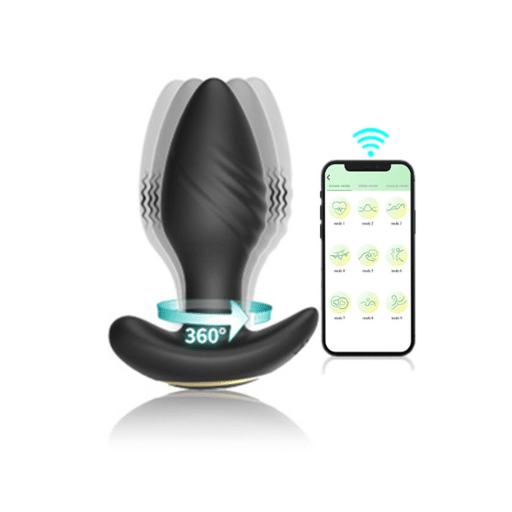
- Selling app-connected or electronic toys? OEM is usually necessary. ODM factories rarely support complex firmware customization.
- Testing your first product ever? Choose ODM.
- Relaunching a proven seller with strong sales data? Choose Modified ODM or OEM.
- Need to differentiate but cannot afford full OEM? Choose Modified ODM.
IP Protection: What Every Founder Misses
The most dangerous assumption in ODM is that your branded packaging protects you. It does not.
When you choose ODM, the factory legally owns the base design. They can sell that same design, or a variation of it, to your competitors. They can do this while you are still building your brand. They can do this after you have spent thousands on marketing.
This is not theoretical. It is standard practice. Chinese ODM factories routinely produce the same base product for multiple brands, changing only the logo and color.
What You Can Negotiate
Exclusivity agreements are your first line of defense. Request market exclusivity for your target regions. A factory may agree not to sell your specific configuration in North America or Western Europe.
NDAs protect any customizations you develop. If you modify an ODM design with proprietary features, document those changes and secure legal protection.
Design patents cover ornamental appearance. Utility patents cover functional innovations. Both are harder to enforce across borders than most founders realize, but they still deter casual copying.
How to ODM-Proof Your Brand
Product differentiation is only one defense. The strongest brands combine Modified ODM products with unbeatable customer experience, community building, and brand storytelling.
Your competitors can copy your vibrator shape. They cannot copy your relationship with your customers. They cannot copy your content strategy. They cannot copy the trust you build through transparency about body-safe materials and ethical manufacturing.
Negotiating MOQs Like a Pro
Minimum order quantities are not written in stone. They are starting points for negotiation.
The adult toy industry has seen massive downward pressure on MOQs. E-commerce brands need flexibility. Traditional 1,000-unit OEM minimums are increasingly outdated.
Tactics That Work
Offer a higher per-unit price in exchange for a lower MOQ. If the factory quotes 500 units at 8each,askfor300unitsat8each,askfor300unitsat10 each. The factory covers their setup cost. You reduce your inventory risk.
Combine SKUs to meet combined MOQ thresholds. If a factory requires 500 units per mold, order 250 units each of two designs that share tooling. You meet their threshold across your product line.
Use sample orders as a bridge. Many factories accept 50-unit sample runs at prototype pricing. If those sell, you have leverage to negotiate the full production MOQ.
Demonstrate long-term partnership potential. Chinese factories operate on thin margins. They value steady repeat business over one-time large orders. Show them your marketing plan and projected reorder schedule.
Red Flags
Factories that refuse to negotiate at all often have one of two problems. They are either oversized for your needs and do not value small brands, or they are hiding something about their production capacity. Neither is a good partner.
At Joyflick, our OEM and Modified ODM programs both start at 300 units. That is 60-70% lower than traditional adult toy OEM minimums. We believe emerging brands deserve the same manufacturing access as established ones.
Common Mistakes to Avoid
Choosing OEM for your first product without validation. David’s story is not unique. Custom tooling and certification delays destroy more first-time founders than product failures.
Assuming ODM means zero upfront cost. Samples, branding customization, packaging design, and certification verification still add up to 3,000−3,000−7,000. Budget for it.
Ignoring certification timelines in your launch plan. A factory can produce ODM goods in four weeks. But REACH testing takes two weeks. Packaging design takes two weeks. Shipping takes three weeks. Your “four-week” launch is actually ten weeks.
Not securing mold ownership in OEM contracts. Some factories retain mold ownership even when you paid for tooling. Your contract must explicitly state that molds are your property and must be returned or transferred if you switch suppliers.
Failing to plan the ODM-to-OEM transition path. If your ODM product succeeds, you will eventually want more control. Negotiate transition terms upfront. Know which modifications you can make under your current agreement. Know when you will outgrow the factory’s base platform.
How Joyflick Supports Every Stage
Joyflick is structured specifically for brands that want to grow from ODM to OEM without switching manufacturers.
Our ODM catalog includes 300+ proven designs across vibrators, dildos, anal toys, BDSM gear, and couple’s products. All catalog items carry existing certification documentation for major markets. MOQs start at 300 units.
Our Modified ODM program lets you customize motors, textures, colors, materials, and packaging on proven platforms. You get meaningful differentiation without full OEM investment. Typical timelines are 2-4 months.
Our OEM program supports full custom design from sketch to shelf. We provide in-house engineering, 3D prototyping, and mold production. With 50+ patents and ISO-certified production, we handle complex electronics, app connectivity, and ergonomic innovation. And our OEM MOQ starts at 300 units, not 1,000.
Compliance support is built into every engagement. We manage CE marking, FCC certification, REACH and RoHS documentation, and GPSR responsible person services. You focus on your brand. We handle the regulatory complexity.
For brands entering custom sex toy design or exploring custom packaging for adult toys, our team guides you from concept through production.
Request a Manufacturing Consultation — Tell us your product idea, budget, and timeline. We will recommend the right model and provide accurate cost estimates.
Conclusion
OEM vs ODM manufacturing is not a final choice. It is a stage in your brand’s evolution.
The founders who succeed treat manufacturing models as tools, not identities. They start with ODM to validate demand. They graduate to Modified ODM to build defensible differentiation. They invest in full OEM when the data justifies it.
Sarah proved her market for 6,900.Davidnearlyfailedwith6,900.Davidnearlyfailedwith22,000. Priya built a hybrid portfolio that scales. All three made the right choice for their stage. The question is not which model is better. The question is which model is better for you right now.
Your product idea deserves the right manufacturing strategy. Start your consultation with Joyflick today and build a roadmap that matches your budget, timeline, and ambition.