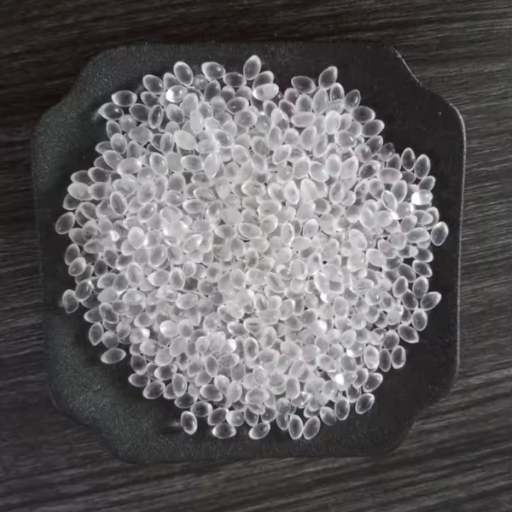
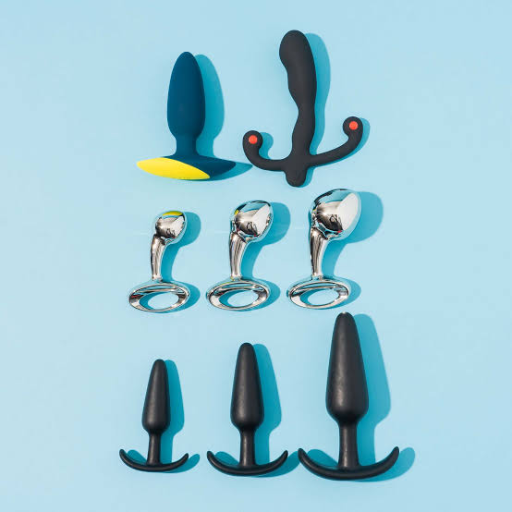
Platinum-cure silicone is the best material for anal toys in most cases. Borosilicate glass and 316L stainless steel are equally body-safe and better for specific uses: glass for temperature play, steel for a firmer, heavier feel.
What separates those three isn’t safety. It’s how long the toy stays in.
Most guides on this topic answer “which material is safest” and stop there. That’s a useful answer, and it genuinely matters. But it isn’t the question that decides whether the product you buy, or the one you specify, works.
Dana found that out with a plug she bought last spring. The assistant told her silicone was the safe choice, which was true. Nobody told her that the soft grade would compress under pressure and feel smaller than its listed size.
Nobody told her, either, that a plug worn for two hours while sitting gets judged on its base long before its polymer. She replaced it within a month. Not because it was unsafe, but because it was uncomfortable in a way no material label predicted.
This guide answers the safest material for anal toys question by use case rather than reputation. It explains why anal use changes the calculus, then covers the part that matters if you’re building a product rather than buying one.
If you want the material science in full, our guide to body-safe materials in adult toys covers chemistry, porosity and cost per kilogram. This page is about the decision.
Key Takeaways
- Silicone, borosilicate glass and 316L stainless steel all pass the body-safety test for anal use. TPE, jelly and PVC don’t reliably do so.
- Past about 30 minutes of wear, base construction and total weight matter more than the polymer.
- Soft silicone is the most comfortable choice for long wear and the least forgiving if the base is under-specified.
- Steel is the easiest material to sterilise and the heaviest to wear. Glass is the slickest and the most rigid.
- Every anal toy needs a base that physically can’t pass the sphincter. No material choice overrides that rule.
Specifying an anal product line rather than buying one plug? Our materials team will review the spec with you before you commit to tooling.
Best Material for Anal Toys: The Short Answer
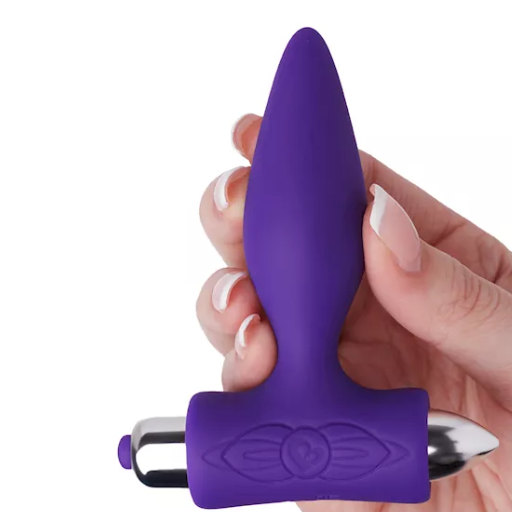
Here’s the comparison in one place. Read it as a set of trade-offs, not a league table.
| Material | Porous? | Boil to sterilise? | Lube compatible | Heat and cold | Best for | Verdict |
|---|---|---|---|---|---|---|
| Platinum-cure silicone | No | Yes, if solid | Water-based; silicone lube risks damage | Poor conductor | Most uses, long wear, training sets | Safe default |
| Borosilicate glass | No | Yes | All types | Excellent | Temperature play, easiest cleaning | Safe, rigid |
| 316L stainless steel | No | Yes | All types | Excellent | Pressure, short sessions, temperature | Safe, heavy |
| TPE / TPR | Usually yes | No | Water-based only | Poor conductor | Not recommended for internal use | Conditional |
| Jelly / soft PVC | Yes | No | Subject to plasticiser migration | Poor conductor | Not recommended for internal use | Avoid |
Two things about that table deserve stating plainly.
First, “safe” and “best” are different words. All three top rows are safe for anal use when the product is well made, and none of them is best for every situation.
If you want the safest material for anal toys and nothing else, it is platinum-cure silicone in a firm base. Body safe anal toys are, in practice, the ones where both the material and the base construction can be documented.
Second, the bottom two rows aren’t equivalent, and neither is automatically dangerous. TPE is a family of blends, not a single substance. Whether a given TPE suits anal use depends on its formulation and on whether the supplier will document it.
Jelly isn’t a material name at all. It’s a marketing word for whatever soft plastic a factory happened to use.
For the full teardown of how those three compare, see our guide to silicone vs TPE vs jelly.
If you’re specifying an anal product line, the material decision is only half the job. The documentation that proves it is the other half, and it starts with a certificate of analysis you can trace to a batch.
Why the Best Material for Anal Toys Depends on Wear Time
Four things change for anal use, and only one of them is about porosity. Here they are, in the order they affect a purchase.
- There’s no self-lubrication. The anus doesn’t produce lubricant, so every surface interaction depends on the lube you apply and how well the material holds it. Surface behaviour becomes a usability property, not a footnote. Silicone is hydrophobic and holds a water-based film differently from polished glass or steel, which are slick almost immediately.
- Retention is a documented clinical problem. A Swedish study of 85 patients with retained rectal foreign bodies found that sex toys accounted for 41% of cases, that 74% of patients were admitted, and that the laparotomy rate was 17% for toys against 4% for other objects (Dahlberg et al., 2019). US emergency department data show the same pattern at scale. Those numbers exist because some objects have no base that can’t pass the sphincter. The rule that follows is absolute: a base wide enough that it physically can’t be drawn inside, plus a retrieval feature on beads and multi-segment products.
- Wear time drives the decision more than the polymer. Ten minutes, forty-five minutes, and three hours produce three different best answers. Few guides acknowledge this.
- The tissue is delicate and the exposure is prolonged. That’s why material purity and documentation matter more here than in most categories, and why a certificate of analysis beats a “body safe” badge on a box.
Marcus learned the third point the direct way. He bought a steel plug after reading that metal was the premium option, which it can be. Then he wore it for a three-hour evening.
The weight that felt reassuring on insertion became the reason he took it out early. Nothing about the material was wrong. The use case was.
Which Anal Toy Material Fits Which Use
Here’s the comparison most guides skip: not which material is safest, but which one is right for a specific session. Read the rows as answers to “what am I doing with this,” not as a ranking.
| Use case | Best choice | Why |
|---|---|---|
| First toy, 10 to 30 minutes | Soft silicone, Shore 00-30 to 00-50 | Forgiving, compressible, easy to size up |
| Temperature play | Borosilicate glass or 316L steel | Holds heat and cold; silicone doesn’t |
| Pressure, short session | 316L steel | Mass and rigidity transmit pressure directly |
| One to three hours, sitting or walking | Silicone, with a base chosen for the position | Steel’s weight becomes the limiting factor |
| Vibrating product | Silicone body over a rigid housing | The material question becomes a housing question |
| Anal beads | Silicone, with a retrieval cord or ring | Takes pressure while remaining retrievable |
Platinum-Cure Silicone: The Default
Silicone wins most cases for reasons that have little to do with marketing. It’s soft enough to insert comfortably, firm enough to hold a shape, warm to the touch, and available across a wide hardness range. It takes pigment, it can be dual-density, and it doesn’t need warming before use.
The catch is that “silicone” on a listing covers a wide range. Not all silicone anal toys are platinum-cure, and the cure system is what determines how the surface behaves over years of use.
The specification detail that matters most isn’t the silicone. It’s the hardness split. A plug body in Shore 00-30 to 00-50 is comfortable. A base in the same grade is a design problem, because a soft base folds, and a folded base is harder to retrieve.
The fix is either a firmer grade at the base or a rigid insert. It’s the single most common thing we change when a brand sends us a prototype to review. For how the durometer scale maps to feel, see our guide to choosing a Shore hardness; for base geometry and tooling, see custom silicone butt plug design.
There’s one real downside. Silicone lube can soften and permanently damage a silicone surface, so water-based is the default. The chemistry is covered in our piece on silicone lube compatibility.
One caveat for anyone specifying a product: soft silicone compresses under sphincter pressure. A 35 mm plug at Shore 00-30 can feel more like 30 mm inside. That isn’t a defect, but it means quoted dimensions don’t fully describe the experience, and buyers notice.
Borosilicate Glass: The Temperature and Hygiene Option
Glass behaves most like a laboratory instrument, and that’s both its strength and its limit. It’s non-porous, it sterilises completely, it works with every lubricant type, and it holds temperature far longer than silicone. It’s also the slickest surface of the three, which matters for a body part that produces no lubricant of its own.
The grade matters absolutely, and it’s where most glass anal toys fail. Borosilicate only. Soda-lime glass and unlabelled “glass” don’t have the thermal shock resistance that makes temperature play predictable. If the listing doesn’t say borosilicate, treat it as unknown.
The trade-off is rigidity. Glass doesn’t give at the sphincter, which makes it a poor first choice for someone still learning what comfortable insertion feels like, and a good choice for anyone who already knows. Never describe glass as unbreakable. It’s strong, and it’s still glass.
One advantage buyers rarely consider: a glass plug’s base is structurally simple and easy to inspect. Chips and stress marks are visible, which isn’t true of a moulded base in any other material.
316L Stainless Steel: The Weight Question
Steel is usually described as a straight upgrade, and it isn’t. It’s the right material for a specific job.
Start with the grade, because it’s the only part of a metal anal toy you can’t inspect by eye. 316 or 316L only. A large share of the cheap “metal” plugs on marketplaces are chrome-plated zinc alloy or brass, and plating failure on an insertable is a safety event rather than a cosmetic one: flaking, pitting and exposed base metal against mucosal tissue. It’s the most common material substitution in the category, and the price is usually the tell.
The honest specification is weight. A steel plug of similar dimensions runs roughly two to four times the mass of a silicone one. That mass is what makes steel good for pressure and short sessions, and what makes it a comfort ceiling when you’re sitting for an hour. Weight is the most frequent complaint in long-wear discussions, and almost no guide on this topic states it.
Surface finish matters too. A mirror polish above roughly 400 grit resists bacterial adhesion better than a brushed surface, and passivation is what keeps the surface from corroding over years of use.
Where TPE, Jelly and PVC Stand as Anal Toy Materials
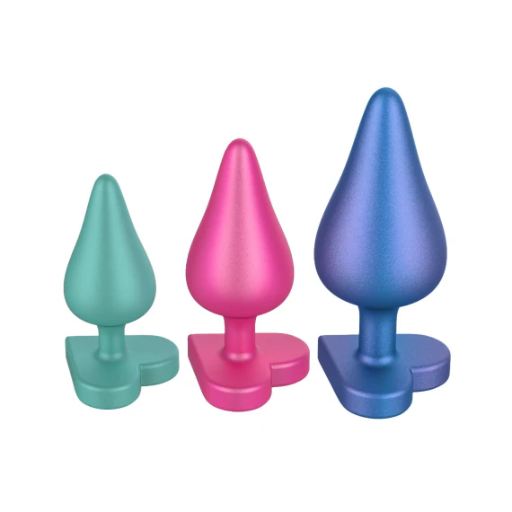
TPE, jelly and soft PVC are porous or unverifiable, which is the practical reason they’re not recommended for internal use. TPE is a family of blends; jelly is usually plasticised PVC sold under a feel-based name; PVC is a known plasticiser carrier. We won’t repeat the full teardown here, because our silicone vs TPE vs jelly comparison already does it properly.
A 2023 peer-reviewed study tested four sex toys by standardised abrasion and gas chromatography. It found phthalates “known to be endocrine disruptors were present in all tested sex toys at levels exceeding hazard warnings” (Sipe et al., 2023). Two of the four exceeded the US and EU 0.1% phthalate limit for children’s toys. One of those was a PVC anal beads product whose packaging said: “phthalate free.”
The authors are clear about the limits of their own work. Four products is a small, non-representative sample, and an abrasion test doesn’t replicate real use. That caveat matters, and so does the finding: the risk is concentrated in undocumented formulations, not in a material name.
TPE deserves a fair sentence. A TPE compound with a batch-linked certificate of analysis is a different proposition from an unlabelled soft plastic, and the difference is documentation rather than chemistry. That’s also why we’d rather tell you to ask for the paperwork than tell you a material is toxic.
Anal Toy Material by Product Type
Once the material families are settled, product type narrows the choice quickly.
- Butt plugs. Silicone by default, and the best material for butt plugs in most sessions. Steel for short-session pressure. Glass for temperature play. Base construction matters more than the body material.
- Anal beads. Silicone, with a retrieval cord or ring. A PVC beads product was the item that failed phthalate testing worst in the study above.
- Prostate massagers. Firmer silicone in the 10A to 20A range, or a hybrid with a firm arm. The angle does more work than the material.
- Anal dildos. Silicone, firm enough to insert without folding. A dildo without a flared base isn’t an anal product.
- Training kits. Soft silicone, graduated. Kits outsell single plugs for new brands because they solve a sizing problem the buyer can’t solve alone.
- Vibrating products. The decision moves to the housing, because the material question becomes an overmoulding question rather than a polymer question.
For brands, the useful framing is that the material follows the geometry and the wear window. Most product briefs specify the first and forget the second.
Certifications and What “Medical Grade” Proves
The standard that covers this product category is ISO 3533:2021, the first international standard for sex toy design and safety. It has provisions written specifically for anal products: a clause on anal use products, a “prevention of retention” requirement under mechanical hazards, a surface temperature limit, and requirements for smooth surfaces free of burrs and sharp edges (ISO 3533:2021; the SGS summary sets out the structure). If a supplier can’t tell you how they address retention in design, that’s your answer about their engineering process.
On the material side, three certifications come up constantly and they do different jobs. ISO 10993 covers biological evaluation of medical materials. USP Class VI covers biocompatibility of plastics for medical use. FDA 21 CFR 177.2600 covers rubber articles intended for repeated food contact.
None of them certifies a finished toy.
Which brings us to the phrase that causes the most confusion here. “Medical-grade silicone” describes the raw material grade and the biocompatibility testing behind it. It isn’t an FDA device approval, and adult toys are typically sold as novelties in the United States. A supplier who implies otherwise is either misinformed or overstating. Our guide to silicone sex toy certifications decodes the rest, including CE, RoHS and REACH for market access.
How to Check a Material Claim
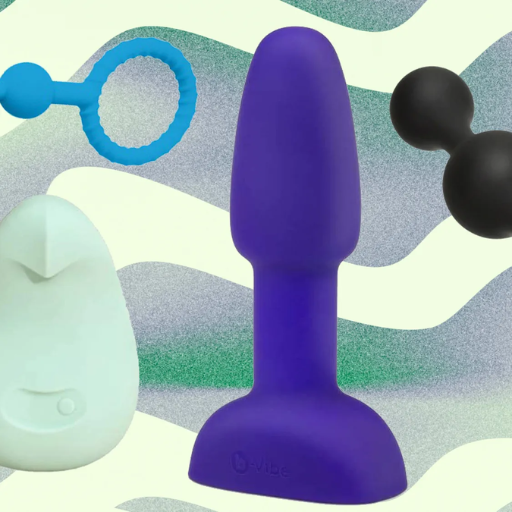
The gap between a claim and a document is where most of the bad anal toy material on the market survives.
If you’re buying, five checks filter most of the market, and none of them require a lab.
- Look for a material name on the packaging, not a feeling word. “Platinum-cure silicone” is a claim that can be tested. “Premium jelly” isn’t.
- Look for a firmness claim. A supplier who knows their product can tell you the shore grade.
- Compare the base to the widest insertable point. Buyer guides commonly describe a base roughly an inch wider, or a retrieval ring or cord. The principle matters more than the number: nothing should be able to pass the sphincter.
- Smell it. A strong plastic odour on a new insertable is a reason to stop.
- Ask the seller, in writing, what grade of silicone it is. The answer, or the silence, is informative.
If you’re a brand, five documents do the same job at a professional standard. Ask for a batch-linked certificate of analysis, the raw-material safety data sheet, and a migration or extractables test matched to your target market. Then ask for an ISO 3533 design risk review, plus either a factory audit or a third-party inspection report. Our body-safe materials guide walks through how those fit into a supplier conversation, and our verification playbook covers the audit in detail.
Building an anal product line and want the material spec reviewed before tooling? Request a quote or a sampling consultation and we’ll tell you what we’d change.
FAQ
Is silicone or metal better for anal toys?
Neither is better in general. Silicone is the better metal alternative for comfort and longer wear, because it’s soft and light. Steel is better for short sessions where you want pressure and weight, and for temperature play. If you’re choosing one, choose silicone.
What is the most comfortable material for long wear?
Soft platinum-cure silicone, provided the base is firm enough not to fold. Comfort over an hour or more is mostly a base-shape and weight question. Steel’s mass works against it there, even though its surface is easier to keep clean.
This is also the choice where material selection and base design are hardest to separate. A comfortable butt plug material on a badly shaped base will still be uncomfortable.
Can I leave a butt plug in overnight?
No manufacturer should endorse overnight wear, and we won’t. Published guidance generally puts comfortable wear at roughly 30 minutes to a few hours, with re-lubrication for longer sessions. Longer wear is a conversation to have with a clinician, not a feature to shop for.
Is TPE safe for anal use?
It depends on the formulation, and that’s the honest answer. TPE is a family of blends, some documented and some not. Because it’s generally porous, it can’t be sterilised the way silicone can, which is a strong argument against internal use regardless of grade.
Ask for the full test file. Without one, there’s no basis for calling it body safe for anal use.
Do butt plugs help hemorrhoids?
There’s no evidence that they treat hemorrhoids, and we wouldn’t present any toy as therapeutic. If you have a hemorrhoid, a fissure, a prolapse or recent anal surgery, speak to a clinician before anal play rather than choosing a product around it.
The Material Decision Is a Specification Decision
The best material for anal toys comes down to five choices, and only one of them is about the polymer.
Choose the family first: silicone as the default, glass for temperature, steel for short-session pressure, and not TPE, jelly or PVC for anything internal. Then choose the wear window, because it decides the base and the weight.
Then specify the base so it can’t pass the sphincter, whatever the material. Then choose the lubricant to match the surface. Then ask for the documentation that proves the first four.
Alicia, who runs a small brand out of the Netherlands, put it well when she sent us her prototype. She’d specified a single Shore 00-40 pour for the whole plug because it was simpler and cheaper. The change we made was to split the hardness between body and base.
Same mould, same tooling cost, and a product that came back with a fraction of the complaints her first run generated. That’s the level at which material choice actually pays.
For buyers, all three safe materials will serve you well, and the differences you’ll actually feel are weight, slickness, and give. So the best anal toy, in your case, is the one whose weight and surface suit the session you have in mind. For brands, the differences that matter are the ones you write into a purchase order.
If you’re at that stage, and the question has shifted from which material to what goes in the spec, talk to our team before the first tool is cut. Trial orders start from 300 units, and material sampling is the cheapest part of the process to get right.