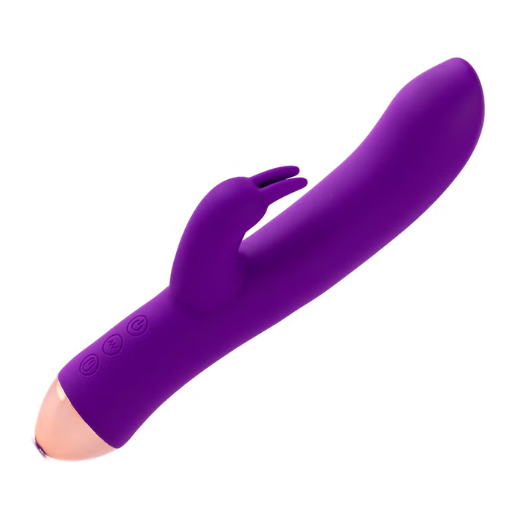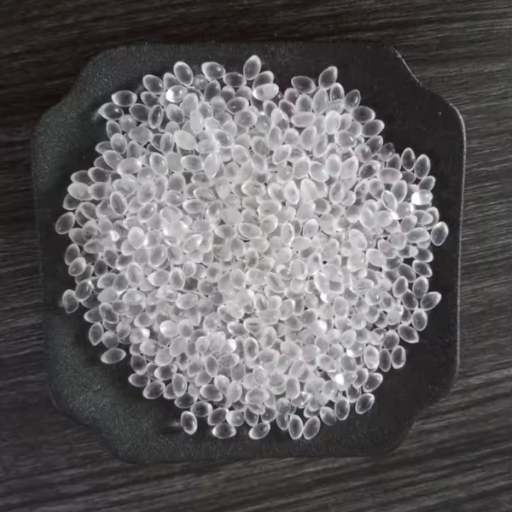

Cheap sex toys are safe when the material, the manufacturing controls and the electrical parts are documented, and risky when they are not. Price is a weak proxy for all three.
That answer sounds like a dodge, so here is the evidence behind it. In 2025, Stiftung Warentest, the German consumer testing organisation, sent 19 sex toys to a lab and screened them for roughly 200 substances. Only 7 of the 19 were judged usable without concerns. A drugstore-brand vibrator took the best overall grade, while products from well-known brands were marked down for pollutants.
Price didn’t sort the good from the bad. Documentation might have.
This guide separates the two questions that get blurred together: whether a toy is cheap, and whether it is safe. It covers what actually gets cut to reach a low price, the materials worth paying for, the chemicals that show up in testing, and seven checks you can run before checkout. If you are building a product rather than buying one, the last section translates the same logic into a specification.
Key Takeaways
- Cheap is a price, not a material. A low-cost toy can be body-safe, and an expensive one can fail a chemical screen.
- The strongest predictors of risk are porous materials, undisclosed formulations, missing test documents and uncertified electronics.
- In a 2025 lab test of 19 toys, only 7 were usable without concerns; a drugstore-brand model scored highest.
- Platinum-cure silicone, borosilicate glass and 316L stainless steel are the low-risk defaults. Jelly and soft PVC are the categories to avoid for internal use.
- Ask for a batch-linked certificate of analysis. If a seller can’t produce one, the price isn’t the problem.
Want the material science in full? Our guide to body-safe materials in adult toys covers chemistry, porosity and cost per kilogram.
Are Cheap Sex Toys Safe? The Short Answer

Cheap sex toys are safe when three conditions hold: the material is non-porous or properly documented, the product has passed relevant migration and electrical tests, and the seller can trace it to a batch. They are risky when any of those is missing, which is more common at the low end but not exclusive to it.
| Lower-risk signals | Higher-risk signals |
|---|---|
| Material named precisely, such as platinum-cure silicone or 316L steel | Vague labels such as “silicone blend”, “jelly”, “rubber” or “body-safe gel” |
| Batch-linked certificate of analysis available | No test documents, or a generic certificate with no product name |
| No strong odour; smooth, consistent surface | Solvent or vinyl smell; tacky surface; visible seams or bubbles |
| Recognised electrical markings and a protected charging circuit | Unmarked charger, overheating during charge, no IP rating |
| Sold by an authorised retailer with a warranty | Marketplace listing with no identifiable seller or lot code |
| Price consistent with the stated material | “Silicone” priced below comparable TPE products |
The rest of this article explains why those signals matter, and where each one can mislead you.
Why Cheap Sex Toys Are Cheap: Three Costs That Get Cut
A sex toy’s landed cost comes from five buckets: material, tooling, electronics, labour and testing. Tooling and labour are relatively fixed. When a buyer pushes the price down, the cuts usually land in the other three.
Material substitution
The same mould can be filled with different compounds. Platinum-cure silicone costs more per kilogram than a styrenic TPE, which costs more than a heavily oil-extended TPE or a soft PVC. A factory can hit a target price by changing the compound without changing the shape, the packaging or the product name.
This is why “silicone” on a listing is not a specification. Silicone is a polymer family; TPE is a family of blends; jelly is not a material name at all. The practical differences are porosity, heat resistance, how the surface ages and what can migrate out of it.
Priya, a founder preparing her first line, learned this while comparing quotes. One supplier offered a soft-feel dildo at 2.90landed.Anotherquoted2.90landed.Anotherquoted7.10 for a comparable shape.
The cheap quote listed “TPE-grade material” and no certificate. The higher quote specified the base polymer, the process oil, a migration test and a batch code. She chose the documented option. Not because the price was higher, but because the cheap quote could not tell her what was in the product.
Testing and documentation
Testing is invisible on a shelf, so it is easy to remove. A basic material safety package can include a safety data sheet, a certificate of analysis for the compound, migration or extraction testing, odour and volatile organic compound screening, and, where claims are made, biocompatibility testing.
Each test adds cost and lead time. A supplier competing on price can skip all of it and still produce a toy that looks identical. The absence of a document is not proof of harm, but it removes the only evidence a buyer or brand has.
Electronics, batteries and chargers
Vibrators add a second product inside the product. Cells, protection circuits, charging contacts, motors and firmware all carry safety and compliance obligations. At the low end, the common shortcuts are uncertified cells, missing overcharge protection, poorly sealed charging ports and chargers that were never tested for the destination market.
Tom bought a $12 bullet vibrator for a trip. It worked fine for a month. Then the charging port grew hot enough to discolour the plastic.
He stopped using it, but he had no way to tell whether the problem was the cell, the port or the charger. Nothing on the packaging identified the manufacturer or the batch.
If you are specifying a product line, the material decision is only half the job. Our team can review your spec and test plan before you commit to tooling.
What “Body-Safe” Actually Means, and What It Does Not
“Body-safe” has no single legal definition for finished sex toys. It’s a marketing phrase, and it can be applied to almost anything. When someone asks whether cheap sex toys are safe, the label is the first thing that fails to answer.
In the United States, the Food and Drug Administration regulates genital devices that make medical claims, such as therapeutic devices. It doesn’t approve sex toys sold purely for pleasure. Many products carry a “for novelty use only” line, which signals that the item is not being marketed as a medical device. That label says nothing about the material.
The Consumer Product Safety Commission has jurisdiction over consumer products, but it has not imposed sex-toy-specific material standards. The 0.1% phthalate limit that applies to children’s toys doesn’t automatically cover adult products, a gap documented by Public Health Post.
Europe has a similar gap. REACH restricts certain phthalates in toys and childcare articles, not in sex toys as a category. RoHS covers electrical and electronic equipment, so a vibrator’s electronics may fall within it, but RoHS is not a skin-contact safety certificate.
The first global attempt to close the gap is ISO 3533:2021, “Sex toys: Design and safety requirements for products in direct contact with genitalia, the anus, or both.” It covers risk management, design, materials, cleaning and user information. It’s voluntary. A manufacturer can follow it, but no regulator requires the logo on the box. A newer ASTM work item, WK88190, is attempting to define a specification for adult sexual products, which shows how recent this work is.
A CE or UKCA mark is also not a body-safety certificate. For many product categories, it is a manufacturer’s self-declaration that applicable directives have been met. It can tell you something about electrical safety or restricted substances in the electronics. It doesn’t tell you that the skin-contact material is non-porous or that the formulation has been tested.
Which Cheap Materials Are Actually Lower Risk?

Material is the single most useful thing to check, because it narrows the risk before you look at anything else. For body safe sex toys, the label should name the material rather than describe a feeling.
| Material | Porous? | Can it be boiled? | Lube compatibility | Best use | Verdict |
|---|---|---|---|---|---|
| Platinum-cure silicone | No | Yes, if the toy has no motor | Water-based; silicone lube can damage the surface | Insertables, long-term use, shared toys with cleaning | Safe default |
| Borosilicate glass | No | Yes | Any lubricant | Temperature play, easy cleaning | Safe, rigid |
| 316L stainless steel | No | Yes | Any lubricant | Pressure, temperature, long wear | Safe, heavy |
| ABS plastic | No | No | Water-based | Handles, external bodies, hard shells | Safe for external use |
| TPE / TPR | Usually yes | No | Water-based only | Soft-feel external or short-life products | Conditional |
| Jelly / soft PVC | Yes | No | Plasticiser migration risk | Not recommended for internal use | Avoid |
A few nuances matter more than the table.
Silicone is not a single grade. Platinum-cure silicone is the version usually recommended for body contact. “Silicone blend” may contain other polymers, and a soft silicone can still trap particles if the surface is poorly finished. Ask for the cure system, not just the word silicone. Our guide to silicone vs TPE vs jelly breaks down the differences.
TPE is conditional, not automatically unsafe. TPE is a family of blends, and a well-documented TPE can be appropriate for external use or for products with a short replacement cycle. The problem is the undocumented version, where the process oil, filler or pigment is unknown. If you want the full material breakdown, read ” Are TPE sex toys safe.
Jelly is a marketing word. It usually means a very soft plasticised compound, often PVC. Soft PVC can contain plasticisers that migrate. For internal use, it is the category to avoid, especially at a very low price.
Glass and steel have their own checks. Glass should be borosilicate and free of chips or internal cracks. Steel should be a named grade such as 316L; people with nickel sensitivity should be cautious with any metal toy, even one described as surgical steel.
Phthalates, Nonylphenol and the Chemicals That Show Up
Chemical risk is real, but it is usually discussed in extremes. The phrase toxic sex toys is imprecise; the concern behind it is not. The evidence is more specific.
A 2023 peer-reviewed study by Sipe and colleagues tested four sex toys, each purchased in triplicate, and identified the materials using infrared spectroscopy. The set included a dual vibrator, anal beads, an anal toy and an external vibrator. All four contained phthalates, including DEHP, BBP, DBP and DnOP.
In two products, DnOP exceeded the 0.1% limit that the CPSC applies to children’s toys. All four shed micro- and nanoplastic particles under abrasion (Sipe et al., 2023).
The study has limits. Four products are not a market survey. The abrasion protocol was not designed to simulate real use. It doesn’t prove that every cheap toy is contaminated.
What it does show is that phthalates in sex toys are not a theoretical worry. They can appear in products sold for intimate contact, and the children’s-toy limit does not protect adult buyers.
The 2025 Stiftung Warentest results point in the same direction. Of 19 toys, only 7 were usable without concerns. Two were heavily contaminated with nonylphenol, a hormonally active substance; one released too much nickel from a charging contact. Testers also found a glued-on decorative stone on an anal plug and an oversized dildo marketed for anal use.
Neither study supports the claim that cheap toys cause cancer. What they support is narrower and more useful: some products contain substances that should not be in intimate contact, the current rules do not screen them out, and price does not tell you which ones.
That is the gap a certificate of analysis is meant to close. A batch-linked COA tells you what the compound is and which tests it passed. A safety data sheet tells you the hazards of the material as supplied. Neither is a guarantee, but both are evidence.
Nadia bought a $16 dildo described as “premium silicone.” It smelled like a shower curtain when she opened the box. Within six weeks the surface had turned tacky, and the colour had begun to migrate onto the storage pouch.
She replaced it with a platinum-cure silicone toy that cost three times as much and came with a batch code. The second toy was not safer because it was expensive. It was safer because the seller could tell her what it was.
Are Cheap Sex Toys Safe? Seven Checks Before You Buy
You don’t need a lab to filter out most of the risk. These checks take about five minutes.
- Read the material line, not the badge. Look for a named material: platinum-cure silicone, borosilicate glass, 316L stainless steel, ABS. Treat “silicone blend”, “jelly”, “rubber”, “cyberskin” and “body-safe gel” as unknown until proven otherwise.
- Smell it. A strong solvent, vinyl or perfume smell is a warning sign. Odourless does not prove safety, but a chemical smell is a reason to put it down.
- Inspect the surface and seams. Visible seams, bubbles, tackiness, colour bleeding or a sticky film suggest poor process control. On glass, check for chips. On metal, check for plating defects.
- Ask for the certificate of analysis. A useful COA names the product, the lot or batch, the compound and the tests performed. A generic certificate with no batch link is close to useless. If the seller can’t produce one, assume the material claim is unverified.
- Look at the seller, not just the listing. Authorised retailers can usually provide a lot code, warranty and return path. Marketplace listings with no identifiable manufacturer are harder to trace and harder to hold accountable.
- Check the electrical markings. A mains-connected or rechargeable product should have a visible input rating, a recognised safety mark where applicable and a charging circuit designed for the cell. A charger that heats up, a port that discolours or a product with no IP rating should be retired.
- Sanity-check the price against the material. If a “silicone” toy of the same size costs less than a comparable TPE product, the material claim deserves scrutiny. This is a prompt to ask questions, not proof of fraud.
If a seller passes all seven, you still have a cheap toy. You also have a traceable one.
Are Cheap Sex Toys Safe? What to Do If You Own One
A low price isn’t a reason to throw away a toy that works. It’s a reason to change how you use and inspect it.
- Use a condom on porous toys. A condom creates a barrier and makes sharing safer, but it does not sterilise the material underneath. Change it between partners and after use.
- Clean before and after. Warm water and mild soap are enough for most toys. Non-porous, motor-free silicone, glass and steel can be boiled or wiped with a 10% bleach solution and rinsed thoroughly. Do not boil motorised products. Our guide to how to clean TPE sex toys covers porous materials in more detail.
- Dry completely. Moisture trapped in pores or seams supports bacterial and mould growth. Air-dry in a well-ventilated space before storage.
- Store separately. TPE and soft PVC can react with other plastics and deform. Keep them in a breathable pouch, not sealed in a warm bag.
- Replace at the first sign of failure. Tackiness, a persistent smell, cracks, tears, discoloration or a surface that will not come clean are all reasons to retire the toy. Our guide to how long sex toys last gives realistic intervals by material.
- Use the right lubricant. Water-based lube is the safe default for silicone and TPE. Silicone lube can degrade silicone and TPE surfaces; reserve it for glass and steel.
- Stop if something changes. Irritation, burning, unusual discharge or pain after use is a reason to stop and speak to a clinician. This article is not medical advice.
For Brands: How to Build a Low-Cost Toy Without Cutting Safety

The same logic applies on the manufacturing side, with one difference: a brand cannot inspect a finished toy the way a consumer can. It has to specify and verify the inputs.
Specify the compound, not the category. A purchase order that says “TPE” or “silicone” leaves the important decisions to the factory. Name the base polymer, the process oil or plasticiser system, the filler, the colorant and the fragrance. Set limits for migration, odour and volatile organic compounds.
Require batch-linked documents. Ask for a COA per lot, a safety data sheet and migration or extraction reports from a recognised lab. If the product makes biocompatibility or “medical-grade” claims, require the test reports behind them. Our guide to adult toy certifications explains which documents support which claims.
Test the electronics to the destination market. Battery cells, protection circuits, chargers and wireless modules each carry requirements. A product that passes a factory function test is not the same as one that passes the relevant electrical safety and electromagnetic compatibility standards.
Design against ISO 3533. The standard’s risk-management and design clauses cover retention, edges, surface temperature, moving parts and user information. Following it will not certify a product, but it gives the design team a defensible checklist.
Keep the material claim honest. Do not call a TPE product silicone. Do not use “medical-grade” without a documented grade and test report. Do not use “FDA-approved” for a pleasure product. These claims are easy to make and expensive to defend.
Build traceability into the batch. A lot code on the product and the packaging lets you link a complaint to a compound, a machine and a test report. Without it, a quality issue becomes a recall with no boundaries.
Testing and documentation add cost. They add less cost than a recall, a marketplace delisting or a claim that the material was not what the label said. For a deeper look at the process, see our guide to quality control in adult toy manufacturing and how to find an adult toy manufacturer.
Planning a low-cost line without cutting the safety case? Send us the spec and target landed cost. We will tell you which parts can be optimised and which cannot.
FAQ
Are cheap sex toys safe to use?
Sometimes. A cheap toy is safe to use when the material is named and appropriate for the use, the product is clean and undamaged, and the electronics show no signs of overheating. A cheap toy made from an unknown soft PVC or jelly compound is a poor choice for internal use.
Are cheap sex toys toxic?
Not automatically. Toxicity depends on the formulation, not the price. A cheap toy made from documented, non-porous material can be safe. A cheap toy made from an unknown soft PVC or jelly compound carries more risk, especially for internal use.
The practical test is whether the seller can name the material and provide a batch-linked certificate of analysis.
Are cheap vibrators safe?
A vibrator adds electrical and battery risk to the material question. Look for a visible input rating, a protected charging circuit, a recognised safety mark where applicable and an IP rating for cleaning. A very cheap vibrator with an unmarked charger, a hot charging port or no manufacturer information is not worth the saving.
Are Temu and Amazon sex toys safe?
Marketplaces are not a single seller. Some listings come from established manufacturers with documentation; many are unbranded imports with no traceable lot. The platform does not verify material claims for you. Apply the same checks: named material, batch-linked COA, identifiable seller, electrical markings and a return path.
Is TPE safe for sex toys?
TPE can be safe when the blend is documented and the product is used as intended. It is usually porous, so it cannot be fully sterilised, and it has a shorter service life than silicone.
It is a reasonable choice for external use or short-life products. It is a weaker choice for internal use, sharing or long-term wear. See whether TPE sex toys are safe for the full breakdown.
How much should a safe sex toy cost?
There is no reliable price floor. Material, tooling, electronics and testing all affect cost, and retail markup varies widely. A $15 toy can be safe if it is simple, non-porous and documented.
A $150 toy can still fail a chemical screen. Budget for the material and the documentation, not for a brand tier.
Can a condom make a cheap toy safe?
A condom reduces contact between the toy surface and the body, which lowers risk for porous materials and sharing. It doesn’t sterilise the toy, and it can slip or tear. Use a condom as a risk-reduction layer, not as a substitute for cleaning or replacement.
Are expensive sex toys always safer?
No. The 2025 Stiftung Warentest results included products from well-known brands that were marked down for pollutants, while a drugstore-brand vibrator took the top grade. Price buys design, motors, packaging and brand support. It doesn’t buy a guarantee of material safety.
The Bottom Line
Cheap sex toys are safe when the product is traceable, the material is known and the electronics are tested. They’re risky when the label is vague, the documents don’t exist and the price was achieved by removing the parts of the process that protect the user.
Finding cheap body safe sex toys is not about hunting for the lowest price. It’s about finding a seller who can answer a question about the batch.
Before you buy, ask three questions. What exactly is it made of? Can the seller prove it for this batch? And what happens if it fails?
A toy that survives those questions is a reasonable purchase at almost any price. A toy that can’t answer them is a gamble, however much it costs.
If you are building a product, the same three questions become a specification. Start with the body-safe materials guide, then talk to our team about the compound, the test plan and the cost target. The cheapest safe product is the one you only have to make once.