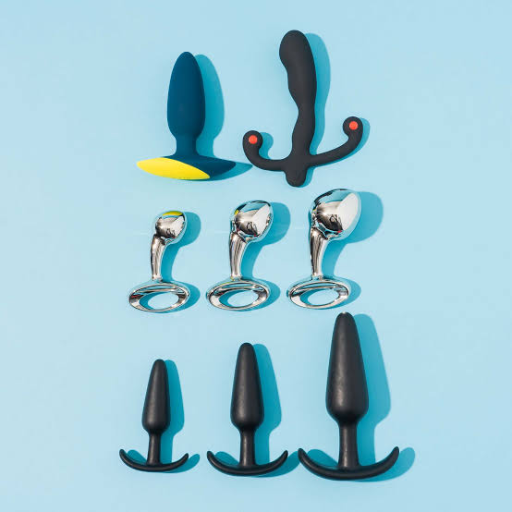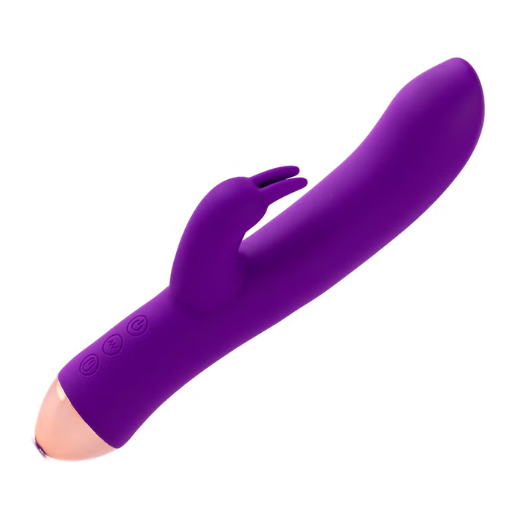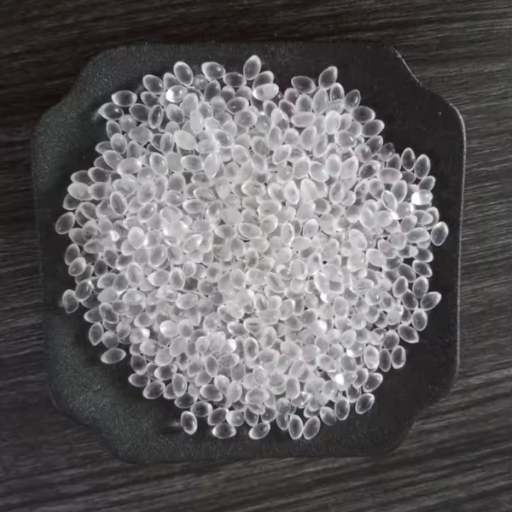
TPR vs TPE sex toys is usually a comparison between two labels for the same material family, not two rival plastics. TPR is a common supplier name for a thermoplastic elastomer, often SBS-based. TPE is the umbrella term, and many toys use SEBS-based compounds instead.
That answer is less satisfying than a clean either-or. It’s also the one that holds up when you ask for the grade, the oil content and the test report.
Consider a brand owner we’ll call Nadia. She ordered two sample strokers, one labelled TPR and one TPE. They felt identical.
A week later, in a warm sample room, one had an oily sheen and a sharp smell. The other was unchanged.
Her supplier had no grade name, no oil content and no heat-aging data. The useful difference wasn’t the acronym on the bag. It was the compound inside.
This sex toy material comparison separates the label from the engineering.
If you’re specifying a product, ask our materials team to review the compound and documentation before you cut steel.
Key Takeaways
- TPR is usually a supplier label for a thermoplastic elastomer, often SBS-based. TPE is the umbrella family, and many toys use SEBS. No standard enforces the split.
- Performance comes from the compound: polymer base, oil load, filler, antioxidant and pigment. The acronym predicts little.
- Most TPR and TPE toys are porous and can’t be fully sterilized. Use a condom for shared or internal use, and replace when tacky, cracked or smelly.
- TPR suits ultra-soft, short-life external products. SEBS-based TPE suits firmer, lower-oil-bleed products. Silicone, glass or steel fit long-life insertables.
- A COA, SDS, phthalate report and heat-aging data beat a “body-safe” badge.
TPR vs TPE Sex Toys: The Short Answer
TPR and TPE sex toys are usually the same class of material. TPR is a common trade name for a thermoplastic rubber, often an SBS-based styrenic compound. TPE is the umbrella term, and many toy compounds use SEBS. The differences that matter are oil content, hardness, aging and documentation.
Here’s the comparison. Read it as tendencies, not law.
| Question | TPR | TPE |
|---|---|---|
| What the name usually means | Supplier shorthand for a thermoplastic rubber; often SBS-based | Umbrella family; in toys, often SEBS-based |
| Typical feel | Softer, stretchier, often glossier | Firm to soft; often smoother and more matte |
| Oil bleed risk | Higher when the oil load is high | Lower when the compound is well formulated |
| Heat, UV and aging | Weaker with SBS | Better with SEBS |
| Porosity | Usually porous | Usually porous |
| Best fit | Ultra-soft external products, strokers, short-life items | Firmer external products, longer-life items |
| Verdict | Valid if specified and documented | Valid if specified and documented |
Two caveats.
First, these are tendencies. A well-formulated SBS compound can outperform a badly formulated SEBS one. A cheap SEBS grade with too much oil can still sweat, smell and tear.
Second, neither column is automatically body-safe. Safety belongs to a specific product, its manufacturing controls and its test evidence, not a three-letter label.
For the full safety picture, see our guide to TPE sex toy safety.
TPR vs TPE Sex Toys: What the Names Describe
Suppliers use TPE vs TPR loosely across the industry. That’s not a small technicality; it changes what you ask a supplier.
TPE is the umbrella; TPR is a supplier convention
Thermoplastic elastomer (TPE) describes a class of materials that behave like rubber but can be melted and re-moulded. The family includes styrenic block copolymers (TPS), thermoplastic polyolefins (TPO), vulcanizates (TPV), polyurethanes (TPU) and others.
Thermoplastic rubber (TPR) is widely used as a synonym for TPE. Some sources treat TPR as a specific subset, usually styrenic compounds based on SBS. Others use it for any thermoplastic rubber.
The useful conclusion isn’t that one source is right. It’s that the label isn’t a specification. If a listing says TPR, ask which polymer base, which hardness and which oil. If it says TPE, ask the same questions.
“TPR silicone” deserves a separate warning. It isn’t a recognised material class. The phrase usually means a TPE or TPR compound marketed to sound like silicone, and it should trigger a request for the datasheet.
Why SEBS and SBS behave differently
The polymer base explains most of the performance gap.
SBS stands for styrene-butadiene-styrene. Its middle block is unsaturated, leaving it vulnerable to heat, ultraviolet light and oxygen. It’s cheaper than SEBS and holds process oil less firmly, which is why some SBS-based toys turn tacky or weep oil.
SEBS is hydrogenated SBS. The hydrogenation saturates the middle block, improving resistance to heat, UV, ozone and yellowing. It also holds oil better, so SEBS-based compounds tend to feel drier, age more slowly and hold their colour.
Neither polymer is a finished toy material. A compound also contains process oil, often polypropylene, fillers, antioxidants and pigment. The oil is usually the largest ingredient in a very soft compound, and it’s the main source of odour, migration and stickiness.
Listings blur the labels further. A 2023 study tested four sex toys and identified PET, PVC, a silicone/PDMS blend and polyisoprene rubber, despite the marketing claims (Sipe et al., 2023). It didn’t test TPE or TPR, so don’t read it as proof that either is toxic. It’s a reminder that a package claim isn’t evidence of what’s inside.
The Differences That Matter in a Sex Toy
Once the acronym is out of the way, four specification questions decide how a product feels, lasts and sells.
Softness and oil load
Softness in TPR and TPE comes mostly from process oil. More oil means a softer, more gel-like feel. It also means lower tensile and tear strength, and a greater chance that oil will migrate to the surface.
That’s the trade-off in soft-toy compounding. A very soft compound can feel remarkably skin-like. It can also tear at a thin opening, stain packaging and turn sticky after a few months in a warm warehouse.
Ask for hardness on a named scale, oil content by percentage and oil grade. A number without a scale isn’t a specification.
For how material choice maps to product type, see our sex toy material selection guide.
Oil bleed, odour and aging
Oil bleed is the slow migration of process oil out of the compound. It shows up as a sheen, a tacky film, a stain on the pouch or a stronger smell. Heat accelerates it, and so do UV exposure and incompatible lubricants.
Odour isn’t proof of toxicity. A faint rubber smell can come from the polymer or the oil, and it may fade after airing. A strong solvent smell, a persistent oily film or a surface that stays tacky after cleaning are formulation and aging signals, and they’re reasons to replace the product.
We cover the mechanics and fixes in why TPE sex toys get sticky.
Tear strength and surface durability
A soft toy fails at its weakest geometry, not its thickest point. Openings, seams, thin walls and the base of a stroker are where tears begin.
TPR stretches a long way, but high oil content reduces tear strength. A compound that passes a factory pull test can still split after a few months. Tensile strength is commonly measured to ASTM D412 and tear strength to ASTM D624. A supplier who can’t provide either number is asking you to trust a feel sample.
Colour, finish and overmoulding
TPR compounds often take bright colour and a glossy finish easily. TPE compounds often suit a matte, drier surface. Both can be pigmented and overmoulded onto a rigid ABS or polypropylene housing.
Overmoulding is where a feel sample stops being enough. Bond strength depends on the grade, substrate, mould temperature and gate design. Shrinkage also varies by grade, so tooling cut for one compound may not produce a correct part in another. That’s a tooling cost to plan for.
Safety: What Changes and What Doesn’t
The safety conversation around TPR and TPE is often louder than the evidence. Here’s what actually changes between the two, and what stays the same.
Porosity is the shared constraint
Most TPR and TPE toys are porous. The surface holds moisture, lubricant and biological material in irregularities that washing doesn’t fully reach.
TENGA notes that porosity depends on the manufacturing technique and that porous products shouldn’t be shared. It recommends non-porous silicone for insertables (TENGA).
The rules follow:
- Wash before and after use with warm water and mild soap.
- Dry completely before storage.
- Use water-based lubricant unless the supplier has tested compatibility with something else.
- Use a condom for shared or internal use where infection risk matters.
- Replace at the first sign of tackiness, cracking, staining or persistent odour.
- Don’t boil a TPR or TPE toy. Heat can distort it and speed up oil migration.
If a brand wants a “boilable” or “sterilizable” claim, the material should be platinum-cure silicone, glass or steel. Those claims don’t transfer to a porous elastomer.
Phthalates are a formulation question
Phthalates are plasticizers most associated with flexible PVC and jelly. TPR and TPE usually don’t need them, and many are formulated without them.
“Usually” isn’t “never.” Contamination, recycled feedstock, cheap pigments and mislabelling all exist. A product sold as phthalate-free can still fail a lab test.
The 2023 study is a useful caution, if you read its limits. Four toys were tested. All four contained phthalates, and two exceeded the 0.1% children’s-toy limit.
None was identified as TPR or TPE. That supports a documentation rule, not a ban on a material family (Sipe et al., 2023).
For a brand, the ask is specific: a phthalate test report from an accredited lab, with the method, detection limits and the batch it covers. A “phthalate-free” badge is marketing. A GC-MS report is evidence. Process oil deserves the same scrutiny: mineral oil isn’t inherently toxic, but grade matters.
What ISO 3533:2021 does and does not do
ISO 3533:2021 is an international standard for sex toys. It covers design and safety requirements for products in direct contact with the genitals or anus, including materials, mechanical hazards, cleaning and user information (ISO 3533:2021).
It’s a voluntary standard, not a certification. A supplier claiming “ISO 3533 compliant” should show a risk assessment, test evidence or a declaration of conformity. A logo on a box proves nothing.
It also doesn’t turn a porous material into a non-porous one. It gives a risk framework, not a replacement for the cleaning and replacement rules above.
How to Choose TPR vs TPE Sex Toys by Product
Material choice should follow the product, the wear window and the cleaning expectation. Here is the short version.
| Product | Sensible default | Why | What to watch |
|---|---|---|---|
| Vibrator sleeve or cover | SEBS-based TPE | Firmer, lower oil bleed, bonds to a rigid housing | Bond strength, hardness, wall thickness |
| Realistic external dildo | TPE or TPR | Soft skin feel at a lower unit cost | Pore structure, tear strength, colour fastness |
| Male stroker | TPR | Ultra-soft, high stretch, low cost | Oil bleed, tearing at the opening |
| Packer or soft prosthetic | TPE or TPR | Light, soft, comfortable against skin | Colour fastness, skin-contact testing |
| Insertable plug or dildo | Silicone preferred | Non-porous and sterilizable | If TPE or TPR, use a condom and shorten the replacement cycle |
| Shared toy | Silicone, glass or steel | Can be cleaned thoroughly | Do not rely on TPR or TPE for shared use |
When TPR is the right call
TPR makes sense when the product needs to be very soft, very stretchy and inexpensive, and when the buyer accepts a shorter service life. Male strokers, soft sleeves and some realistic external products fit that profile. For a single-user product with a clear replacement cycle, a well-specified TPR compound can deliver a feel that a firmer TPE can’t match at the same price.
When TPE is the right call
SEBS-based TPE makes sense when the product needs to hold its shape, resist yellowing, carry less oil and survive a longer shelf life. Vibrator sleeves, firmer realistic dildos and overmoulded handles are common examples. The word “SEBS” matters more than the word “TPE” here.
When neither is right
Neither is the right default for a long-life insertable, a shared toy or a sterilizable claim. Platinum-cure silicone is the safer default for those uses, with glass and steel as alternatives for specific products.
Our comparison of TPE vs silicone sex toys covers the cost and performance gap. The three-way version, including jelly and PVC, is silicone vs TPE vs jelly.
How to Vet a TPR or TPE Supplier
A feel sample shows what the compound does today. A specification shows what it will do six months later.
Ask for these eight items before tooling:
- Grade name and datasheet. Hardness with scale, density, tensile strength, tear strength, elongation and compression set.
- Polymer base and oil content. SBS or SEBS, oil percentage, oil grade and antioxidant package.
- Certificate of analysis by batch. The COA should match the grade you approved, not a generic family datasheet.
- Safety data sheet. Covers handling and restricted substances, not a migration test.
- Phthalate and heavy-metal test report. Accredited laboratory, named method, detection limits and a clear pass/fail against the target market.
- Migration or extraction testing. Relevant to skin and mucosal contact.
- Heat-aging and UV data. Evidence that the colour, hardness and surface will survive storage and transport.
- ISO 3533:2021 alignment. A risk assessment or declaration, not a badge.
Red flags matter:
- “TPR silicone” or “medical-grade TPR” with no standard named.
- “Phthalate-free” with no test report.
- A hardness number with no scale.
- A solvent smell that doesn’t fade after airing.
- An oily film on a sample stored warm.
- Visible colour variation between batches.
- A supplier who can’t name the compounder.
For the manufacturing side, including tooling, shrinkage and process windows, see our TPE sex toy manufacturing guide.
Cost, Lifespan and Total Cost
TPR and TPE cost less than platinum-cure silicone. They process faster and often use less expensive tooling. Unit price isn’t total cost.
Consider a brand owner we’ll call Priya. She chose a TPR compound that saved roughly $0.80 per unit. Six months after launch, 6% of units came back with tacky surfaces. Replacement shipping, reverse logistics and marketplace penalties wiped out the saving.
The specification was the problem. Nobody had asked for heat-aging data or oil limits. Retail guidance puts TPR life at 6 to 12 months with regular use. Condition matters more than the calendar: replace at the first sign of tackiness, cracks, tears, staining or persistent odour.
FAQ
Are TPR and TPE the same thing?
Usually, yes. TPR material is widely used as a synonym for TPE. When a supplier distinguishes them, TPR often means an SBS-based compound and TPE often means an SEBS-based one. No standard enforces the split, so ask for the grade and datasheet.
Is TPR safer than TPE?
Neither name is safer by itself. Safety depends on the compound, the oil grade, the additives, the manufacturing controls and the test evidence. A documented TPR compound can be safer than an undocumented TPE one, and vice versa.
Can you boil a TPR sex toy?
No. Boiling can distort the shape and accelerate oil migration. Wash with warm water and mild soap, dry thoroughly, and replace the toy when the surface degrades. If you need a boilable toy, choose platinum-cure silicone, glass or steel.
Why does my TPR toy get sticky?
Oil is migrating to the surface. Heat, UV, age and incompatible lubricants speed it up. Wash the toy, dry it completely and apply the manufacturer’s renewing powder if there is one. If the stickiness returns quickly or comes with a strong smell or cracks, replace it.
Is TPR safe for internal use?
Most TPR and TPE toys are porous, so they can’t be fully sterilized. For internal use, use a condom and clean thoroughly before and after. For long-term or shared use, a non-porous material such as platinum-cure silicone, glass or steel is better.
How long does a TPR sex toy last?
Retail guidance commonly suggests 6 to 12 months with regular use, or up to about two years with light use. Condition matters more than the calendar. Replace it at the first sign of tackiness, cracking, tearing, staining or persistent odour.
The Decision Rule
TPR vs TPE sex toys isn’t a choice between a good material and a bad one. It’s a choice between two labels that describe a wide range of compounds, which can be formulated well or badly.
Choose by product and wear window. TPR fits ultra-soft, short-life external products. SEBS-based TPE fits firmer, longer-life external products. Platinum-cure silicone, glass or steel fit long-life insertables and shared use.
Then choose by evidence. Ask for the grade, oil content, COA, SDS and test reports. A supplier who can answer those questions is selling a material. A supplier who can’t is selling a word.
If you’re weighing TPR vs TPE sex toys for a new product, send our materials team the brief and intended use. We’ll review the specification and documentation before you commit to tooling.