
The best lube for TPE sex toys is water-based. It’s the one category that doesn’t interact with the material, and it’s what nearly every manufacturer’s care card recommends.
That answer is correct. The reasoning behind it usually isn’t.
Most guides tell you to avoid silicone lube with TPE because it “damages” the material. That rule was written for silicone toys, and it got copied onto TPE without the mechanism that justifies it. Repeating it has also buried a bigger risk: oil-based lubricants.
TPE isn’t one material either. It’s a family of thermoplastic elastomers with different base polymers, oil contents, and hardness grades. A single verdict was never going to fit all of them.
This guide covers what TPE actually is, what each lube category does to it, and how to test any lubricant against a specific toy before you commit to it. If you’re still choosing between materials rather than lubricants, our guide to TPE vs silicone sex toys covers that decision.
Key Takeaways
- Water-based lube is the safe default for TPE because it has no solvent action on the polymer or on the oil that softens it.
- The “never use silicone lube with silicone toys” rule comes from same-polymer swelling. TPE is a different polymer family, so the rule doesn’t map cleanly.
- Oil-based lube is the better-documented risk, because TPE is already an oil-plasticized system.
- TPE formulations vary widely in oil content and hardness. A 24-hour patch test on your actual toy beats any general rule.
Best Lube for TPE Sex Toys: The Short Answer
| Lube type | Verdict for TPE | Why |
|---|---|---|
| Water-based | Safe default | No solvent action on the polymer or plasticizer; rinses clean |
| Hybrid (water + silicone) | Patch-test first | A smaller dose of the same silicone question |
| Silicone-based | Patch-test first | Absorbed into pores, hard to wash out, effect varies by formulation |
| Oil-based | Avoid | Adds oil to a material that’s already saturated with it |
If you want the one-line version of what lube is safe for TPE toys: water-based always, silicone and hybrid only after a test, oil-based never.
Read that table by the “why” column, not the verdict column. The verdicts are short because the mechanisms behind them are different, and the mechanism is what tells you when a rule bends.
One note on scope. This table covers TPE only. For the cross-material picture, including glass, metal, ABS, and latex condoms, our guide to silicone lube and silicone toys has the full chart.
Writing care instructions for a TPE product line? Send us the formulation details and we’ll help you phrase a lubricant recommendation that holds up across batches.
Why the Silicone-on-Silicone Rule Does Not Apply to TPE
The rule everyone quotes is real. It just belongs to a different material.
Silicone toys are made of silicone polymers. Silicone lube is also made of silicone polymers. When two materials from the same polymer family sit in contact, the fluid can migrate into the solid network and swell it. That’s why a silicone toy can go tacky or soft after silicone lube, and it’s why the warning exists.
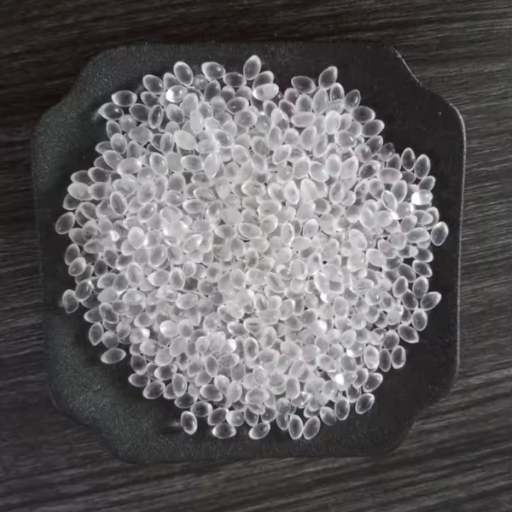
TPE contains no silicone at all. It’s a thermoplastic elastomer, usually built on SEBS or SBS, a block copolymer that behaves like rubber but melts and molds like plastic. To make it soft, manufacturers blend in mineral or paraffinic oil. That oil is the plasticizer, and it’s what gives TPE the squish that silicone struggles to match at the same hardness.
So the “same family dissolves same family” mechanism has no direct equivalent in TPE. Which means the guidance on the best lube for TPE sex toys never actually rested on it. The rule was imported anyway, because it was short, memorable, and sounded scientific.
That import cost the category twice. It overstated one risk, and it pointed attention away from another.
Nadia runs a small European brand that sells mostly TPE sleeves. In 2024 her team copied a competitor’s care card almost word for word, including a line warning customers off silicone lube.
It wasn’t wrong, exactly. But it was the only lubricant guidance on the card, and it said nothing about oil-based products.
When returns started arriving with complaints about tacky surfaces, the pattern traced back to customers using coconut oil. “We’d warned them about the thing that wasn’t the problem,” she told us. The card was rewritten in a week.
What Each Lube Type Actually Does to TPE
Water-based: the default, and its one real caveat
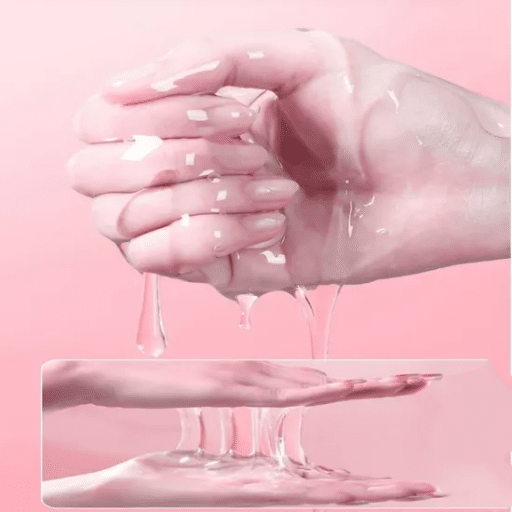
Water-based lube is mostly water with a thickener and usually glycerin or propylene glycol. None of those ingredients dissolve a thermoplastic elastomer, and none of them disturb the oil balance inside it.
That’s the whole case for it, and it’s a strong one. It rinses off with water, it doesn’t leave a residue in the pores, and it doesn’t change the surface over time.
The caveat isn’t about the toy. It’s about the person. Glycerin and propylene glycol irritate some people, particularly with repeated use, and a lubricant that irritates is bad no matter how material-safe it is. If you’ve had sensitivity issues, look for a glycerin-free water-based formula.
Hybrid: a smaller dose of the same question
Hybrid lubes are water-based with a small amount of silicone added for longevity. They behave like water-based lube in most respects, with a fraction of the silicone exposure.
That makes them a reasonable middle option, but it doesn’t make them automatically safe for TPE. A small amount of the questionable ingredient is still that ingredient. Treat hybrid as a patch-test category, not a free pass.
Silicone-based: a real risk, weaker evidence than claimed
Here’s where the borrowed rule does the most damage, in both directions.
Silicone fluid isn’t in the same polymer family as SEBS, so the swelling mechanism that ruins silicone toys doesn’t transfer directly. But silicone fluids are mobile, low-surface-tension liquids, and TPE is porous. Fluid that gets into the surface structure is difficult to rinse back out, and it can interact with the oil phase sitting there.
The reported outcome is tackiness, swelling, and a surface that never quite feels clean again. That’s a real complaint pattern, and it’s why “avoid unless tested” is sensible advice.
What’s missing is documentation. The sources that actually grade this put silicone-based lube at patch-test, not forbidden, and the effect clearly depends on the formulation. A high-oil, low-hardness sleeve is a different proposition from a firm, low-oil grade.
So the honest position is this: silicone lube is the category most often flagged for TPE, the mechanism is plausible, and the strength of the effect varies enough that testing beats guessing. Anyone telling you it always destroys TPE is repeating a claim the evidence doesn’t carry.
Oil-based: the risk most guides bury
This is the one that matters most when you’re choosing the best lube for TPE sex toys, and it usually gets a footnote.
TPE is soft because it’s loaded with mineral or paraffinic oil. Industry guidance puts the practical threshold for SEBS and SBS compounds at roughly 30% oil content, above which the oil starts migrating on its own. That figure is practitioner guidance rather than peer-reviewed data, but the direction is consistent across formulators.
Oil-based lubricants add more oil to a system that’s already at or near saturation. The plasticizer balance shifts. The material softens, swells slightly, and pushes excess oil to the surface, which is exactly the tackiness TPE is already prone to. The plasticizer migration literature describes this mobility in detail, and the polymer degradation research on elastomer ageing points the same way.
Coconut oil is the common culprit. It’s popular as a natural alternative, and porous TPE absorbs it readily. It’s also the single most frequent cause of a “my toy went sticky” complaint that has nothing to do with cleaning.
If you’re already dealing with a tacky surface, our guide to why TPE sex toys get sticky walks through the mechanism and what actually helps.
How to Patch-Test Lube on a TPE Toy
You can’t reliably identify a TPE grade from the packaging. Most toys don’t name the base polymer or the oil content, and two sleeves that look identical can behave differently. That’s why testing beats categorizing.
The test takes a day and costs nothing:
- Pick an inconspicuous spot. The base of the toy, or any area that doesn’t contact the body.
- Apply a small amount of the lubricant and leave it, unrinsed, for 24 hours at room temperature.
- Wipe it off with a damp cloth and let the surface dry completely.
- Compare against an untreated area. Look for tackiness, a change in gloss, swelling, or a colour shift.
- Repeat once before trusting the result. A single pass can miss a slow interaction.
Tomás, a quality manager at a mid-size manufacturer, runs this test as a formal step before any lubricant gets named on a retail care card. His team tests three sample units per batch, not one, because formulation drift between batches is real. “We’ve had the same lube spec pass on one run and fail on the next,” he said. “The test is cheap. The returns aren’t.”
Rinse the toy properly afterwards. Our guide to how to clean TPE sex toys covers drying and storage, which matter as much as the wash.
For Brands: Writing Lube Guidance That Holds Up
Most care cards get this wrong in the same way. They promise a compatibility the brand can’t actually verify.
“Safe with all water-based lubricants” is a promise about products you don’t make, tested against batches you may not have run. It’s also the kind of claim that turns into a support ticket when a customer’s preferred formula doesn’t behave.
The safer structure is narrower and more honest:
- Name the category, not the product. Recommend water-based lubricant generally rather than endorsing specific brands.
- State the mechanism in one line. “TPE is softened with oil, so oil-based lubricants can affect the surface” tells a customer more than a blanket warning ever will.
- Flag oil-based products explicitly. This is the gap most care cards leave open.
- Say “test first” for anything outside the default. That’s not a hedge. It’s accurate.
Two more things belong alongside it. First, note that formulations drift between batches, so a care claim should be tied to a tested specification rather than to a single sample. Second, cite the standard you’re designing to accurately.
ISO 3533:2021 sets design and safety requirements for products in direct contact with genitalia or the anus. It’s a design framework, not a market authorization, and it doesn’t certify a lubricant recommendation.
Need help turning formulation data into customer-facing care copy? Request a documentation review, and we’ll map it against your target markets.
Frequently Asked Questions
Does silicone lube damage TPE?
It can, but not reliably, and not the way most guides describe. Silicone fluid can be absorbed into porous TPE and is hard to rinse out, which shows up as tackiness or swelling. The effect depends heavily on the formulation, which is why patch-testing is the standard recommendation rather than a blanket ban.
Can you use silicone lube on TPE toys?
You can, but test it first. Silicone lube isn’t the same polymer family as TPE, so the swelling rule that applies to silicone toys doesn’t carry over directly. It can still be absorbed into porous TPE and is hard to rinse out, and how much that matters depends on the formulation.
What is the best lube for TPE sex toys?
Water-based lubricant is the safe default. It has no solvent action on the polymer or on the oil that softens it, and it rinses away cleanly. If glycerin or propylene glycol irritates you, choose a glycerin-free water-based formula.
Can you use oil-based lube with TPE toys?
No. TPE is already plasticized with mineral or paraffinic oil, so adding more oil shifts the balance and accelerates the migration that causes tackiness. Coconut oil is the most common problem case because porous TPE absorbs it readily.
Is hybrid lube safe for TPE?
Treat it as a patch-test category. Hybrid lubricants are water-based with a small amount of silicone added for longevity, so they carry a fraction of the silicone exposure rather than none of it. The silicone percentage varies widely between brands, which is why testing the exact formula beats assuming the category is safe.
How do I know which TPE my toy is made from?
Usually you can’t. Most products don’t disclose the base polymer, oil content, or hardness grade. That’s exactly why a 24-hour patch test on the actual toy is more useful than any general rule about the material category.
Conclusion
The best lube for TPE sex toys is water-based, and that part of the conventional advice holds up. What doesn’t hold up is the reasoning attached to it.
The silicone-on-silicone rule is a same-polymer-family rule. TPE is a different polymer family, softened with oil, so the mechanism behind the warning doesn’t carry over intact. The category that actually deserves the warning is oil-based lube, which adds plasticizer to a material that’s already saturated with it.
Practically, that gives you three moves:
- Default to water-based.
- Treat silicone and hybrid formulas as test-first, not forbidden.
- Avoid oil-based entirely.
When you’re unsure, spend 24 hours testing the actual toy rather than trusting a category label.
If you’re specifying materials for a product line and want the care guidance to match what the material can survive, our comparison of how TPE and silicone differ is the right starting point.