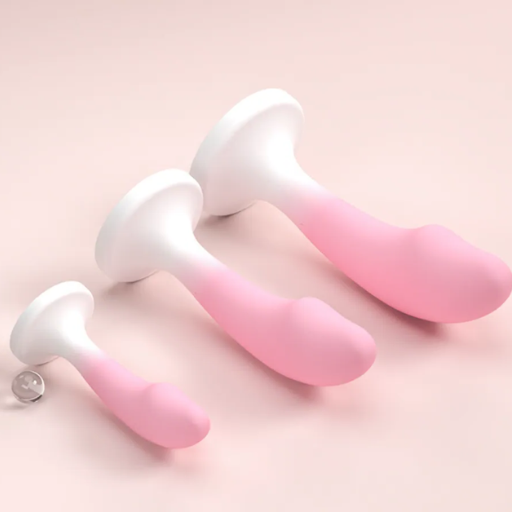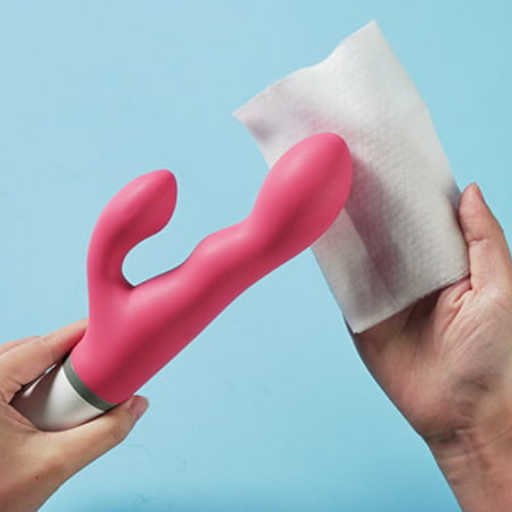

Yes, quality TPE sex toys are generally considered safe for their intended use, but the word “TPE” on a label is not what makes a product safe. Safety comes from the specific formula inside the toy, how it was manufactured, and the testing evidence behind it. A soft, well-documented thermoplastic elastomer (TPE) compound can be perfectly fine for a stroker, sleeve, or textured external toy. The same category name on a budget marketplace listing with no paperwork is a genuine gamble.
That gap between a material name and a material specification is where nearly all the confusion lives.
If you’ve searched “are TPE sex toys safe,” you’re probably holding two questions at once. First, the direct one: is this thing going to hurt me? Second, the practical one: how do I tell a safe product from a risky one before I buy? Both deserve a straight answer, and both depend on far more than the three letters T-P-E.
Key Takeaways
- TPE is not inherently toxic or inherently safe. Safety depends on the exact compound, polymer system, process oil, fillers, pigments, and fragrance, plus the testing behind it.
- Quality TPE formulations are typically plasticizer- and phthalate-free, unlike plasticized PVC or “jelly” products, which are the materials most often flagged in safety testing.
- Most TPE toys are porous and cannot be fully sterilized, so careful cleaning, condom use for shared or internal use, and timely replacement are the practical safety rules.
- A buyer can verify safety with documents: a Certificate of Analysis (COA), a Safety Data Sheet (SDS), a VOC/migration test report, and a batch or lot number.
- Adult toys are generally not FDA-approved medical devices. “Body-safe,” “non-toxic,” and “medical-grade” are largely marketing terms unless a specific test or standard backs them up.
Are TPE Sex Toys Safe? The Short Answer
Here’s the direct answer in under 60 words.
Quality, well-documented TPE is generally considered body-safe for its intended use, but it is usually porous, so it cannot be fully sterilized. Lower-risk TPE uses a documented, plasticizer-free formula and a high-purity process oil. Keep it clean, use a condom for shared or internal use, and replace it when it degrades. The main risks come from low-end, mislabelled, or uncertified products, not from TPE as a material class.
Here’s a quick way to sort products before you go deeper.
| Lower-risk TPE looks like | Higher-risk TPE looks like |
|---|---|
| Sourced from a named, reputable brand | Unbranded marketplace listing, no manufacturer |
| Ships with a COA, SDS, or test report | No documentation of any kind |
| Declared plasticizer- and phthalate-free | No material claims beyond “soft” |
| Clear care and replacement guidance | Vague or missing care instructions |
| Consistent texture and finish | Strong chemical smell, sticky surface out of the box |
For a wider look at how materials compare on safety, our guide to body-safe materials in adult toys breaks down the full category.
What “safe” actually means for a sex toy
Safety for an intimate product has three parts, and it helps to name them separately.
Material safety is about what the toy is made of: the polymer, the oils, the colorants, and any additives. Biological safety is about how those materials behave in contact with skin and mucous membranes. In plain terms, does anything migrate out of the toy and into the body? Use safety is about how the toy is cleaned, stored, shared, and eventually retired.
When someone asks if TPE sex toys are safe, they usually mean all three. A product fails if any one of them fails, no matter how good the others are.
Why the material name alone proves nothing
Imagine two toys, both labelled “TPE.” One is a soft, platinum-grade-blend sleeve from a manufacturer that ships a batch-linked test report. The other is an unbranded item where “TPE” might be accurate, approximate, or simply aspirational.
The label is identical. The products are not.
TPE is what the industry calls a family of blends, not a single recipe. Two compounds that both read “TPE” can differ in their base polymer, the amount and quality of softening oil, the fillers, and the colorants. That’s why the useful question isn’t “is TPE safe?” It’s “is this TPE, from this supplier, with this documentation, safe?” Only one of those questions has an evidence-based answer.
What Is TPE, and What Is It Made Of?
To judge a safety claim, you first need to know what you’re judging.
TPE is a family of blends, not one material
TPE stands for thermoplastic elastomer, sometimes called TPR (thermoplastic rubber). A typical sex-toy TPE is built from a handful of ingredients:
- A base polymer, often a styrenic block copolymer such as SEBS, which gives the material its rubbery stretch.
- A process oil (also called a softening oil or extender oil), which controls how soft the final product feels.
- Fillers, which add volume and adjust the price point.
- Additives, including colorants, and sometimes fragrance or slip modifiers.
That process oil is the ingredient most worth understanding, because it drives both the feel and the smell.
Where the smell and the “softness” come from
A low-hardness, very squeezable TPE usually contains more process oil. More oil can mean a stronger smell, because the oil is the most volatile part of the blend. High-quality, highly refined oils smell faintly. Lower-grade oils, cheaper fractions with more impurities, smell stronger, sometimes with a diesel-like or chemically sharp note.
Here’s the important nuance: smell is an indicator of oil quality, not proof of toxicity. A faint-smelling toy is not automatically safe, and a slightly scented new toy is not automatically dangerous. Volatile organic compounds (VOCs) can be measured properly through gas chromatography–mass spectrometry (GC-MS) testing, and odour can be graded using methods such as VDA 270. That’s the verification path, not a sniff test in your living room.
Silicone, PVC, and jelly: where TPE sits
It helps to see the whole shelf at once.
Silicone (polydimethylsiloxane, or PDMS) is a cured elastomer. When it’s well made and properly finished, it’s non-porous, chemically stable, and can often be sterilized when there are no electronics inside. It also costs more.
TPE sits in the middle. It’s softer and cheaper than silicone, and it can be body-safe when the formula is clean. Its main trade-off is porosity, which we’ll cover shortly.
Jelly rubber and PVC sit lowest in confidence. These materials often rely on plasticizers to stay soft, and they’re the products most frequently singled out in material testing. Phthalates, plasticizers used to soften rigid plastics, are the specific concern, because certain types are classified as endocrine-disrupting chemicals.
Two things are true at once here. Quality TPE generally does not require phthalates the way plasticized PVC does. But a mislabelled product can call itself TPE while containing something else entirely. This is why formulators and brands treat the material name as the beginning of the conversation, not the end of it.
Are TPE Sex Toys Toxic? Sorting Real Safety Concerns
Let’s go through the concerns you’ll actually see raised, and separate the ones that matter from the ones that don’t.
Porosity and cleaning
This is the real, practical issue with most TPE.
TPE is generally porous, which means it has microscopic surface structures that can trap moisture, bacteria, and residue. A porous toy cannot be fully sterilized the way a non-porous one can. That doesn’t make it unsafe to use. It changes the rules for using it.
Porosity is also, partly, a product-level question. Formulation and surface finish both influence how porous a given TPE article behaves, which is why a blanket “all TPE is equally porous” claim isn’t accurate either.
The practical consequences are simple:
- Clean it promptly after each use, before residue dries into the surface.
- Use a condom for shared use or for internal use, because a porous surface can harbour bacteria that cleaning alone won’t fully remove.
- Replace it when it degrades, not years later. We’ll get to the warning signs.
Phthalates, plasticizers, and heavy metals
This is where the strongest evidence exists, and where it’s usually misapplied.
The most-cited recent study on this subject is a 2023 paper in Microplastics and Nanoplastics, “Bringing sex toys out of the dark: exploring unmitigated risks.” The researchers identified the material composition of several products with spectroscopy and reported phthalates present in all of the tested toys at levels exceeding hazard warnings. The PVC-based and jelly-type products exceeded US and EU phthalate limits. The study also found that abrasion released microplastics and nanoplastics, with the softer toys shedding the most.
That’s a serious, legitimate finding. But read it carefully, because it doesn’t say what the headlines often imply. It found problems with the specific products tested, it did not establish that TPE, as a category, contains phthalates. The lesson is that unverified materials are where the danger concentrates, and that verification is the buyer’s best defence.
The heavier metals story is similar. Cheap formulations can, in principle, carry colourants or stabilizers containing lead, cadmium, or zinc compounds. Reputable suppliers test for these and can show you the results.
Counterfeits and unregulated marketplaces
This is the highest-risk zone, and it’s mostly about sourcing.
Counterfeit or generic products from unregulated marketplaces often have no traceable manufacturer, no batch records, and no test data. When you can’t verify what’s in a product, you’re trusting a listing photo. We saw this pattern with a small wellness brand, which we’ll come back to.
It also matters legally. Adult toys are generally not FDA-approved medical devices, and manufacturers often label them “for novelty use only” to stay outside medical-device regulation. So a claim that a toy is “FDA-approved” or “medical-grade” deserves scrutiny, the material may meet a relevant standard, but that is not the same as regulatory clearance of the finished product.
How to Check If a TPE Sex Toy Is Body-Safe

Here’s the part you can act on today. You don’t need a laboratory to make a better decision at the checkout.
Read the material claim critically
Start by separating language that sounds reassuring from language you can verify.
“Body-safe,” “non-toxic,” “skin-safe,” and “medical-grade” are largely marketing terms for finished sex toys, because there’s no single enforceable definition that governs all of them. When you see these words, look for the specific thing backing them: a named test, a standard, or a report.
Request the evidence
Reputable manufacturers and suppliers can provide documents. If a supplier can’t or won’t, that silence is a signal.
The documents to ask for:
- Certificate of Analysis (COA), confirms the specifications of the material or the finished product for a specific batch.
- Safety Data Sheet (SDS), summarises a material’s composition and handling, though it’s written for safety professionals, not for measuring skin-contact risk.
- VOC and migration test report shows what volatilizes off the product and what can leach out of it.
- Biocompatibility testing, where relevant, is evaluated against a standard such as ISO 10993, which is only meaningful when the test plan matches how the product is actually used.
- Batch or lot number ties the paperwork you were shown to the physical units in your hands.
There’s an international standard worth knowing by name: ISO 3533:2021, “Sex toys, Design and safety requirements for products in direct contact with genitalia, the anus, or both.” Published in 2021, it covers risk management, material safety, biocompatibility, and cleaning, and includes guidance for building a Restricted Substance List. A supplier who can describe how their process aligns with ISO 3533 understands the category at a level that goes beyond marketing copy.
For a deeper, B2B-level walkthrough of verifying material claims, see our guide on how to verify a material claim.
A five-step buyer checklist
Run every TPE product through these five steps before you buy.
- Confirm the material and intended use. Is it sold for external or internal use? That shapes how much porosity matters.
- Match the documentation to the specific product and batch. A report for raw material that never mentions your finished product or its pigment isn’t full evidence.
- Look for a plasticizer- and phthalate-free declaration plus VOC or migration testing. This is the single most useful safety signal on a spec sheet.
- Follow the porous-material care rules. Clean promptly, use a condom for shared or internal use, and dry thoroughly.
- Choose certified suppliers over unbranded marketplace listings. Traceability is the whole game.
If you’d rather not vet compounds alone, this is exactly where a manufacturer partnership helps. Talk to Joyflick’s material team about specifying a documented, tested TPE formula for your product.
TPE vs Silicone vs Jelly: Which Materials Are Body-Safe?
Here’s a simplified ladder, from most to least confidence. Treat it as a starting guide, not a certification; safety is still a product-level question.
| Material | Porosity | Can be sterilized? | Typical safe use | Confidence |
|---|---|---|---|---|
| Platinum-cured silicone | Non-porous | Yes (solid, non-electronic) | Insertables, long-life, shared use | Highest |
| Documented, plasticizer-free TPE | Often porous | No | External, soft-touch, shorter-life products | Moderate to high (formula dependent) |
| Undocumented or generic TPE | Varies | No | Buyer caution, evidence unavailable | Low |
| Jelly rubber / PVC | Porous and chemically unstable | No | Treat with most caution; avoid for internal use | Lowest |
A quick way to read the ladder: for anything insertable or shared, silicone is the safer default. For soft-feel, external, or short-lifespan products, a documented TPE is a sensible, affordable choice. For jelly and PVC, apply maximum caution, especially for internal use.
For the complete head-to-head, our comparison of TPE vs silicone sex toys works through feel, cost, care, and manufacturing.
Using and Caring for a TPE Toy Safely
A safe product, used badly, stops being safe. Here’s how to keep a TPE toy in good condition.
Cleaning and storage
Clean promptly with a mild, pH-neutral cleanser or a dedicated toy cleaner, then rinse and dry completely, including any internal channels. Do finish with a light dusting of cornstarch if the surface feels tacky. Don’t boil TPE, and don’t use alcohol, bleach, or acetone; TPE has low heat resistance and can deform or break down. Store toys separately, because TPE can react with surfaces it rests against.
Lubricant and condom guidance
Use water-based lubricant only with TPE. Silicone-based and oil-based lubricants can degrade the surface over time. Pairing TPE with a condom is the single highest-impact safety step: it keeps a porous surface, and anything the surface has absorbed, away from the body. If you’re going to use one TPE toy in multiple ways, that applies every time.
When to replace a TPE toy
Stop using a TPE toy when it turns tacky, develops a persistent odour, discolours, or shows small tears. These aren’t cosmetic flaws; they’re signs the material is breaking down. A realistic replacement window is measured in months to a couple of years of regular use, and replacing on those signals is a safety decision, not a style preference.
A Mini-Story: Two Labels, Two Outcomes
Priya runs a small wellness label. In spring, she sourced a batch of soft TPE strokers from a marketplace seller who promised “premium, body-safe TPE” at a compelling price. The units sold well for two months, then reviews shifted. Buyers complained about a sharp smell and a sticky surface, and her listing rating started to dip.
Her second attempt went differently. She asked a manufacturer for the compound specification before committing: which base polymer, which process oil, and a VOC test report for the finished product. The new supplier’s oil was more refined, so the smell faded within a day.
Returns dropped, and the reviews turned. The material was still TPE both times. The documentation was the difference.
For Brands: How to Sell TPE Products You Can Stand Behind
If you manufacture or sell TPE products, this whole topic is upstream of your brand’s reputation. A single toxic-sounding review thread can follow a product for years.
The fix is specification. Ask your supplier to define the compound, not just the category: the base polymer, the oil type and purity, the filler level, and the pigments. Then require batch-linked documentation, a COA, an SDS, and finished-product VOC or migration testing, after pigments and additives are added, not just for the raw pellet. Raw-material reports that ignore the finished colour are one of the most common gaps we see.
The payoff is measurable. Better-documented compounds generate fewer complaints about odour and stickiness, fewer returns, and stronger reviews. That’s a lower total cost than the cheapest per-unit price suggests, because it’s the difference between a product customers trust and one they complain about.
This is where working with an experienced OEM/ODM partner pays off. Request a material brief and samples from Joyflick and we’ll help you specify a TPE formula, arrange third-party testing, and prepare the documentation your markets require.
FAQ
Are TPE sex toys safe to use?
Quality, documented TPE is generally considered body-safe for its intended use. The risks concentrate in low-end, mislabelled, or uncertified products, and in misuse such as sharing a porous toy without a condom or using a degraded one.
Is TPE safer than PVC or jelly?
Generally, yes. Quality TPE formulations are typically plasticizer-free, whereas PVC and jelly rubber often rely on plasticizers. In the 2023 material study on this topic, the PVC and jelly-type products were the ones that exceeded phthalate limits.
Do TPE sex toys contain phthalates?
High-quality TPE generally does not require phthalates, unlike plasticized PVC. However, because “TPE” is a family of blends and mislabeling happens, you should confirm with a plasticizer-free declaration and test documentation rather than assuming.
Is TPE porous?
Most TPE used in sex toys is porous, which means it can’t be fully sterilized. Porosity partly depends on the specific formula and finish, so a blanket claim either way isn’t accurate. Treat porous toys with the appropriate care rules.
Are TPE sex toys safe without a condom?
For solo external use, a clean, quality TPE toy is commonly considered acceptable. For shared use or internal use, a condom is strongly recommended because a porous surface can harbour bacteria that cleaning alone won’t remove.
Can you boil or sterilize TPE sex toys?
No. TPE has low heat resistance and can deform or break down when boiled. Clean it with a mild, pH-neutral cleanser instead, and never use alcohol, bleach, or acetone.
Are cheap sex toys toxic?
Not automatically, but price is often a proxy for how much verification happened. Extremely cheap, unbranded products are the least likely to carry traceable materials and test data, so the risk of unknown additives is highest there.
How long are TPE sex toys safe to use?
Replace a TPE toy when it becomes tacky, develops a lasting odour, discolours, or tears. In practice, that’s often within months to a couple of years of regular use, depending on care.
What documents prove a sex toy is body-safe?
There’s no single certificate that proves it, but the useful evidence is a Certificate of Analysis, a Safety Data Sheet, a VOC or migration test report, biocompatibility testing where relevant, and a batch number linking the paperwork to your units.
Conclusion
So are TPE sex toys safe? The honest answer is that safety is a property of a specific, documented formula and how it’s used, not of the material label. A quality TPE compound, made with a clean process oil and backed by testing, is a practical and affordable choice for soft-feel or external products. A porous, undocumented one is a gamble you don’t need to take.
Four conditions keep TPE on the safe side: a documented, plasticizer-free formulation; use appropriate to the material; proper cleaning and drying; and replacement once the surface starts to break down. Meet those, and the material name stops being a worry.
If you’re building a product line and want TPE you can stand behind, Joyflick can help you specify the compound, test the finished product, and prepare the compliance documentation your markets require. Start a conversation with our team, and we’ll help you bring a body-safe product to market with evidence behind it, not just a label.