Custom silicone dildo manufacturing turns an original shape into a market-ready product through a factory partner, and it usually costs far less than founders expect to start. You can launch a private-label dildo line at a low minimum order quantity, or invest in full custom tooling to own an exclusive design. This guide walks you through the process, the real cost ranges, MOQs, lead times, certifications, and exactly how to brief and vet a manufacturer.
Maya had sold other brands’ toys for two years when she sketched her first original dildo, a smooth sculptural piece for the “body-safe minimalist” market. Full custom tooling was her first instinct, until three factory quotes landed between 18,000 and 18,000 and 40,000. So she validated demand with a low-MOQ order first, then reinvested the profit into her own mold. Today she owns both the design and the tooling, and her line has grown through two reorders.
If you’re researching custom silicone dildo manufacturing for your own brand, the search results are probably not helping you much. You’ll find marketplace listings that quote prices with no context, and thin blog posts that describe the process without the numbers that actually drive decisions. This guide gives you the full picture: the design and engineering choices, the cost tiers you will encounter, how long production really takes, and the certifications that keep your product legal to sell.
Key Takeaways
- “Custom silicone dildo manufacturing” splits into three routes: private label (rebrand an existing mold), ODM (customize a factory design), and full OEM (you own a new mold). MOQs and cost rise in that order.
- A custom dildo starts at roughly 300 units with a low-MOQ partner, while full custom tooling is only economical at higher volumes.
- Silicone choice is a Shore-durometer decision: soft toys sit around 00-20, classics around 00-50, and premium “skin-feel” lines use dual-density construction.
- Published industrial tooling ranges vary from about 2,000forsimplecompressionmoldsto2,000forsimplecompressionmoldsto50,000+ for advanced injection tooling, so always request real quotes.
- Verify “medical-grade” claims through test reports and certifications, because adult toys are not FDA-approved medical devices.
What Is Custom Silicone Dildo Manufacturing?
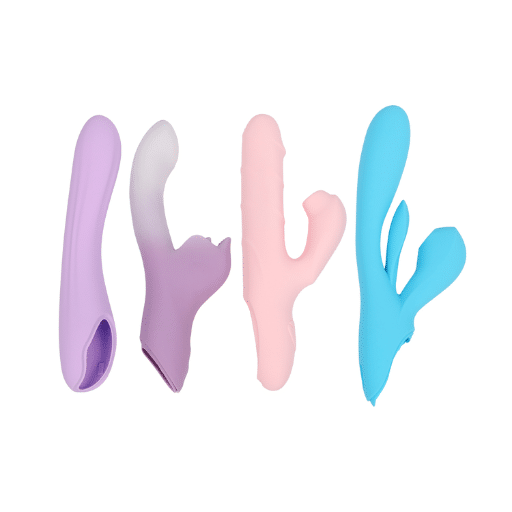
Custom silicone dildo manufacturing is the process of producing a branded silicone dildo to your specifications through a manufacturing partner. You supply the concept, the design, and the brand. The factory supplies engineering, tooling, production, and compliance support. The result is a product that carries your name instead of a generic factory label.
There are three routes to that result, and each one changes your cost, your timeline, and what you actually own:
| Route | What you get | Typical MOQ | Investment | Design ownership |
|---|---|---|---|---|
| Private label / white label | An existing factory design, rebranded with your logo and packaging | 50-300 units | Lowest | None (design is shared) |
| ODM (customize a catalog design) | A factory design you customize with colors, texture, or features | 300-500 units | Low to medium | Usually none, unless agreed |
| Full custom (OEM) | A brand-new mold made to your exclusive design | Varies, often 500+ | Highest (tooling) | You own the mold and design |
Most successful brands start with private label or ODM to test demand, then graduate to full custom once a product proves itself. For the full comparison of these business models, see our guide to OEM vs ODM manufacturing.
A note on the word “mold”
The word “mold” causes more confusion than any other term in this industry. A hobby kit can sell a “silicone dildo mold” for a few dollars; that is a product you pour into at home. Industrial tooling is different: a precision negative cavity, usually metal, that casts hundreds of identical dildos in liquid silicone. When a manufacturer quotes you $20,000 for a mold, they mean production tooling, not a craft item. Keep that distinction in mind, because the cost discussion only makes sense if you do.
Why Silicone Is the Default Material for Custom Dildos
Silicone is the material customers trust most, and that trust has a solid technical basis. Silicone is non-porous, so it does not absorb fluids or harbor bacteria. It is hypoallergenic, odorless, and free of phthalates. It can be washed with soap and water, and non-motorized toys can even be boiled or run through the dishwasher to sanitize them. No other soft material offers that full combination.
The closest competitor is TPE, which is cheaper and can feel very soft. The trade-off is porosity. TPE absorbs oils and breaks down over time, and it cannot be fully sanitized. For an insertable product like a dildo, that hygiene gap is a real problem. We break down the full comparison in our TPE vs silicone sex toys article, but for a custom dildo line, platinum-cured silicone is the responsible default.
Are silicone dildos body-safe? Yes, when they are made from verified body-safe silicone. “Body-safe” is not a regulated claim on its own, so brands should look for platinum-cured silicone and ask for third-party test reports that confirm the material is non-porous, phthalate-free, and free of heavy metals. The term “medical-grade silicone” refers to the raw material grade and its biocompatibility testing, not to a government approval of the finished toy.
Shore hardness and dual-density realism
Firmness is the design decision that most affects how a dildo feels. Silicone firmness is measured on the Shore durometer scale, where lower numbers mean softer material. Ultra-soft toys sit around Shore 00-20. Classic medium toys sit around Shore 00-50. Firmer toys climb toward Shore A 20 to 40. For a plain-language guide to picking the right range for your product, see our Shore hardness for silicone sex toys guide. The video below shows how the measurement actually works.
Video: Intertronics explains Shore hardness and why the scale guides material selection.
The premium route to feel is dual-density construction, which layers a soft silicone shell over a firmer core to mimic skin over tissue. It feels plush outside and holds its shape during use. The catch is engineering: the layers must bond cleanly, or the toy can delaminate and trap moisture. If realism is core to your brand, dual-density is a strong differentiator. If not, single-density silicone delivers a quality product at a lower tooling cost.
Types of Custom Dildos You Can Manufacture
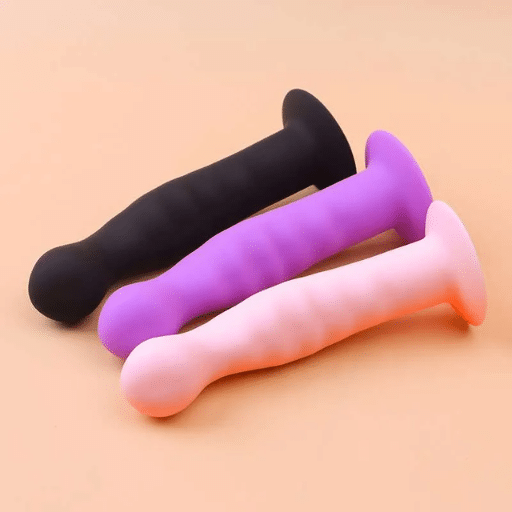
Dildos are a forgiving first product because a non-vibrating dildo is a single piece of silicone with no motor, no battery, and no waterproofing to solve. The design decisions focus on shape, surface, and safety features.
Realistic dildos copy human anatomy with veins, glans detail, and skin-tone colors. They often use dual-density silicone to improve realism. Abstract and sculptural dildos use smooth, ergonomic forms designed for targeted stimulation, such as G-spot or prostate focus. Textured dildos add ridges, bumps, and ripples that intensify sensation. Many brands also offer suction-cup bases for hands-free use, and strapless or strap-on-compatible shapes for partner play.
Two safety rules shape every design. A dildo intended for anal play must have a flared base wide enough that it cannot be fully inserted and lost. A dildo marketed for strap-on use needs a harness-compatible base. Both features are part of the mold, so you must decide on them before tooling begins.
How Custom Silicone Dildos Are Made, Step by Step
Understanding the production sequence helps you budget and communicate. For a closer look at how a factory turns a sketch or 3D file into a finished toy, the process guide from silicone manufacturer Newtop is a useful walkthrough. The stages below summarize what happens in almost every project.
- Design and requirements. You provide a sketch, a 3D file (STL or OBJ), reference images, or even a description. You specify target dimensions, firmness, texture, safety features, and color.
- 3D modeling and digital prototyping. The factory refines your concept in CAD, adjusting proportions, curves, wall thickness, and demoldability. You review renders and approve the design.
- Physical prototype. A master model is produced by 3D printing or CNC machining so you can inspect the shape, feel, and ergonomics before any expensive tooling is cut.
- Production tooling. The approved master becomes a negative cavity mold. This is the largest single investment and the step where most of the project timeline lives.
- Casting and finishing. Liquid platinum-cured silicone is mixed, degassed to remove air bubbles, and poured or injected into the mold. Pigments create solid colors, gradients, marbling, or glow effects.
- Quality control and packaging. Each piece is inspected for surface defects and cured properly, then cleaned and packed in discreet, body-safe packaging.
A full custom project also includes a golden sample: a pre-production unit made from the actual production mold, so you can approve the real product before mass production begins. Never skip this step. A flaw found at the golden-sample stage costs a fraction of a flaw found after 500 units are boxed.
How Much Does Custom Dildo Manufacturing Cost?
Cost is where most founders get lost, so let’s separate the two very different things people call “mold cost.” A craft or DIY silicone mold costs a few dollars. Industrial production tooling for a custom dildo is measured in thousands. The published ranges below come from silicone tooling and adult-industry cost guides, and they are planning estimates, not quotes. Your final number depends on the factory, the geometry, and the mold process.
| Tooling type | Indicative range | What it means |
|---|---|---|
| Simple compression mold | ~2,000−2,000−5,000 | Lower-cost tooling, shorter production life |
| Typical full custom tooling | ~15,000−15,000−50,000 | Common range quoted for adult-toy tooling |
| Advanced injection (LSR) tooling | $50,000+ | Complex shapes, tight tolerances, high volumes |
Budget a buffer above any tooling quote, because certification, design revisions, and production setup add up. Sources like Dibo Technology’s guide to custom silicone mold costs walk through the tiers in detail.
Per-unit pricing is a separate lever. Unit cost falls as volume rises, and it depends on the silicone grade, whether you use single or dual density, the size of the toy, and any added features. A low-MOQ trial order of a simple single-density dildo costs more per unit than a large production run of the same product, which is normal and expected.
Here is where the economics click together. Full custom OEM only pays off once you move enough volume to spread tooling across many units, so first-time founders usually stage their approach: rebrand or lightly customize an existing design, validate sales, then reinvest profit into your own exclusive mold. That is exactly why low-MOQ adult toy manufacturing matters; it lets you test before you commit to a five-figure mold. For a full cost breakdown across vibrators, dildos, and smart toys, see our guide to adult toy manufacturing costs.
When Priya compared quotes for her first custom dildo, she almost chose the cheapest factory she found online. Then she asked three questions: who owns the mold, what certifications are included, and can she see a golden sample before mass production. The cheap factory went quiet. A second factory answered clearly and sent a sample within two weeks. Priya paid more per unit but launched without a recall, a mold dispute, or a compliance headache.
MOQs, Lead Times, and Payment Terms
Two practical questions dominate every buying conversation: how many units must I order, and when will I get them?
MOQ depends on your route. Private-label orders of existing designs can start very low, sometimes around 50 to 100 units depending on the supplier and packaging. ODM customization commonly lands around 300 to 500 units. Full custom OEM with your own tooling often carries a higher minimum, because the factory is committing production capacity to a brand-new mold. Low-MOQ partners such as Joyflick start trial orders at just 300 units, which opens the door to emerging brands that larger factories ignore.
Lead time depends on how much is new. Design approval can take days to weeks depending on iteration. Prototyping and sampling typically run one to three weeks. Tooling takes weeks, and sometimes a couple of months for complex molds. Mass production usually lands in the 30 to 60 day range. The published timelines from PrivyPlay’s product development guide confirm that a realistic concept-to-shelf timeline is several weeks to a few months, not days. If you are working with a partner that already has your tooling, reorders are much faster than first-time production.
Payment terms are standard across the industry. Expect a deposit of around 30% to start, with the balance due before shipment. Sign an NDA before you share proprietary designs, and get mold ownership, exclusivity, and inspection rights in writing. These contract details protect you far more than a friendly sales conversation ever will.
Certifications and Body-Safety Compliance for Silicone Dildos
Certifications are the difference between a product you can export and a product that stops at the border. The specific requirements depend on your target markets, and our silicone sex toy certifications guide covers them in depth. The short version looks like this:
- Material biocompatibility. Platinum-cured silicone that meets recognized biocompatibility testing such as ISO 10993, USP Class VI, or FDA 21 CFR 177.2600 supports a “body-safe” claim.
- European market. CE marking and RoHS compliance apply to products sold in the EU, and REACH governs chemical substances.
- Emerging global standard. ISO 3533:2021 sets design and safety requirements specifically for sex toys, and buyers and retailers increasingly ask for evidence of compliance. You can review the standard via the ISO catalog.
- US market nuance. In the United States, many dildos are sold as “novelties.” Adult toys are generally not FDA-approved medical devices, so be careful with how you word any health or therapeutic claims.
A responsible supplier will hand you test reports, material data sheets, and export documentation without hesitation. For more on the material-grade side, our medical-grade silicone sex toys guide explains what that label really means and how to verify it.
How to Choose a Custom Dildo Manufacturer
The right manufacturer makes your launch smooth. The wrong one makes it expensive. Use this checklist when you evaluate a partner:
- Confirm they are a factory, not a trading company. Ask for the factory address, and verify it independently rather than trusting a website.
- Request certifications. ISO 9001 for quality management, plus material test reports and the market certifications you need.
- Ask for a sample before you commit. A real factory can send a physical sample; a middleman often cannot.
- Confirm mold ownership in writing. If you pay for tooling, you should own it, and the contract should say what happens if you switch suppliers.
- Check their quality control. Ask about inspection points and whether you can arrange third-party inspection before shipment.
- Confirm discreet packaging and logistics. Plain outer packaging and correct export documentation matter for adult products.
- Ask about exclusivity. If you use a factory design, clarify whether the same product can be sold to your competitors.
For the broader process of finding and vetting a partner for any adult toy, start with our complete guide to custom adult toy manufacturing.
How to Brief a Factory for Your First Custom Silicone Dildo
A clear brief gets you an accurate quote, and an accurate quote is the difference between a realistic budget and an unpleasant surprise. Send your manufacturer a one-page spec sheet that covers these points:
- Dimensions. Target length and girth, with acceptable ranges.
- Firmness. A Shore range or a descriptive target such as “soft, like a stroker” versus “medium, classic dildo.”
- Construction. Single or dual density, and any realistic surface detail you want captured.
- Features. Suction cup, flared base for anal use, harness compatibility, or a cavity for a bullet vibrator.
- Color. Solid tone, skin tone, gradient, marbling, or glow effect.
- Packaging and branding. Logo treatment, insert card, and box requirements.
- Compliance targets. The markets you plan to sell into and any certifications you need.
- Commercials. Target price, order volume, and target launch date.
If you don’t have a 3D file yet, don’t let that stop you. A good manufacturer will help you develop the design from a sketch, reference images, or even a competitor product you want to differentiate from. The key is to be specific about feel and function, because those two factors drive the mold, the material, and the price.
Common Mistakes to Avoid
First-time founders tend to repeat the same handful of errors. Avoiding them will save you both money and months of delay:
- Skipping the prototype or golden sample. Every project needs a physical approval step before mass production.
- Not locking down mold ownership. If it is not in writing, it does not exist.
- Choosing the wrong firmness. Skip a proper Shore hardness conversation and you will launch a toy that feels too hard or too soft for your positioning.
- Underestimating tooling cost. Budget extra above the first quote for revisions and certification.
- Ignoring dual-density demoldability. Complex layered shapes need an experienced tooling partner.
- Skipping compliance checks. Confirming certifications before production is far cheaper than fixing an export problem later.
- Buying from a trading company when you need a factory. For custom tooling, you want the people who actually cut the mold.
FAQ
How much does it cost to make a custom silicone dildo?
Full custom tooling typically ranges from about 15,000to15,000to50,000 for production molds, with simpler compression molds starting lower. Per-unit costs depend on volume, silicone grade, and features. Request real quotes for your specific design.
What is the MOQ for custom silicone dildos?
Private-label orders of existing designs can start around 50 to 100 units. ODM customization commonly needs 300 to 500 units, and some partners such as Joyflick start trial orders at just 300 units.
How long does custom dildo manufacturing take?
Realistic concept-to-shelf timelines run several weeks to a few months. Prototyping and sampling take one to three weeks, tooling takes weeks to a couple of months, and mass production typically runs 30 to 60 days.
Are custom silicone dildos body-safe?
Yes, when they are made from verified platinum-cured silicone and backed by test reports. Look for non-porous, phthalate-free material and third-party biocompatibility testing.
Can I make a custom dildo from my own design or 3D file?
Yes. A factory can work from a sketch, a 3D file such as STL or OBJ, reference images, or a detailed description. They will refine the design for feel, safety, and manufacturability.
Conclusion
Custom silicone dildo manufacturing comes down to four decisions: which manufacturing route fits your budget, which silicone firmness matches your product, whether you are ready for tooling investment, and which partner you trust with your design. Start with a route that matches your current volume. Validate the product with a low-MOQ order. Graduate to your own tooling once the sales justify it. And always verify certifications, mold ownership, and quality control in writing before you commit.
If you are ready to bring your concept to life, a low-MOQ OEM/ODM partner makes the first step affordable. Joyflick offers ISO-certified production, medical-grade body-safe materials, private molding and branding support, and trial orders starting at just 300 units, with custom production lead times of roughly 15 to 30 days. Whether you want to rebrand an existing design or build an exclusive mold, request a quote and your roadmap from concept to shelf can begin this quarter.