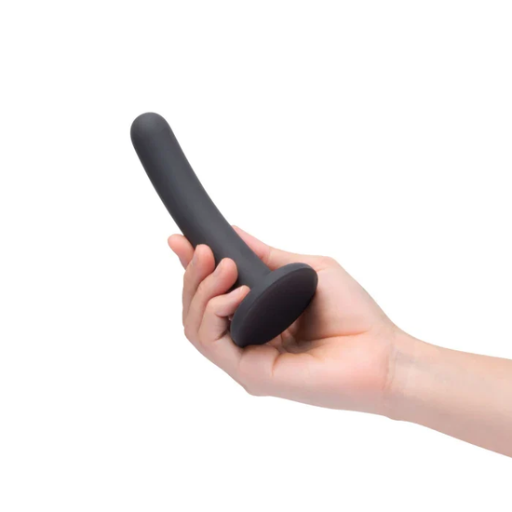
The best packer material is platinum-cure silicone if you wear it daily or use it as an STP. It doesn’t absorb liquid, takes hot washing, sheds no oil, and fails by tearing rather than by degrading. TPE and TPR are the better answer when softness matters more than lifespan, and foam or fabric wins whenever the packer never touches your skin.
One note first: this is about prosthetic packers. Search “best packer material” on its own and Google hands you bubble wrap, oil-well packers and glazing shims. A packer is soft goods you wear for hours, and that changes which material is right.
Dane bought an $18 TPR packer in February. By July it was tacky, had stained a pair of grey boxers, and smelled faintly of machine oil. Nothing had gone wrong with how he cleaned it. The material was doing what oil-heavy TPE does.
That story isn’t a reason to avoid TPE. It’s a reason to know what you’re buying.
If you’re sourcing rather than buying, ask our team to review your material spec before you commit to tooling.
Key Takeaways
- Platinum-cure silicone is the safest default for daily wear and STP use: non-absorbent, heat-cleanable, no oil to migrate.
- TPE and TPR are softer and cheaper, average roughly six months of daily wear, and belong behind a pouch or underwear.
- Foam and fabric are the right choice when the packer stays off the skin, and they’re machine washable.
- Use time and skin contact, not price alone. A 70siliconepackercostsabout70siliconepackercostsabout17.50 a year over four years; an 18TPRonereplacedtwiceayearcosts18TPRonereplacedtwiceayearcosts36.
- “Medical-grade” isn’t a regulated grade. Ask for a cure type, a Shore value with its scale, and a biocompatibility test report.
Best Packer Material: The Short Answer
Match the material to three things: how long you wear it, whether it touches skin, and whether it carries urine.
| Your situation | Best material | Why | Watch out for |
|---|---|---|---|
| Daily wear, several hours, direct skin contact | Platinum-cure silicone | Non-absorbent, boils or dishwashers clean, no oil shed onto clothes | Firmer than TPE; costs more up front |
| Light or occasional wear, softness first | TPE or TPR | Softest drape for the price; warms quickly | Oil migration, tackiness, roughly six months of daily use, wear behind a barrier |
| STP or 3-in-1 that carries urine | Platinum-cure silicone | Channel can be flushed and heat-cleaned; no porous surface for residue | Higher price; check the funnel design, not just the material |
| Never touches skin (pouch, harness, costume) | Foam or fabric | Light, cheap, machine washable, no skin reaction risk | Not realistic to the touch; foam can crumble |
| Sensitive skin or a known reaction history | Silicone behind a fabric pouch | Removes both the material contact and the friction | Adds bulk; check pouch breathability |
The single question that decides most cases is: does it touch skin, and for how long?
Why Packing Changes the Material Question
A dildo is used for twenty minutes and washed. A packer is worn for ten hours, under your clothes, against skin, with compression from a waistband and body heat. That holds whether you call it a packer, a soft packer, or an STP (stand-to-pee) device.
That’s a different exposure pattern. It stresses three things a brief-use toy never stresses: sustained moisture, friction, and anything the material sheds.
Fenway Health’s Trans Health Program puts the cleaning requirement plainly. Packers, and especially STPs that involve bodily fluids, need frequent and thorough cleaning “to prevent UTIs, infections, and skin irritation.”
Its guidance also notes that packing pouches keep a packer from touching skin directly. Many harnesses let the packer rest against the body, which “may not be the right choice for you if you have sensitive skin.”
Dermatology gives the mechanism a name. Intertrigo is inflammation from skin-on-skin friction in a fold, where moisture gets trapped because air can’t circulate.
A 2023 scoping review of 55 articles describes exactly that chain: friction, trapped moisture, poor airflow.
A packer worn tight against the groin creates the same conditions. It isn’t a skin fold, but it is a warm, damp, low-airflow interface with something pressing on the skin for hours. That’s why breathability and cleanability matter more here than on a toy, and why “which is softest” is only half the decision.
Packer Materials Compared: Silicone, TPE, Foam and Fabric
If you’re asking what packers are made of, the answer is one of these four. Every “typical lifespan” figure below is a range from care guidance and vendor documentation, not a guarantee.
| Platinum-cure silicone | TPE / TPR | Foam (EVA, polyurethane) | Fabric (cotton, polyester, blends) | |
|---|---|---|---|---|
| Feel | Firm to squishy, depends on Shore; skin-like when textured | Softest drape, slightly tacky when new | Light, dry, compressible | Soft, obviously fabric |
| Weight | Heaviest | Medium | Lightest | Light |
| Skin contact | Wears against skin | Best behind a pouch or underwear | Usually behind fabric | It is the fabric |
| Cleaning | Hot soapy water; boil or top-rack dishwasher if 100% silicone | Warm soapy water only; never boil | Hand wash, air dry | Machine washable |
| Heat tolerance | High | Low; heat warps it permanently | Low | Normal laundry temperatures |
| Oil or plasticizer | None to migrate | Oil-bearing; can stain and go tacky | None | None |
| Typical daily-wear life | Years, damage permitting | About six months | Months; compresses and crumbles | Long; depends on the fabric |
| Relative cost | Highest | Lowest | Low | Low |
| Best for | Daily wear, STP, sensitive skin | Budget, softness, light wear | Packing under clothes, youth, costumes | Pouch filling, sensory comfort, sensitive skin |
One caveat on the table: “silicone lasts years” is the claim every vendor makes and no vendor publishes test data for. The defensible version is narrower. Platinum-cure silicone is a thermoset, it doesn’t carry oil, and it survives heat cleaning. Its failure mode is mechanical damage, not material breakdown.
Silicone: soft in Shore 00, firm in Shore A
Silicone isn’t one firmness. It’s a family of formulations, and the number on the spec sheet means nothing without its scale.
Packers are usually poured in ultra-soft grades, around Shore 00-20, which is squishy enough to drape and compress. Shore 00 and Shore A are different scales and aren’t interchangeable: 00-20 is far softer than 20A. Some makers use a firmer core with a soft outer layer, the same construction described in our Shore hardness guide for other products in the category.
So when a buyer says “silicone feels too firm,” the useful follow-up is “at what Shore, on which scale?” A packer at 00-20 and one at 10A are both silicone. They feel nothing alike.
Platinum-cure (addition-cure) silicone is the grade to look for. It cures without the peroxide or tin systems that leave residues, and it’s the one that survives boiling. Most silicone packers sold as “medical-grade” are platinum-cure; the phrase itself is unregulated, and verifying it means documents, not adjectives.
The trade-off is real. Silicone is firmer than TPE at the same softness rating, it costs more, and it’s heavier. A silicone packer moves less.
TPE and TPR: mostly oil, and why that matters
TPE and TPR are thermoplastic elastomers. In the soft grades used for packers, they’re a rubbery polymer heavily extended with mineral oil. The base polymer is often a styrenic block copolymer such as SEBS, and the oil is what lets the compound drape at room temperature. Published gel formulations run from about one part polymer to one to three parts oil by weight. The softest gels go past 90% oil.
That oil is the material’s whole personality. It makes TPE softer and cheaper than silicone. It also means the packer is, in a real sense, slowly losing an ingredient.
When the oil reaches the surface and evaporates, the polymer left behind is tacky. That’s the same mechanism behind why TPE toys go sticky.
Transguy Supply sells both materials, and its care guidance is unusually direct. TPR gets warm soapy water only, never boiling, because “heat warps it for good.” The same page puts daily-wear life at about six months. It also says TPR “has trace mineral oil in it, so always wear it with a barrier: packing underwear, a harness, or a packing pouch, not right against your skin.”
That’s a retailer being straight with its own customers. Take it seriously.
None of this makes TPE a bad material. It makes it a material with a known service life and a known handling rule. For the full safety picture, TPE safety evidence covers formulation, additives and testing.
Foam and fabric: the zero-contact option
Foam and fabric packers never touch skin, and that removes most of the argument.
Fabric packers are machine washable and carry no reaction risk beyond the fabric itself. A UPMC and UVM Health packing handout notes that fabric options “limit sanitary issues and are machine washable.” The same handout says silicone “feels more realistic but can be sweaty.”
That word is worth sitting with. The most hygienic material in the table can still be the least comfortable one against skin for ten hours.
Foam is lighter than anything else, cheap and trim-able, which makes it a common first packer and a common youth option. Its weakness is mechanical. Foam compresses, loses shape and eventually crumbles, and its care rule is hand-wash and air dry.
There’s a middle path too. A quality silicone packer worn in a breathable fabric pouch gets realism and a barrier at once, which is a common setup for sensitive skin.
When Maya, 24, had broken out twice from wearing a TPR packer against skin, she switched to a $70 silicone packer in a cotton pouch. Her rash cleared within a week. The change was two things at once: a material that doesn’t shed oil, and fabric between the packer and her skin.
Packer Material and Skin: Sweat, Friction, Barriers
The material is only half the system. The other half is what sits between the packer and your body.
A pouch or the compartment in packing underwear keeps the packer off skin, catches moisture and reduces wear, at the cost of bulk. A harness holds more securely but often leaves the packer in direct contact, the setup Fenway flags for sensitive skin. Adhesive packers skip the gear but stick to the body, and the UVM handout advises against them for people with adhesive allergies.
STPs and 3-in-1s deserve their own rule. A channel that carries urine has an inside surface, and an inside surface is where residue collects. Flush it with warm water after use, wash it properly, and dry it completely before storage. Transguy Supply’s routine starts exactly there: flush the channel first, then wash.
And the rule that outranks all the others: if packing causes pain, stop. UPMC’s handout lists rubbing, chafing and allergic reaction as the causes of irritation and says plainly to discontinue packing if there is pain. Irritation that persists after you stop is a reason to see a clinician, not a reason to switch brands.
What “Medical-Grade” and “Body-Safe” Actually Mean
Two phrases do most of the work in packer marketing. Both are worth decoding, because packer material safety comes down to what the material is, what it sheds, and how clean you can get it.
“Medical-grade” isn’t a regulated grade. No authority certifies a packer as medical-grade. What the phrase points at is a material and a manufacturing discipline: platinum-cure silicone, controlled cure, documented tests.
Treat it as a claim to verify. Our body-safe materials guide covers the documents behind it.
ISO 3533:2021 is a real standard with a narrow scope. It sets safety and user-information requirements for materials and design in products intended for sexual use. That scope is limited to products in direct contact with the genitals or anus.
The standard also says, explicitly, that it isn’t aimed at medical devices, cosmetics or lubricants. And it’s voluntary. No packer should be called “ISO 3533 certified.”
A worn packer sits at the edge of that scope rather than at its center, which is one more reason to judge a packer on its actual material and care data.
The porosity argument needs precision. Silicone is widely called non-porous and TPE porous. The useful meaning is absorption and cleanability, not molecular structure. Intact silicone doesn’t absorb liquid and tolerates heat cleaning. Soft TPE absorbs more at the surface, carries oil, and can’t take boiling water.
One wellness comparison put it well: TPE may be “more porous or harder to disinfect than a well-made, intact silicone surface.”
There’s evidence the difference matters for residue. A 2014 study in Sexually Transmitted Infections had 12 women use a TPE vibrator and a silicone vibrator on separate occasions. Researchers swabbed both before cleaning, after cleaning, and 24 hours later.
Before cleaning, HPV DNA was found on 8 of 9 TPE shafts and 6 of 9 silicone shafts. After cleaning, 5 of 9 and 4 of 9. At 24 hours, HPV DNA was still detectable on 2 of the 5 TPE shafts that had been positive after cleaning, and on none of the silicone ones.
Read that carefully. The sample was 12 people, the measure was viral DNA rather than infectious virus, and the objects were vibrators, not packers. It’s evidence that a heat-cleanable, non-absorbent surface is easier to get genuinely clean. It isn’t evidence that TPE causes infection.
How to Choose the Best Packer Material: Five Questions
Work down this list and the answer usually picks itself.
- How long will you wear it? All day, most days, points to silicone. An hour or two a few times a week leaves TPE on the table.
- Will it touch skin? If you’ll always wear it in a pouch, the material matters less and the pouch matters more.
- Does it need to carry urine? Any STP or 3-in-1 use points to silicone.
- Does softness or realism matter more? Drape favors TPE. Realistic texture, weight and detail favor silicone.
- What’s your annual budget, not your purchase budget? Run the math below.
A TPR packer at 18thatlastssixmonthscostsabout18thatlastssixmonthscostsabout36 a year. A silicone packer at 70 that lasts four years costs about 70 that lasts four years costs about 17.50 a year. Silicone is cheaper from year two onward, and it doesn’t stain your clothes or quit mid-year.
That math flips if you wear a packer twice a month, because a six-month TPE packer will last far longer at that rate.
Best Packer Material for Brands: What Belongs in the Spec
If you’re building or sourcing a packer line, the material name isn’t a specification. These fields are.
| Field | What to write | Why it matters |
|---|---|---|
| Cure system | Platinum-cure (addition-cure) for silicone | Tin and peroxide systems are cheaper and leave residues |
| Hardness | “Shore 00-20, ASTM D2240” or “Shore A 10,” never a bare number | ±5 Shore A is a realistic production tolerance, so specify a target and a window |
| Oil content (TPE) | Polymer-to-oil ratio and oil type | Above roughly 30% oil loading, migration and tackiness complaints rise |
| Biocompatibility | ISO 10993 or USP Class VI panel, plus a restricted-substance declaration | A named test panel is evidence; a badge isn’t |
| Care instructions | Matched to the material, printed on the packaging | Prevents returns, and the barrier line is the most useful one a TPE brand can print |
Oil loading is a formulation decision made at the factory, not a care decision made at the sink. Certificates of analysis per lot are the traceability layer behind the biocompatibility panel.
A silicone packer can say boil or dishwasher. A TPE packer must not. A care card that says so will prevent returns, and the barrier instruction is worth printing on the box itself.
For a wider view of how material choice shifts by product type, our product-type material guide covers dildos, vibrators, plugs, strokers and packers side by side. The TPE vs silicone comparison goes deeper on the material science.
Frequently Asked Questions
Is silicone or TPE better for a packer?
The silicone packer vs TPE decision comes down to wear pattern. Silicone suits daily wear and anything that carries urine, because it doesn’t absorb liquid, sheds no oil and tolerates heat cleaning. TPE is better if softness and price matter more than lifespan, provided you wear it behind a barrier. Neither is unsafe when used the way its material allows.
How long does a silicone packer last?
Care guidance puts a well-made platinum-cure silicone packer at several years, with replacement driven by damage rather than age. There’s no published test standard for packer lifespan, so treat any specific number, including a maker’s, as an estimate. Nicks, tears and stains are the practical signals to replace.
Is TPE safe for packers, and can you wear one all day?
TPE can be worn against skin, but it carries mineral oil and holds moisture, so the safer routine is a pouch or underwear barrier, washing after each wear, and full air drying. Retailer guidance puts daily-wear life at about six months. Switch to silicone if you develop irritation or need something boilable.
What’s the softest packer material?
If you’re shopping for the best soft packer, TPE and TPR win at a given price, because the oil loading lets the compound go far softer than a comparable silicone. Among silicones, ultra-soft grades around Shore 00-20 are the softest, and they’re noticeably softer than a Shore A 10 silicone even though both are sold as “soft.”
Can you boil a packer?
You can boil 100% platinum-cure silicone, and some makers allow the top rack of a dishwasher without detergent. Never boil TPE or TPR, which warps permanently, and never heat anything with a mixed material, an insert, or electronics. Check the product page first.
Do you need a pouch with a TPE packer?
It’s strongly recommended. A pouch keeps oil off your skin and clothes, holds the packer in place, and adds a layer against moisture. Fenway Health lists pouches and packing underwear among the ways to keep a packer from touching skin directly.
Conclusion
The best packer material isn’t a single product. It’s the one that matches your wear pattern.
Day after day, against skin, or carrying urine: platinum-cure silicone, and the price is worth it over a year. Soft, occasional, budget-first: TPE or TPR, worn behind a barrier, replaced when it goes tacky. Never touching skin: foam or fabric, and wash it like laundry.
Whichever you choose, the barrier and the drying matter as much as the polymer. A silicone packer left damp in a drawer and a TPE packer worn straight against skin both undo the advantage their material was supposed to give you.
If you’re specifying a packer or a related soft-goods line and want a second read on the material call, hardness target or care card, request a material and spec review. We’ll tell you what the spec is missing before you pay for tooling.