
The process of certifying adult toys depends on the specific product category and the intended consumer market. The European Union mandates that non-electric toys must comply with GPSR regulations while they do not require CE marking. In Europe electronic toys must obtain CE marking according to LVD/EMC directives while they need FCC certification for the United States market. The REACH chemical compliance standard and the ISO 10993 biocompatibility testing standard provide advantages to all products.
A Berlin-based brand founder lost €40,000 worth of inventory in 2024. The manufacturer had added CE marks to all silicone dildos glass plugs and leather restraints which were part of the shipment. Customs rejected the entire container.
The General Product Safety Regulation applies to non-electric sex toys. They do not carry CE marking. Those marks were not just unnecessary. They were legally improper.
Your research about adult toy certifications for your brand has likely led you to the same confusion which others have experienced. Manufacturers claim “FDA approved” on their datasheets. Suppliers apply CE marks to products which do not require those marks.
Testing labs charge different certification prices which range between extreme ends for identical certification needs. The regulatory landscape exists as a complete system which developers must navigate. The system exhibits contradictory elements. The system costs money to operate through incorrect practices which lead to violations.
The guide establishes a clear path through all present disturbances. The product certification requirements between different markets and their actual costs and manufacturer verification methods and GPSR transition details from December 2024 will be presented to you. The process will begin with us showing the three most common certification myths to be false while we present the market requirements and explain all main certification systems and demonstrate actual expense information and guide you through supplier auditing procedures.
Key Takeaways
- The FDA does not approve sex toys. They are novelty items unless explicit medical claims are made.
- CE marking is only required for electronic sex toys in the EU. Non-electric products fall under GPSR without CE marks.
- GPSR replaced GPSD on December 13, 2024, introducing mandatory EU responsible persons and 2-day incident reporting.
- Electronic vibrators sold in the US require FCC Part 15 certification and battery safety testing (UN38.3, IEC 62133).
- Certification costs range from 500forbasicREACHtestingto500forbasicREACHtestingto15,000+ for full RED Directive CE marking with notified body involvement.
- ISO 3533:2021 is the first international safety standard specifically written for sex toys. Early adoption builds competitive credibility.
The Certification Myth: What Most Guides Get Wrong
FDA Does Not “Approve” Sex Toys
The FDA does not require sex toys to undergo any premarket assessment according to their current regulations. The agency considers these items to be either novelty products or standard consumer merchandise.
The FDA can regulate a product only when it makes specific medical or therapeutic assertions. A vibrator that companies sell as “pelvic floor therapy” equipment qualifies as a medical device. The product exists as an adult novelty but not as a medical device.
Manufacturers use the terms “FDA approved” and “FDA certified” in their marketing activities. The statements presented here are untrue. The manufacturer conducted material testing according to FDA 21 CFR 177.2600 which establishes standards for rubber materials used in multiple times contact with food. The process involves material testing which does not result in product approval.
Three suppliers showed Marcus “FDA certificates” that displayed impressive seals when he evaluated US manufacturers for his 2024 launch. He requested the actual test reports. The two suppliers presented generic material datasheets which lacked official lab certification.
The third shared a genuine FDA 21 CFR 177.2600 extraction test from an ISO 17025 lab. The sole supplier who understood material testing versus product approval process was selected by Marcus.
The Federal Trade Commission conducted investigations against his competitors who used fake certificates to make false health statements.
CE Marking Is Not Required for Most Sex Toys
The industry holds this misconception as its most costly error. CE marking applies to products that meet the requirements of particular EU directives. The CE marking directive does not cover non-electric sex toys because they do not meet any of its requirements.
The General Product Safety Regulation (GPSR) governs their operations. Products which fall under GPSR do not display CE marking.
Electronic sex toys have different requirements. The devices need to obtain CE marking because they must comply with the Low Voltage Directive (LVD) which safeguards electrical safety and the Electromagnetic Compatibility Directive (EMC) which protects against interference and they might also need to follow the Radio Equipment Directive (RED) which governs Bluetooth and Wi-Fi connections.
The practice of displaying a CE mark on a non-electric product requires this explanation. The practice creates confusion for consumers which becomes deceitful when it includes a fraudulent Declaration of Conformity.
“Body-Safe” Has No Legal Definition
“Body-safe” is a marketing term with no regulatory backing for novelty items. Any manufacturer can use it without testing, documentation, or third-party verification. The term sounds authoritative. It means nothing in court.
This is why material selection and testing matter more than label claims. Platinum-cured silicone with ISO 10993 biocompatibility documentation carries actual legal and scientific weight. The phrase “body-safe” on a package does not.
Understanding the Regulatory Landscape by Market
United States: CPSC, FDA, FCC, and State Laws
The United States has multiple agencies that operate its regulatory system. The Consumer Product Safety Commission (CPSC) oversees general product safety. The FDA regulates products that make medical claims. The Federal Communications Commission (FCC) controls all electronic devices that contain digital circuits and wireless components.
California Proposition 65 mandates that products which contain any of 900+ listed chemicals must display warning labels. New York, Washington, and Vermont have similar but narrower chemical disclosure laws. Nationally selling brands must follow the most stringent state regulations which usually come from California.
European Union: GPSR, CE for Electronics Only
The European Union functions through its two-level system. The General Product Safety Regulation (GPSR) applies to all consumer products not covered by specific sectoral legislation. The EU classifies sex toys as non-medical devices which do not qualify as medical devices. The European Commission explicitly confirmed in 2024 that it does not intend to propose sectoral legislation for sex toys.
The GPSR standard needs companies to perform risk evaluations and create technical records and implement traceability systems and conduct market monitoring activities. The system does not need organizations to obtain third-party certification or CE mark for their products. The CE-marking directives require electronic sex toys to complete conformity assessment tests before they can be sold.
United Kingdom: UKCA Post-Brexit
The UK needs to use UKCA marking for product testing because the country left the European Union. The Windsor Framework allows Northern Ireland to continue using CE marking requirements. The United Kingdom implemented UK REACH which replaced EU REACH while maintaining similar chemical restrictions.
The UK requirements create extra challenges for adult toy companies without providing any safety benefits. CE certified manufacturers need to complete extra testing for UKCA certification, while documentation and labeling requirements remain independent from testing.
Canada, Australia, and Other Markets
Canada requires compliance with the Canada Consumer Product Safety Act (CCPSA) and SOR/2011-17 for toys. Australia and New Zealand use AS/NZS ISO 8124. Japan requires compliance with the Food Sanitation Law for body-contact materials.
| Market | Non-Electric Toys | Electronic Toys | Chemical Compliance | Key Distinction |
|---|---|---|---|---|
| EU | GPSR (no CE) | CE (LVD/EMC/RED) | REACH, RoHS | GPSR since Dec 2024 |
| US | CPSC | FCC Part 15 | Prop 65, state laws | FDA only for medical claims |
| UK | GPSR (no CE) | UKCA | UK REACH | Separate from EU post-Brexit |
| Canada | CCPSA | IC certification | SOR/2011-17 | Bilingual labeling required |
| Australia | ACCC | RCM | ACL | AS/NZS standards referenced |
Need clarity on how material choices affect certification requirements? Read our complete guide to body-safe materials to understand the testing implications of silicone, TPE, glass, and metal.
CE Marking Explained (For Electronic Toys Only)
Which Directives Apply: LVD, EMC, RED
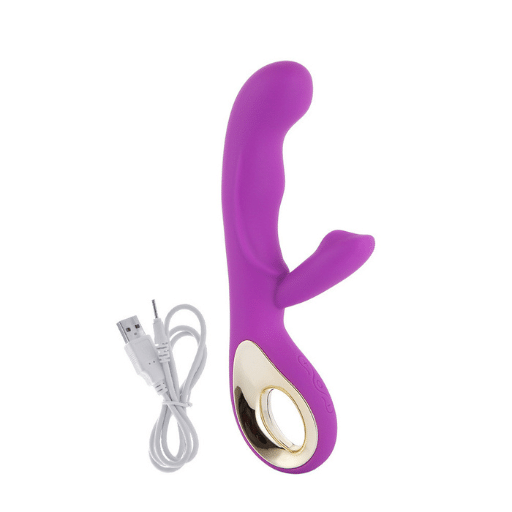
All electronic sex toys need to obtain CE marking through compliance with two different European Union directives. The Low Voltage Directive (2014/35/EU) establishes electrical safety requirements for products that operate within the voltage range of 50 to 1,000 volts AC or 75 to 1,500 volts DC. The Electromagnetic Compatibility Directive (2014/30/EU) ensures devices do not generate or are immune to electromagnetic disturbance.
Bluetooth toys and app-connected toys require compliance with the Radio Equipment Directive (2014/53/EU). The RED testing requirements include specific radio spectrum testing and SAR (specific absorption rate) evaluation for body-worn transmitters and cybersecurity assessment for app-connected devices.
The Notified Body Process
Only specific CE markings permit self-declaration by manufacturers. Manufacturers can use internal production control to test low-risk devices according to LVD and EMC regulations. The RED standard requires manufacturers to get certification from authorized bodies for their radio equipment. The notified body is an EU-accredited organization that reviews technical documentation, witnesses testing, and issues EU-type examination certificates.
The selection of a notified body is an important decision. Consumer electronics organizations do not possess the knowledge necessary to handle intimate products. Medical device experts tend to create excessive requirements. The perfect partner should have worked directly with personal care electronics.
Technical Documentation and Declaration of Conformity
CE marking needs a technical file which must include design drawings and material specifications and test reports and risk assessments and user instructions. The Declaration of Conformity (DoC) is a signed legal document which states that the product meets all applicable directives. The two items need to be kept for 10 years after the final product has been sold in the market.
CE Marking Costs and Timelines
| Directive | Cost Range | Timeline | Notified Body Required |
|---|---|---|---|
| LVD only | 3,000-5,000 EUR | 2-4 weeks | Usually no |
| LVD + EMC | 4,000-8,000 EUR | 4-6 weeks | Usually no |
| LVD + EMC + RED | 8,000-15,000 EUR | 8-16 weeks | Yes |
| ISO 10993 biocompatibility | 3,000-8,000 EUR | 4-8 weeks | No |
GPSR: What Changed in December 2024
GPSD vs. GPSR: Key Differences
The General Product Safety Directive (GPSD) established rules for EU consumer products which remained in effect until December 13 2024. The General Product Safety Regulation (GPSR) became operational on that day. The transition from directive to regulation enables direct application of GPSR rules throughout all EU member states without requiring national implementation processes.
The GPSR legislation introduced four principal modifications. Online marketplaces now face shared responsibility for unsafe products which users purchase through their websites. Businesses must inform authorities about serious risks within a two-day period which starts from the moment they identify the danger.
Non-EU manufacturers need to establish an economic operator who will serve as their representative in the European Union. The requirement now mandates all technical documentation which was previously suggested as optional.
EU Responsible Person Requirement
Most brands experienced unexpected difficulties because of this particular alteration. Non-EU manufacturers require an EU-based responsible person to sell products to EU retailers and consumers. The economic operator needs to be displayed on product labels because this entity holds legal responsibility for product safety enforcement throughout the EU.
The responsible person oversees technical records while working with market surveillance agencies and implementing safety measures to address safety concerns. Brands without an EU responsible person risk border rejection, marketplace delisting, and fines up to €10 million.
Incident Reporting and Post-Market Surveillance
The GPSR requires manufacturers to take immediate action when they discover safety hazards. National authorities must receive reports about serious risks within 2 business days. Manufacturers need to operate post-market surveillance systems which will enable them to gather safety feedback and conduct safety assessments.
Adult toy brands must establish three systems which include complaint tracking and batch traceability and recall procedures before they ship their first product. Organizations should not wait until an incident occurs before they begin to follow compliance procedures.
FDA Compliance: What It Actually Means
Novelty Items vs. Medical Devices
The FDA classifies products based on intended use, not physical form. Sexual pleasure devices sold as novelty items. The same device marketed for treating sexual dysfunction or pelvic floor rehabilitation becomes a Class II medical device requiring 510(k) clearance.
The distinction creates a compliance requirement which operates as a balancing act for companies. Brands must ensure their marketing, packaging, and sales channels consistently position the product as a novelty item. The FDA establishes medical device jurisdiction for any product which makes therapeutic claims.
FDA 21 CFR 177.2600 for Rubber Articles
The FDA prohibits sex toys from receiving official approval which allows manufacturers to use FDA standards for their material testing. The FDA 21 CFR 177.2600 regulation establishes maximum extraction limits which apply to rubber materials that food contact articles will use repeatedly. Adult toy manufacturers adopt this standard because no FDA regulation specifically covers sex toy materials.
The key requirement limits non-volatile residue extraction to 0.1 mg per square inch when tested with specified solvents. The testing needs to be done by an FDA-registered laboratory which will charge between 800 and 1,500 for each material formulation.
California Proposition 65
Prop 65 requires warning labels for products containing chemicals known to cause cancer or reproductive harm. The list includes over 900 chemicals. Some substances have safe harbor levels yet all materials used in adult toys need warnings except for those which receive specific exemptions.
Brands have three options. The first option requires brands to present complete warnings which detail all hazardous substances. The second option permits brands to display short warnings which designate specific chemicals that the product “can expose you to.” The third option requires brands to remove all hazardous substances which exceed safe harbor limits through product reformulation.
REACH and RoHS: Chemical Compliance
REACH SVHC Restrictions
REACH (Registration, Evaluation, Authorization of Chemicals) restricts Substances of Very High Concern (SVHCs) in products sold in the EU. The threshold is 0.1% by weight per homogeneous material. The most significant SVHCs which apply to adult toys include the phthalates DEHP DBP BBP and DIBP which function as plasticizers in soft plastics and TPE.
Since January 2021, manufacturers must notify ECHA through the SCIP database when their products contain SVHCs above the threshold. The database allows public access to its search functions. The requirement for transparency has reached a point where organizations must practice it as their essential duty.
RoHS Restricted Substances
The Restriction of Hazardous Substances Directive (RoHS) applies to electrical and electronic equipment. The law prohibits the use of lead mercury cadmium hexavalent chromium PBB and PBDE in products. The adult toy electronics industry needs to meet ROHS standards which testing facilities verify through XRF screening and chemical extraction methods.
The cost of ROHS testing ranges from 500 to 1500 for each product and requires 1 to 2 weeks to complete. Most reputable testing labs offer combined REACH and ROHS packages at a discount.
Phthalate Testing and Documentation
Adult toys most frequently fail chemical compliance testing because of phthalate testing requirements. The majority of TPE formulations use DEHP or DBP at levels which exceed the 0.1% REACH limit. Testing requires GC-MS analysis at an ISO 17025 accredited lab.
Brands should request phthalate test reports which include actual measured values instead of providing only a “pass/fail” summary. The report which shows DEHP at 0.08% provides assurance. The report which claims “compliant” without data presents a risk because it may contain results which approach violation limits.
FCC Certification for Electronic Toys
When FCC Part 15 Applies
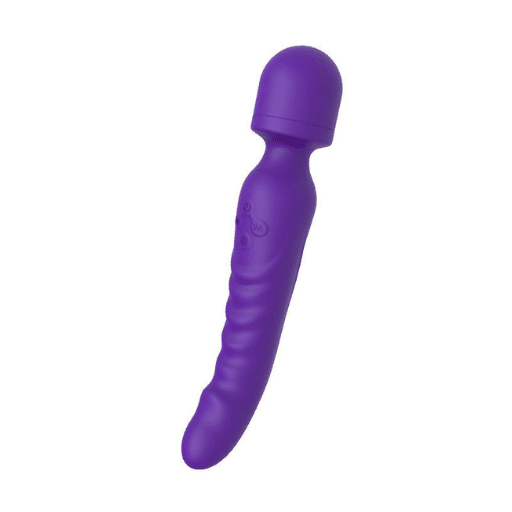
Electronic vibrators and smart toys need to obtain FCC certification for their digital circuits which operate beyond 9 kHz in the United States. This standard applies to all contemporary vibrators which use speed control features and rechargeable battery systems and microprocessor-based functionality.
FCC Part 15 defines unintentional radiators as digital circuits which emit electromagnetic energy without purpose while it defines intentional radiators as Bluetooth and Wi-Fi and RF remote control systems. The FCC ID process requires manufacturers to obtain formal equipment authorization for their intentional radiators. The unintentional radiators usually follow the Supplier’s Declaration of Conformity SDoC system for compliance verification.
Bluetooth and App-Connected Devices
The Bluetooth-enabled toys function as intentional radiators which need testing at an FCC-accredited laboratory and equipment authorization submission to the FCC and permanent FCC ID labeling on the product or packaging. The process costs 3,000to3,000to10,000 and takes 4 to 8 weeks.
The use of app-connected toys introduces new cybersecurity challenges for users. The FCC does not currently mandate specific cybersecurity standards for consumer devices but the FTC has taken enforcement actions against IoT manufacturers who fail to implement adequate security measures. Brands need to establish basic security protocols which require encrypted communication and secure firmware updates and password protection.
Battery Safety: UN38.3 and IEC 62133
Lithium-ion batteries need UN38.3 testing to meet international air transport requirements. The testing process includes seven different test procedures which involve altitude simulation and thermal testing and vibration testing and shock testing and external short circuit testing and impact testing and overcharge testing and forced discharge testing. The standard IEC 62133 establishes extra safety regulations which apply to portable sealed secondary battery systems.
A single battery safety failure can stop all shipments from moving forward. Airlines and freight forwarders require UN38.3 test summaries before accepting lithium battery shipments. International markets cannot receive products which lack this documentation.
ISO 3533:2021: The New Sex Toy Standard
Scope and Requirements
ISO 3533:2021 is the first international standard specifically written for sex toys. The standard contains design requirements and safety requirements which apply to products that touch either genitalia or the anus or both.
The standard requires assessment of material safety together with mechanical safety and thermal safety and electrical safety and user information standards. The standard requires anal-use products to have retrieval features which stop users from losing their devices. The surface temperature must not exceed 48 degrees C according to the requirements. The standard requires users to use common household tools for removing products that trap them inside genital enclosure devices.
Certification Cost and Process
Major retailers now expect ISO 3533:2021 certification which remains optional for businesses. The certification process requires testing products and conducting factory assessments and evaluating quality systems. The total expenses for the project range between 5000 and 15000 dollars which depends on the complexity of the product range. The standard duration for this process requires between 8 and 16 weeks to complete.
LELO became one of the first major brands to achieve ISO 3533:2021 certification in 2024. Companies that adopt this standard before others will receive important marketing benefits because European regulators increasingly use this standard as a reference despite its voluntary nature.
Certification Costs and Budget Planning
Cost Ranges by Certification Type
| Certification | Applies To | Cost Range | Timeline | Renewal |
|---|---|---|---|---|
| GPSR compliance | All EU products | 500-2,000 EUR | 2-4 weeks | Ongoing surveillance |
| CE marking (LVD/EMC) | Electronic toys | 3,000-8,000 EUR | 4-8 weeks | Per design change |
| CE marking (RED) | Bluetooth/Wi-Fi toys | 8,000-15,000 EUR | 8-16 weeks | Per design change |
| REACH testing | All EU products | 800-3,000 EUR | 2-4 weeks | When formulation changes |
| RoHS testing | Electronic toys | 500-1,500 EUR | 1-2 weeks | When supplier changes |
| FCC certification | Electronic US toys | 3,000-10,000 USD | 4-8 weeks | Per design change |
| ISO 3533:2021 | All products (voluntary) | 5,000-15,000 EUR | 8-16 weeks | Annual surveillance |
| ISO 10993 | Body-contact materials | 3,000-8,000 USD | 4-8 weeks | Per formulation |
| UN38.3 | Lithium batteries | 1,500-4,000 USD | 2-4 weeks | Per battery model |
Hidden Costs
The table above shows direct testing costs. Hidden costs add 30% to 50% more. Technical documentation preparation costs 1,000to1,000to3,000. Translation of user manuals and labels into local languages adds 500to500to2,000 per language.
EU responsible person appointment costs 2,000to2,000to5,000 annually. Surveillance audits for ISO certifications run 1,000to1,000to3,000 per year.
Total Compliance Budget by Market Entry
| Market Entry | Minimum Budget | Recommended Budget |
|---|---|---|
| EU only, non-electric | 2,000-4,000 EUR | 5,000-8,000 EUR |
| EU only, electronic | 8,000-15,000 EUR | 15,000-25,000 EUR |
| US only, electronic | 5,000-12,000 USD | 10,000-18,000 USD |
| EU + US, electronic | 15,000-30,000 EUR/USD | 30,000-50,000 EUR/USD |
| Global (EU, US, UK, CA, AU) | 25,000-50,000 EUR/USD | 50,000-80,000 EUR/USD |
Ready to build a compliance roadmap for your specific product and target markets? Request a certification consultation with Joyflick’s regulatory team.
How to Verify Your Manufacturer’s Certifications
Checking Notified Body Legitimacy
Every EU notified body has a unique four-digit identification number. The European Commission maintains the NANDO database which contains all accredited notified bodies that are listed according to each specific directive. Verify the existence of the body through NANDO which must show its accreditation for the particular directive when a manufacturer claims CE certification through a notified body.
The presence of unauthorized notified body numbers and the existence of bodies with accreditation for different directives and the issuance of certificates by self-declared bodies without EU accreditation all serve as red flags.
Validating Test Report Authenticity
Test reports become valid when they contain laboratory accreditation numbers and test method references and actual measured values and sample descriptions and date information. The lab should be contacted through its official website because the contact information on the certificate does not provide valid communication channels.
Her manufacturer delivered REACH test reports from an unknown laboratory when Priya launched her European Union brand extension in early 2025. She used the publicly available contact information to send an email to the lab. The reports existed but they had no record of them.
The manufacturer had created fake documents which utilized the letterhead of an actual laboratory. Priya walked away. She found a transparent supplier and delayed her launch by six weeks rather than risk border seizure or criminal liability for false documentation.
Factory Audit Certification Checklist
Request these documents for every product and every certification claimed:
- Product identification sheet with SKU, photos, and specifications
- Material declarations for all body-contact components
- Test reports with actual values, not just pass/fail summaries
- Declaration of Conformity for CE-marked products
- EU responsible person agreement for GPSR compliance
- Batch control records and traceability documentation
Common Certification Mistakes to Avoid
Displaying CE marks on non-electronic toys. This is misleading and potentially unlawful. GPSR products do not carry CE marking.
Using expired test reports. REACH and RoHS test results have validity periods. Formulations change. Suppliers switch. A report from 2022 does not prove compliance in 2026.
Ignoring the GPSR responsible person requirement. Non-EU manufacturers without an EU economic operator cannot legally place products on the EU market. Marketplaces are now required to verify this.
Confusing self-declaration with third-party certification. Self-declaration under LVD is legitimate for low-risk electronics. But RED requires notified body involvement. Know which applies to your product.
Failing to update for regulatory changes. GPSR replaced GPSD in December 2024. UKCA rules have shifted multiple times since Brexit. Regulations evolve. Compliance is not a one-time event.
When Andrei’s first container of vibrators arrived at Rotterdam in January 2025, customs held it for three weeks. His manufacturer had handled EU sales for years under GPSD. Neither of them had appointed an EU responsible person under the new GPSR requirements.
The delay cost Andrei his Valentine’s Day launch window. It cost him €8,000 in demurrage fees. He now reviews regulatory updates quarterly.
How Joyflick Handles Certification and Compliance
Joyflick keeps complete compliance documentation updated for all its important operational markets. Our certification portfolio includes CE marking for electronic products under LVD, EMC, and RED directives. We perform FDA 21 CFR 177.2600 material testing on all our silicone product formulations. We keep REACH and RoHS documents which show actual values instead of using standard declarations.
We selected an EU economic operator before the implementation of GPSR regulations. Our post-market surveillance system monitors batch numbers together with customer feedback and safety notifications. We assist brands in achieving ISO 3533:2021 certification which enables their entry into premium retail markets.
We offer compliance consulting services to brands entering new markets which identify certification requirements based on their product design and selected countries. We handle third-party testing through our partnerships with accredited laboratories which include SGS and Intertek. We create all technical documents and Declarations of Conformity and user manual translations.
Emerging brands can achieve regulatory compliance through our services which start at 300 units for minimum order quantities. Our engineering team assesses product designs to ensure they meet certification requirements before production starts because this process protects against expensive redesigns that occur after tooling completion.
Request a Compliance Consultation for Your Target Markets — Our regulatory team will review your product design, identify required certifications by market, and provide a compliance roadmap with accurate cost estimates.
Conclusion
The presence of adult toy certifications serves as mandatory legal requirements. The certifications serve as essential legal requirements that determine product distribution to customers or product destruction at border checkpoints.
Every brand needs to make five critical decisions which should be established as their fundamental requirement. The FDA does not approve any novelty items according to this understanding. The CE marking system only applies to electronic devices according to this understanding.
You need to appoint an EU responsible person for GPSR compliance. The budget should include expenses for actual third-party testing. You must confirm all manufacturing claims which your manufacturer presents to you.
The regulatory environment will undergo ongoing changes. The European Union plans to extend chemical restrictions which it currently enforces through REACH. The United States intends to strengthen its FCC enforcement activities for devices which connect to other devices.
ISO 3533:2021 will move from its current status as a voluntary standard which organizations can choose to adopt. Companies that incorporate compliance procedures into their product development process will experience seamless adoption. Companies that treat certification as an afterthought will face delays, fines, and recalls.
Your customers cannot see your test reports. Your customers can see how dedicated you are to safety through the products which you choose to sell. Businesses should not consider compliance as an expense because it serves as their primary method for establishing brand trust.
Ready to bring a certified product line to market? Start your custom manufacturing consultation with Joyflick today.