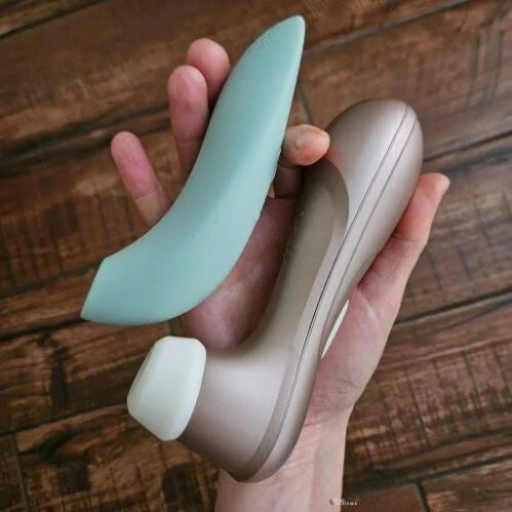

Why does my sex toy smell? Because something volatile is leaving the material, or something’s grown on or in it. There are four sources: the material’s own volatile content, residue trapped in the surface, biological growth, and fragrance added to hide the first three.
Here’s the part most guides skip: a smell tells you what’s on or in the toy, not whether the toy is toxic. Mixing up those two questions leads people to bin a good toy one week and keep using a degrading one the next.
Take a case we’ll call Maya’s. She opened a soft TPE stroker and met a sharp, rubbery smell. A week of washing and airing took it down to almost nothing.
A year later, a toy from another supplier smelled mild on arrival and turned musty after three months in a bathroom drawer. Same complaint, two causes, two outcomes.
This guide separates those causes: what each smell points to, which ones a wash can fix, and which mean the material is finished. If you’re sourcing rather than buying, ask our materials team to review the compound before you commit to a formula.
Key Takeaways
- Sex toy smell has four sources: material volatiles, held residue, biological growth, and added fragrance. Each needs a different response.
- Rubber or solvent smells that fade over days to weeks are usually process oil. A Danish EPA survey recorded “odourless” for hard plastic, “weak rubber odour” for latex, and “weak diesel oil odour” for one thermoplastic rubber.
- Odor is not a toxicity test. Phthalates were found in all four toys in a 2023 study, yet smell alone cannot tell you which products contain them.
- Musty or sour smells on a porous toy mean growth inside the material, not dirt on it. No wash fixes that; the toy should be replaced.
- Perfume is a warning sign, not a feature. Fragrance is sometimes used to mask a cheap oil or a residue problem.
Why Does My Sex Toy Smell? The Short Answer
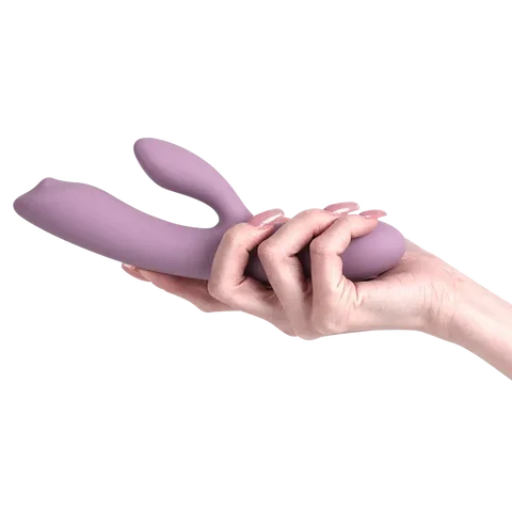
A sex toy smells because something volatile is leaving it, or something’s grown on it. Process oils, plasticisers and manufacturing residue cover the first case. Skin oil, lubricant and soap trapped in a porous surface cover the second.
The useful test is timing. A smell present in the box and fading over days is a material smell. One that appears after use or after storage is residue or growth. One that survives a thorough wash and returns within a day or two means the material itself is holding it.
That last pattern is the one to take seriously. It follows the same logic as why TPE sex toys get sticky: the material is losing something it needs, or holding something it cannot release.
Smell Is Not a Toxicity Test
Many guides say a strong chemical smell means the toy is unsafe. That isn’t supported, and it fails in both directions. It scares people off a toy that only needed airing, and it reassures people who own a questionable product that happens to smell faint.
Odor measures volatile compounds. Toxicity is a dose-and-exposure question answered in a lab, and the two often travel apart.
The 2006 Danish EPA survey illustrates this. Investigators bought 16 products and recorded an odor descriptor for each. The results tracked material class, not safety grade. Soft vinyl samples carried “oil odour,” “oil and toluene odour” and “diluent odour.” Natural latex carried a “weak rubber odour.” One thermoplastic rubber sample carried a “weak diesel oil odour.” The single hard-plastic sample was “odourless.”
That’s a small, old, deliberately worst-case sample. Read it as a pattern: material chemistry predicts smell type. For what a lab report can actually prove, see are TPE sex toys safe.
What Your Toy’s Smell Is Telling You
Use this table to find your likely cause. The right-hand column is the part that matters, because it separates a fix from a farewell.
| What it smells like | Likely cause | Typical materials | Fixable? | What to do |
|---|---|---|---|---|
| Rubber, plastic, “new car,” faint solvent | Process oil and manufacturing residue | TPE, TPR, PVC, jelly | Usually, with time | Wash once, air 3 to 7 days uncovered |
| Sharp, diesel-like, acrid and persistent | Low-grade oil or a heavily plasticised compound | Soft PVC, cheap TPE | Sometimes | Air two weeks; if it persists, treat it as a material problem |
| Sour, musty, mildew, “gym bag” | Moisture plus microbial growth | TPE, TPR, jelly, PVC, latex | No, once established | Replace it |
| Fish-like or body-like | Body fluid, not the toy | Any | Yes | Clean promptly; if it recurs without use, see a clinician |
| Perfume or floral | Added fragrance | Any, most often cheap PVC and jelly | Partly | Air it, and treat masking as a quality question |
| Metallic or burnt | Motor, battery or charging contact | Vibrators | No | Stop using it |
Two rules make the table work. Smell the toy before use, then again a day after a full wash, and note where it is strongest. Residue concentrates where water and air cannot reach, so a localised smell means residue and an all-over smell means material.
Why Does My Sex Toy Smell of Rubber or Chemicals?
Thermoplastic elastomers are blends. The rubber phase gives the feel; process oil makes it soft and workable. That oil is the most volatile part of the blend, and it does not stay put.
Polymer research describes the loss in two stages: the plasticiser diffuses to the surface, then evaporates. Depending on temperature and airflow, either can be the slow one (Wei, Linde & Hedenqvist, npj Materials Degradation, 2019). That’s why the same toy smells stronger in a warm room and fades faster in moving air.
Refined oils smell faintly. Cheaper fractions carry more volatile impurities and smell stronger, sometimes with a diesel note. Mold-release spray adds a surface layer that usually washes off but can sit in a sealed bag for months.
A well-made TPE toy’s new smell typically fades over days to a few weeks. A poorly made one, with a high oil load and a cheap oil, keeps smelling for months and then goes tacky as the oil leaves. For a brand, the levers are upstream: oil grade, loading and a devolatilisation step before packing, covered in TPE sex toy manufacturing.
The perfume problem
Some products arrive smelling floral or sweet. That isn’t a material property. It’s fragrance, added to mask the oil smell or a residue problem, and it’s common in low-cost soft PVC and jelly.
A perfumed toy is a question, not a feature. Fragrance adds volatile compounds to a product that contacts mucous membranes, and it hides the signal you would otherwise use. If a toy smells like perfume, ask what it covers.
Why Does My Sex Toy Smell After Washing?
Porous materials hold what non-porous materials shed. TPE, TPR, jelly, PVC and latex have surface structure that traps lubricant, skin oil, soap and water. Silicone, glass, steel and hard ABS don’t, which is why one routine gives two results, and why residue is the most common reason a sex toy smells after washing.
Residue has three favourite places: internal channels, seams and moulded texture, and the space under a cap ring. A rinse reaches the first, partly the second, and usually misses the third, which is where most “washed it and it still smells” cases begin.
If a toy smells worse after washing, the cause is usually cleanser that wasn’t rinsed out, or storage while damp. Scented soap leaves its fragrance in a porous surface, and a damp toy in a closed drawer sets up the next cause on this list.
That is the loop behind “it smells no matter what I do.” How to clean TPE sex toys covers the full sequence.
A reader we’ll call Tom had exactly this loop. He washed a TPR sleeve after every use, dried the outside with a towel, and put it straight back in its zip pouch. It smelled sour within a month. The towel had done nothing for the channel.
Once he started air-drying it open overnight and storing it in a cotton bag, the same sleeve stayed neutral for the rest of its life.
Why Does My Sex Toy Smell Musty?
This is the cause that changes the answer from “clean it” to “replace it.”
Growth needs water and time. A toy stored damp in a closed drawer or sealed bag, in a warm bathroom, supplies both. The result is musty, sour or mildewy, and it reads differently from the solvent smell of a new toy.
Once growth is established in a porous matrix, surface cleaning cannot reach it. The material isn’t dirty outside; it’s colonised within. Guides that treat every smell as a cleaning problem recommend vinegar, bleach or long soaks, none of which solve it, and some damage the toy.
The evidence is narrower than the marketing suggests. In a 2014 study, 12 women used a TPE vibrator and a silicone vibrator on separate occasions. HPV DNA turned up on 8 of 9 TPE shafts before cleaning, 5 of 9 after a commercial cleaner, and still 2 of 5 at 24 hours. On silicone it went from 6 of 9 to 4 of 9 to 0 of 4 (Anderson et al., Sexually Transmitted Infections, 2014).
Twelve participants and two toys is a small sample, and the authors call the finding suggestive. But the direction matches everything else: porous surfaces retain what non-porous surfaces release.
The practical reading: dry the toy completely, every time, and store it where air moves. If a musty smell has already appeared on a porous toy, replace it rather than reaching for a stronger chemical.
When the Smell Is Body, Not Toy
Not every smell belongs to the toy. A fish-like odor that appears only after use, and is absent when the toy is clean and dry, is a body signal.
The rule: clean and dry the toy, then check whether the smell returns without use. If it does, the toy is the issue. If it only appears after use, a clinician is the right next step.
Why Does My Sex Toy Smell When It Is Silicone?
Platinum-cure silicone is non-porous. It does not absorb into a matrix the way TPE does. That is not the same as odor-proof.
Silicone is semi-permeable at a molecular level, so small volatiles can diffuse in and back out. A toy stored beside a scented candle picks up that smell and loses it after airing.
Most persistent silicone odor sits on the surface: skin oil, lubricant, scented soap, or mold-release residue. Remove the residue and the smell usually goes. How to clean silicone sex toys covers the options silicone has and TPE does not.
A toy sold as silicone that smells strongly, feels tacky and keeps its smell is often not silicone at all. How to tell if a sex toy is real silicone runs through the tests and their limits.
How to Get Rid of Sex Toy Smell
Work through these in order. Most smelly sex toys resolve at step two; the ones that don’t are replacement cases.
- Remove the residue. Use a mild, fragrance-free cleanser and warm, not hot, water. Work it into channels and seams, then rinse until the water runs clear with no slip.
- Dry it completely. Dry the surface with a lint-free cloth, then air-dry with the channel open. A drying stick helps for sleeves. Give it hours, not minutes.
- Air it separately. Leave it uncovered or in breathable fabric for a day or two, away from other toys. Not a closed drawer, not a zip bag.
- Reassess. Smell it again after 24 to 48 hours. Gone means residue. Back means a material problem.
| Method | Works? | Why |
|---|---|---|
| Mild soap and warm water | Yes, for residue | Lifts the surface film without stripping the material |
| Complete drying plus airflow | Yes, for moisture | Growth needs water; remove the condition and it stops |
| Baking soda or charcoal nearby | Masks only | Absorbs airborne odor, does nothing to the source |
| Vinegar soak | No, and risky | Adds its own odor, no sterilization benefit, degrades some materials |
| Dilute bleach | No | Damages TPE and never reaches growth inside a porous matrix |
| Rubbing alcohol | No | Strips and cracks TPE, despite being widely recommended |
| Boiling | Silicone only, motor-free | Effective on non-porous silicone, destructive on TPE and electronics |
| Fragrance sprays | No | Adds a second odor problem on top of the first |
Nothing you can buy will pull a smell out of the inside of a porous material. If the source is inside, the fix is a new toy.
When the Smell Means Replace
Three patterns justify replacement rather than another wash.
- It comes back. The smell returns within a day or two of a proper wash and full dry, because cleaning cannot reach the interior of a porous matrix.
- The surface changes. Tackiness, small cracks, a chalky film or discolouration alongside odor is a degradation pattern.
- It is musty or speckled. A musty or mildewy smell, or dark speckling visible in a channel, means growth that is not reversible.
How long a toy should have lasted depends on material. How long do sex toys last? This comparison includes the point where electronics fail before the material does.
For Brands: Why Some Shipments Smell and Others Don’t
A “my toy smells” ticket is written as a customer complaint. Read it as a specification signal instead.
One brand owner we’ll call Elena ran a low-MOQ launch and got a wave of one-star reviews about a “rubber” smell. Her samples had been fine.
The production batch used a cheaper oil and was packed warm. Nothing about her design had changed. The saving per unit was small; the review damage wasn’t.
Oil grade and volatile content. A refined process oil carries fewer volatile impurities than a cheap fraction. It costs more per kilo and changes the finished part’s smell profile. Ask for the oil type and the volatile content, not a promise that the product is “low odor.”
Devolatilisation and mold release. A controlled post-mould step lets residual volatiles escape before packing. Mold-release choice decides what stays on the surface. Both belong in the process specification, not a verbal assurance.
Fragrance as a design decision. If a formula needs fragrance to be acceptable, that’s information about the formula. Decide deliberately, document it, disclose it.
Measurement. Odor can be graded instead of argued about. The automotive industry uses VDA 270, a trained-panel scale from 1 (imperceptible) to 6 (intolerable). It isn’t a sex-toy standard, but the method transfers, and a declared grade beats “smells fine.” Material requirements and cleaning instructions are covered by ISO 3533:2021. That’s a voluntary standard, not a certification.
The phthalate picture belongs here too. A 2023 study tested four toys and found phthalates in all four (Sipe et al., Microplastics and Nanoplastics, 2023). In two of them, one phthalate exceeded the 0.1% limit applied to children’s toys.
The authors note that four products are not representative. The lesson is not that TPE is toxic, but that material claims need test reports behind them.
Talk to our team about specifying a formula with a documented volatile profile, and see TPE vs silicone sex toys when you compare compounds.
FAQ
Why does my new sex toy smell like chemicals?
New TPE, TPR, PVC and jelly toys usually smell of process oil and manufacturing residue. A faint smell that fades over days to weeks is normal. A sharp, diesel-like smell that persists for months points to a low-grade oil, which is a quality question rather than a safety verdict.
Why does my sex toy still smell after washing?
Usually cleanser residue left in a porous surface, or storage while still damp. Rinse until the water runs clear, dry it completely including the channel, and air it for 24 to 48 hours. If the smell returns, the material is holding it and the toy should go.
Does boiling remove smell from a silicone toy?
Boiling can remove surface residue and sterilize non-porous, motor-free silicone. It does not work on TPE, TPR, jelly or PVC, which deform, and it must never be used on a toy with a motor or charging port.
Can I use vinegar or baking soda on a smelly toy?
Baking soda absorbs airborne odor in a closed container but does not remove the source. Vinegar adds its own odor, offers no sterilization on a porous surface, and can degrade some materials. Neither is a fix.
Is a smelly sex toy safe to use?
Not automatically unsafe, and not automatically fine. A fading solvent smell is a material characteristic. A musty or sour smell with tackiness, cracks or discolouration means the material is degraded or colonised and the toy should go. If a smell only appears after use, the toy is fine and the odor is a body signal.
Conclusion
Why does my sex toy smell? Because one of four things is true, and only some are fixable. Material volatiles fade with time and air. Residue comes off with a proper wash and a complete dry.
Growth in a porous material does not come off at all.
The test that separates them is simple. Wash it, dry it completely, air it, and smell it again two days later. If the smell is gone, you had residue. If it is back, the material is holding it.
That’s also the honest limit of consumer advice. By the time a toy smells, its formula was set months earlier. Brands that want fewer of these complaints have to specify the oil, control the volatiles and measure the result.
The question behind every “why does my sex toy smell” ticket is a manufacturing one long before it reaches the sink. We work with brands on exactly that, and you can start with a material review.