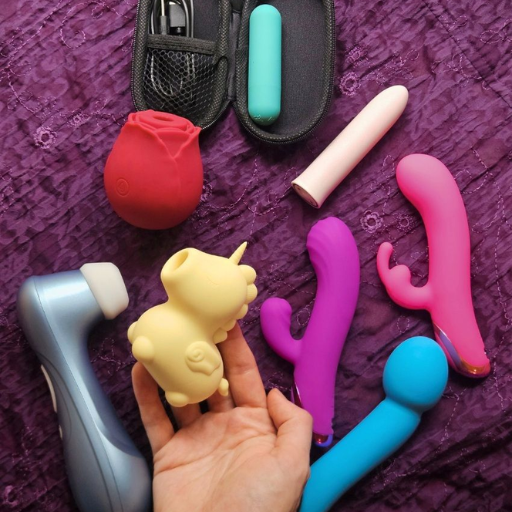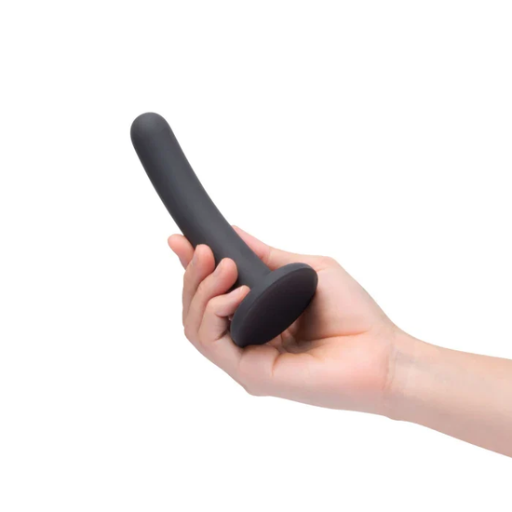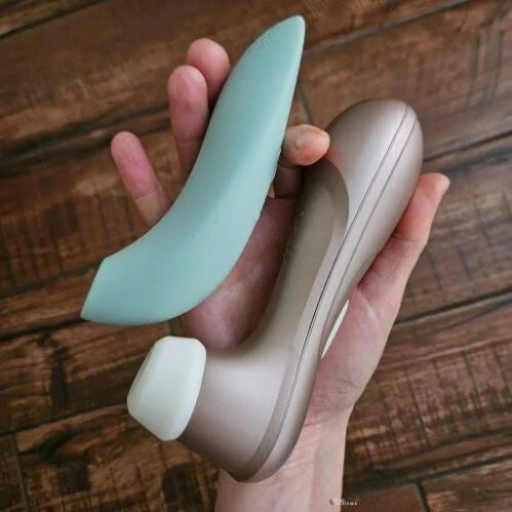
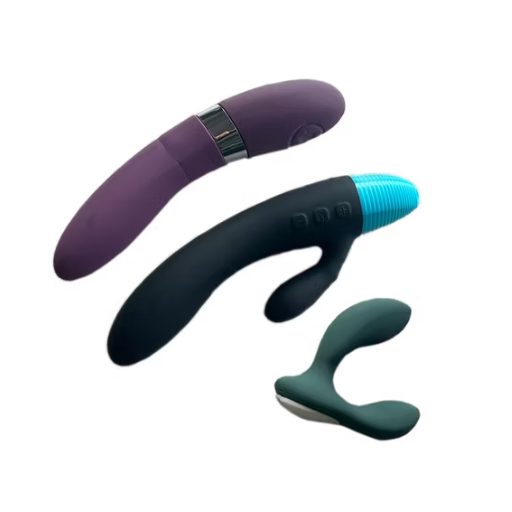
ABS plastic sex toys are generally safe when the ABS is an injection-molded housing, handle, cap, base or bullet shell. ABS is a poor choice for a soft or high-friction insertable surface, it warps near boiling water, and acetone dissolves it.
The material is rarely the problem in an ABS failure. The part, the grade or the finish usually is.
Consider Maya, who launched a bullet vibrator in a matte black ABS shell. Returns started arriving within a month. The complaint was “cheap plastic.”
The mold was fine and the resin met the spec. The failure was a sharp internal corner where the two halves met. Every return had a hairline crack in the same place, and several owners had wiped the shell with acetone-based nail polish remover.
That pattern is the subject of this article. ABS is a useful engineering plastic. It fails in predictable ways, and most of those ways can be designed out before production.
If you are specifying a housing or reviewing a return, ask our materials team to look at the grade and the mold. If you are holding a toy and wondering whether it is safe, the part-by-part verdict below is the short version.
Key Takeaways
- Injection-molded ABS is rigid, non-porous and generally body-safe for housings, handles, caps and bullet shells. It is not a soft insertable surface.
- ABS does not need plasticizers, so phthalates are not part of a normal formulation, and it does not use BPA as a monomer. That is a formulation fact, not a purity certificate.
- General-purpose ABS is rated for continuous service around 60–80°C, with heat deflection at 80–100°C. Boiling water and dishwashers can warp it, and a sunlit dashboard reaches about 69°C.
- Acetone dissolves ABS, and alcohol can cause stress cracks under load. Mild soap and a damp cloth are the default.
- A 3D-printed ABS part is not equivalent to a molded one. Layer gaps harbor bacteria, so print a mold and cast silicone instead.
Are ABS Plastic Sex Toys Safe? The Short Answer

Yes, with three qualifiers. The ABS must be the right part, made from a controlled grade, with a finish that stays intact.
A rigid ABS housing doesn’t contact delicate tissue for long periods, doesn’t need to flex, and doesn’t contain the plasticizer phase that makes soft PVC and TPE a migration concern. That’s why it’s the standard material for vibrator shells, handles, control rings and battery doors.
The most direct evidence comes from a Danish EPA study of toys. Researchers tested 10 ABS products for residual acrylonitrile, 1,3-butadiene and styrene. Acrylonitrile ranged from 8 to 64 mg/kg and styrene from 595 to 1,350 mg/kg. They then ran five migration tests on the two ABS products with the highest levels: 20% ethanol, artificial sweat, artificial saliva, water at 37°C, and stomach acid.
No acrylonitrile, butadiene or styrene migrated above the detection limit in any of the five media. The limits were 0.01 mg/L for acrylonitrile and butadiene and 0.02 mg/L for styrene. The report concluded that residual monomers from the tested toy materials did not pose a health risk (Danish EPA, Survey No. 174, 2019).
Two caveats matter. The study covered children’s toys, not sex toys, and only two ABS products received the full migration panel. A below-detection result is reassuring, not proof of zero exposure. It does show that residual monomer content alone does not predict migration.
What ABS Is, and Where It Belongs on a Toy
The polymer in one paragraph
ABS is a terpolymer of acrylonitrile, butadiene and styrene. The acrylonitrile contributes rigidity and chemical resistance, the butadiene contributes impact strength, and the styrene contributes a smooth surface and easy processing. It is amorphous, so it softens over a range rather than melting at one temperature.
It’s also rigid without plasticizers. That’s the key difference from soft PVC and many TPE compounds. Phthalates are added to PVC to make it flexible. A rigid ABS housing does not need them, which is why “phthalate-free” describes the material rather than a special additive package.
ABS doesn’t use bisphenol A as a monomer either, unlike polycarbonate. That doesn’t make every ABS part “BPA-free” in an absolute sense, because colorants, regrind and contamination are separate inputs. It does mean the base polymer isn’t the source.
A part-by-part verdict
The same material can be a good choice in one location and a bad one in another. Most ABS plastic sex toys combine several of these parts. This table is the article in miniature.
| Part | Typical ABS use | Verdict | Why |
|---|---|---|---|
| Outer shell or housing | Vibrator body, wand head, control housing | Good | Rigid, non-porous, protects electronics and takes a smooth mold finish |
| Handle or grip | Shaft handle, curved grip | Good | Dimensionally stable and holds threads and inserts |
| Battery door or cap | Twist cap, hinged door | Good, with a seal check | Rigid and accurate, but the seam and gasket are the weak points |
| Control ring or buttons | Speed buttons, dials | Good | Wear-resistant and dimensionally stable |
| Suction base | Cupping base, stand | Good | Stiff enough to hold suction; clean the seam |
| Bullet or wand shell | Small vibrator body | Good | Transmits vibration without damping |
| Insertable shaft | Hard “ABS dildo” | Conditional | Non-porous, but hard, unforgiving and seam-sensitive |
| Painted or plated trim | Decorative ring, metallized shell | Check the finish | Wear, chipping and adhesion are the risks, not the ABS itself |
| 3D-printed part | FDM-printed toy or attachment | Not for insertable use | Layer gaps cannot be reliably cleaned |
The insertable row deserves its own paragraph. A molded ABS shaft can be smooth, non-porous and easy to clean. It is still hard, with no give, and it concentrates pressure at the tip and along any seam.
Take Daniel, who bought a hard ABS dildo because the listing said “non-porous and body-safe.” The toy was non-porous. It also had a visible parting line running down one side and a squared-off base. Daniel used it twice and stopped, not because of a chemical problem but because the seam was uncomfortable. A smoother mold and a rounded base would have made the same material work.
If a hard toy is shared, a condom is the practical barrier. If it is cracked, chipped or has a rough seam, retire it. For the wider material map, see body-safe materials in adult toys.
Mixed construction is normal. A silicone skin over an ABS core gives a soft contact surface and a rigid handle in one product. The bond line and the seam are where water and residue collect, so clean and dry them deliberately. For the manufacturing side of that construction, see custom silicone vibrator manufacturing.
The Limits of ABS Plastic Sex Toys: Heat, Solvents and Cracks
ABS plastic heat resistance: the numbers that matter
ABS doesn’t have a single melting point. It has a glass transition temperature and a heat deflection temperature, and both depend on the grade.
| Condition | Approximate temperature | What happens |
|---|---|---|
| Room or bathroom | 20–25°C | No effect |
| Parked car, cabin air | About 46°C | No effect on a sound part |
| Parked car, dashboard surface | About 69°C | Close to the continuous-service ceiling; a loaded part may soften |
| Continuous service, general-purpose grade | 60–80°C | Design ceiling, not a failure point |
| Heat deflection at 1.82 MPa | 80–100°C | The part may deform under load |
| Softening range | 90–100°C | Visible warping and loss of fit |
| Glass transition | About 105°C | Polymer shifts from glassy to rubbery |
| Boiling water | 100°C | Above the safe service range; warping likely |
| Dishwasher | 60–70°C plus detergent | Not recommended; heat, chemistry and load together |
Sources: Noramark’s ABS property summary for the service, heat-deflection and glass-transition ranges, and Vanos et al. (2018) for the dashboard and cabin measurements.
The practical rule is simple. If the part is under load, keep it below the continuous-service range. A housing that sits in a drawer is fine at 40°C. A toy left on a dashboard in summer is at the edge of its design envelope, and a battery inside adds its own heat.
Boiling is the common mistake. Silicone can take it. ABS cannot. The same applies to dishwashers, which combine water near the softening range with detergent and mechanical load. Hand-wash ABS in warm water, not hot.
Solvents: what dissolves it and what only stresses it
ABS is attacked by ketones, esters, aromatic hydrocarbons and chlorinated solvents. Acetone is the one people reach for, and it is close to a solvent for ABS. A wipe can dull the surface. A soak can turn it tacky or dissolve it.
Alcohol is more conditional. Supplier testing rates ethanol at a critical strain of 0.25 for general ABS. That means a part under residual or assembly stress can craze even when the chemical contact is brief.
Silicone oil and silicone grease rate 0.7 or more, and food oils sit around 0.5 to 0.63 (Techno-UMG chemical resistance data). Those values come from a 1/4-ellipse test at 23°C for 17 hours on a 2 mm sheet. They’re guidance, not a guarantee for a molded toy with a snap fit.
Stress cracking needs two things: a chemical and a stress. The stress can come from the mold, a press fit, a screw boss or a snap closure. That is why the same alcohol wipe is harmless on a flat panel and damaging at a sharp internal corner.
- Water and mild soap: no meaningful effect. Use this by default.
- Water-based and silicone-based lube: no swelling problem on ABS. Silicone lube is safe here, unlike on silicone.
- Oil-based lube: low interaction in supplier tests. Wipe it off after use.
- Ethanol: critical strain 0.25. Avoid prolonged contact.
- Isopropyl alcohol: conditional. Keep the contact short and test a hidden area first.
- Acetone, MEK, toluene, paint thinner: dissolve or attack. Never use.
- Abrasive cleaner: scratches the surface and creates places for residue to collect.
How to clean ABS sex toys without damaging them
Use warm water, mild soap and a soft cloth. Work around seams, button gaps and the battery door, because those are the places residue collects. Rinse, then dry fully before closing the battery compartment.
Do not boil it. Don’t put it in a dishwasher. Don’t use acetone, nail polish remover, bleach or an abrasive pad. If the maker specifies a disinfectant, use that product at that concentration, and test it on an inconspicuous area first.
For motorized toys, keep water out of the electronics. A waterproof rating is a claim about the assembled product, not about the ABS. If water gets past a seal, the motor and battery are the greater hazard.
How to Judge ABS Plastic Sex Toys Before You Buy
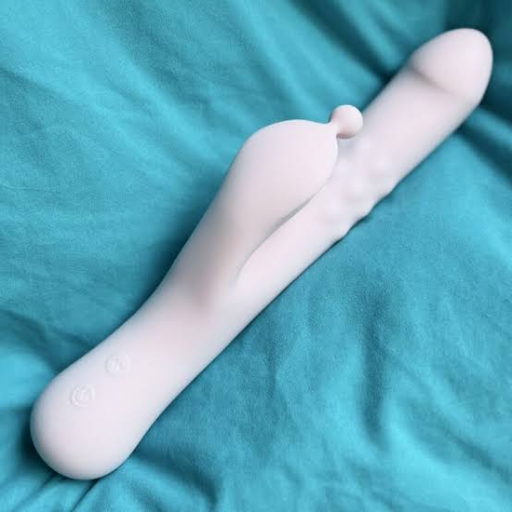
Start with the label. “ABS” tells you the polymer family, not the grade. A good listing or spec sheet names the grade family, the heat rating and the finish. A bad one says “ABS plastic” and nothing else.
Then look at the molding. A quality ABS part has a uniform surface, clean edges and no visible weld line running through a high-stress area. Flash, sink marks, sharp corners and a chalky or uneven color suggest a low-cost tool or an uncontrolled process. None of those is automatically unsafe, but each is a reason to look closer.
Check the finish separately. Painted, plated and soft-touch coatings are additional layers, and each can wear, chip or lift. On an insertable toy, a chipped coating is a defect. On a handle, it is mostly cosmetic. Ask what the coating is and how it was tested.
Smell is a weak test. A strong styrene odor suggests residual monomer or a poorly dried resin, but odor doesn’t tell you the dose or the hazard. The Danish EPA data show that ABS can contain hundreds of mg/kg of styrene and still release nothing detectable in migration tests. Use smell as a quality flag, not a safety verdict.
Likewise, a flame test tells you very little. ABS and other styrenics can behave similarly, and a flame test on a finished toy says nothing about the grade or the additives.
If you are buying at scale, ask for the SDS, the grade data sheet and a migration test report. A certificate of analysis that lists only “ABS” is not enough. For the broader inspection workflow, see quality control in adult toy manufacturing.
ABS vs Silicone, TPE and Polycarbonate
| Property | ABS | Silicone | TPE | Polycarbonate |
|---|---|---|---|---|
| Feel | Hard, smooth, no give | Soft to firm, flexible | Soft, stretchy | Hard, smooth |
| Porosity | Non-porous when molded smooth | Non-porous | Porous | Non-porous |
| Heat | Service 60–80°C; deflection 80–100°C | About 200°C continuous | Grade-dependent; softens lower | Higher heat deflection than ABS |
| Acetone | Dissolves | Generally resistant | Varies | Attacked |
| Silicone lube | Safe | Can swell or soften | Usually safe | Safe |
| Best use | Housings, handles, bases, bullet shells | Insertable surfaces, flexible bodies | Soft, low-cost bodies | Tough housings, clear parts |
| Main weakness | Hard, heat-limited, solvent-sensitive | Silicone lube, cost | Porosity, plasticizer migration | BPA concerns, cost |
ABS vs silicone sex toys is not a fair fight. They do different jobs. Silicone is the better contact surface because it is soft, flexible and can be sterilized. ABS is the better structure because it is rigid, dimensionally accurate and cheap to mold. Most premium vibrators use both.
ABS versus TPE is more interesting. TPE is soft and porous, and its oil phase can migrate. ABS is rigid and non-porous, with no plasticizer to donate.
But the traffic isn’t one-way. TPE oil can soften or crack polystyrene, ABS and polycarbonate on prolonged contact. Store soft TPE and ABS separately, especially under pressure. The mechanism is covered in why do sex toys melt.
ABS versus polycarbonate comes down to heat and toughness. PC is stronger and has a higher heat deflection temperature, which is why it appears in clear or high-heat parts. It also traditionally uses BPA as a monomer, though BPA-free grades exist. ABS is usually the lower-cost, lower-heat option, and it is adequate for most housings. For a broader comparison, see silicone vs TPE vs jelly and sex toy material selection.
The 3D-Printed ABS Exception
A molded ABS part and a 3D-printed ABS part share a name and little else.
FDM printing deposits material in layers. The bond between layers is imperfect, and the surface has microscopic valleys and gaps. Those gaps hold moisture, lubricant and biological residue, and they’re difficult to clean with soap and water.
A 2019 laboratory study of 3D-printing polymers found that more bacteria adhered to ABS than to PLA, with the highest count of Actinomyces viscosus on ABS (Ceynowa et al., Engineering of Biomaterials 153, 2019). The study used discs, not printed toys, so treat it as one signal rather than a verdict.
Sanding doesn’t close the gaps. Acetone vapor smoothing can melt the surface, but it isn’t a validated seal for an insertable product, and acetone is the wrong chemical to leave on a body-contact surface. Coating a printed part with silicone or epoxy adds another material whose cure, adhesion and biocompatibility are unproven.
The reliable route is indirect: print the mold or the master, then cast the contact surface in body-safe silicone. The printed part never touches the body, and the silicone gives you a non-porous, cleanable surface. For the manufacturing options, see silicone sex toys: the complete guide.
Printing also emits styrene and ultrafine particles. NIOSH recommends an enclosure with local exhaust ventilation, HEPA and carbon filtration, negative pressure relative to the room, and separation from occupied spaces. Those controls protect the person printing, not the person using the toy, but they are part of making a printed product responsibly.
For Brands: Specifying ABS and Backing the Claim
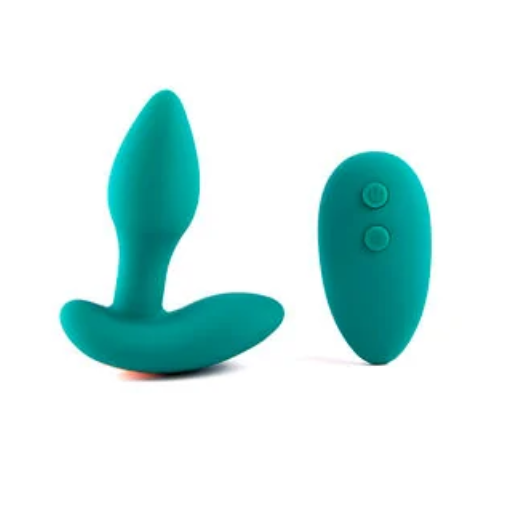
Priya, a sourcing manager for a European brand, asked a supplier for “food-grade ABS.” The quote came back with a resin name and a price. It did not come with a grade data sheet, a migration report or a statement of which food-contact rules the grade was tested against. She had a material name, not a specification.
A useful ABS specification is more than the word “ABS.” It names the grade family, the melt flow range, the impact requirement, the heat rating, the color masterbatch and the allowed regrind percentage. If the toy is marketed as body-safe, the spec should also name the migration tests and the acceptance limits.
Regrind deserves a decision. The Danish EPA found that clean industrial ABS scrap had residual monomer content and migration similar to virgin material.
That’s reassuring for closed-loop scrap from a known production line. It isn’t a license to use unknown post-consumer regrind. Set a source, a percentage and a test requirement.
Most ABS failures are process failures. Dry the resin to the supplier’s specification, because moisture causes splay and weak weld lines. Keep the mold temperature in the recommended window. Place weld lines away from high-stress corners. Radius internal corners instead of leaving a sharp step. Anneal parts that will carry a press fit or a screw boss.
Design the seam before you design the finish. A butt joint with a generous radius and a controlled shutoff is easier to clean than a sharp parting line. If the part will be plated, design for the plating thickness and test adhesion after aging, not just after molding.
Residual monomer content and migration are different measurements. The Danish EPA study is the clearest example: all 10 ABS products exceeded a proposed 1 mg/kg acrylonitrile content limit, yet the two products tested for migration released nothing above the detection limit. A content number alone can make a good part look bad, and a migration number alone can miss a bad batch if the sample was not representative.
A sensible test set for an ABS body-contact part includes:
- SDS and grade data sheet from the resin supplier
- Residual acrylonitrile, butadiene and styrene content
- Overall and specific migration into sweat, saliva, water and ethanol
- Coating or plating adhesion and wear, if the part is finished
- ISO 10993 biocompatibility testing if you intend to claim it
- ISO 3533:2021 user information and cleaning instructions
ISO 3533:2021 is a voluntary international standard for sex-toy design and safety. It covers materials, design, cleaning and user information. It isn’t a certification, and a supplier that claims compliance should be able to show how the requirements were assessed. For the certification landscape, see adult toy certifications.
Paint, plating and soft-touch coatings are the most common cosmetic failure points. Test adhesion after heat aging and after a cleaning cycle, not just on a fresh sample. Specify a PE or PP bag rather than a PVC pouch, because PVC can transfer plasticizer to a silicone contact surface. Put the cleaning limits on the care card: no boiling, no dishwasher, no acetone, no abrasive cleaner.
If you are developing ABS plastic sex toys and choosing a material for a new housing, send the part drawing and the intended use to our materials team. We can review the grade, the seam and the test plan before tooling.
FAQ
Are ABS plastic sex toys safe?
Yes for rigid parts such as housings, handles, caps and bullet shells, provided the part is molded from a controlled grade and the finish is intact. ABS isn’t a good material for a soft or high-friction insertable surface, and a cracked or chipped part should be replaced.
Is ABS plastic body-safe for insertables?
Only with conditions. A smooth, seam-free, molded ABS shaft is non-porous and cleanable, but it is hard and unforgiving. It suits short, low-friction use better than prolonged internal use. If the surface is cracked, rough or coated, do not insert it.
Does ABS contain phthalates or BPA?
ABS doesn’t need plasticizers, so phthalates aren’t part of a normal formulation. It also doesn’t use BPA as a monomer, unlike polycarbonate. That is a statement about the base polymer. Colorants, regrind and contamination are separate, so a brand that claims “phthalate-free” or “BPA-free” should have test data.
Can you boil or dishwash ABS sex toys?
No. General-purpose ABS is rated for continuous service around 60–80°C and starts to deflect at 80–100°C. Boiling water is 100°C, and a dishwasher combines heat, detergent and load. Both can warp the part or start stress cracks. Hand-wash in warm water with mild soap.
Can you use silicone lube on ABS?
Yes. Silicone lube can swell or soften silicone toys, but ABS is a different polymer and does not have that interaction. Water-based and oil-based lubes are also generally compatible. Clean the lube off after use so it does not collect dust or residue.
Does alcohol damage ABS?
It can, depending on the part and the stress. Supplier data rate ethanol at a critical strain of 0.25 for general ABS, which means a stressed part can craze after brief contact. Isopropyl alcohol is conditional. Use mild soap by default. If you use alcohol, keep the contact short and test a hidden area first.
Are 3D-printed ABS sex toys safe?
Not for insertable use. FDM layer lines create gaps that hold residue and are difficult to clean, and sanding does not close them. Acetone smoothing is not a validated seal. The safer approach is to print a mold and cast the body-contact surface in silicone.
Conclusion
ABS plastic sex toys are safe when the material is used for the job it does well. A molded housing, handle, cap or bullet shell is rigid, non-porous and free of the plasticizer problem that affects soft PVC and TPE. The Danish EPA’s ABS data support that: residual monomers were present, but none migrated above the detection limit in the tested products.
Still, the failures are predictable. A sharp corner cracks. A solvent wipe crazes the surface. A dishwasher warps the shell. A printed part traps residue in its layer lines. None of those is a reason to reject ABS. Each is a reason to specify the part, the grade and the finish.
If you are choosing a material for a new toy, start with the part that touches the body. Use silicone or another soft, non-porous material there. Use ABS where you need structure, and give it a clean seam, a stable grade and a care card that keeps it away from heat and solvents. Talk to our materials team about the part drawing, the grade and the test plan before you commit to tooling.