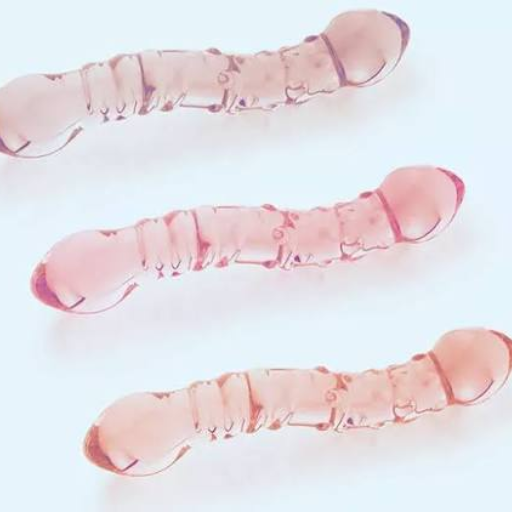
Silicone is the safest sex toy material for anything insertable or shared. TPE is a reasonable middle option when the formula is documented. Jelly is not a material at all. It is a marketing word for whatever soft plastic a factory used, and it is the category to treat with the most caution.
That last point is the one most comparisons skip. You can look up the chemistry of silicone. You can ask a supplier for the specification of a TPE compound. You cannot do either with “jelly,” because the word describes a feel, not a polymer.
If you have ever stood in a shop or scrolled a marketplace listing trying to work out what you were actually looking at, that gap is the problem. The label on the box tells you less than you think.
This guide compares silicone vs TPE vs jelly on the things that actually matter: porosity, plasticizers, cleaning, and safe use. You will get a straight answer in a table, a plain explanation of what each material is, and a short set of checks for identifying what you already own.
We build products in both silicone and TPE, so we have no reason to pretend one material wins everywhere. Where TPE is the right engineering choice, we say so. For the full two-way breakdown, our guide to TPE vs silicone sex toys goes deeper on feel, cost, and manufacturing.
Key Takeaways
- “Jelly” is a marketing descriptor, not a material. It usually means plasticized PVC, sometimes a soft rubber blend, and it cannot be verified from the label.
- Platinum-cure silicone is non-porous and can be sterilized. It is the safer default for insertable and shared products.
- TPE is a family of blends, not one substance. Safety depends entirely on the formula and whether the supplier documents it.
- Porosity, not price, is what determines whether a toy can be properly cleaned between uses.
- A supplier who cannot produce an SDS and a material declaration is telling you something important.
Silicone vs TPE vs Jelly: The Short Answer
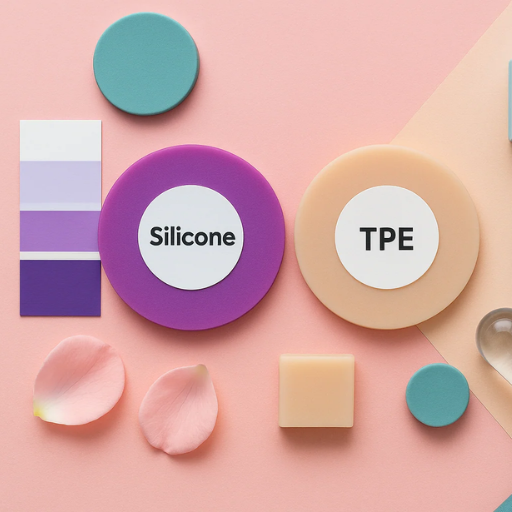
| Silicone | TPE | Jelly / PVC | |
|---|---|---|---|
| What it is | Cured PDMS polymer, usually platinum-catalyzed | Thermoplastic elastomer blend, typically SEBS plus process oil and filler | A marketing term, usually plasticized PVC, sometimes soft TPR |
| Porous? | No | Usually yes | Yes |
| Plasticizers? | No | Usually no | Often yes, and often undeclared |
| Can be sterilized? | Yes, if solid and non-electronic | No | No |
| Sensible use | Insertable, shared, long-life | External, soft-feel, short-life | Avoid for internal use |
Read the table by column, not by row. Silicone and TPE are both real material families with testable properties. Jelly is the odd one out, and the reason is simple: it has no fixed composition to test.
Not sure which material your product needs? Our team specs materials against your product type, price point, and target market. Tell us what you are building.
What Is a Jelly Sex Toy Actually Made Of?
A jelly sex toy is a soft plastic toy sold under a feel-based label rather than a material name. In practice, it is usually polyvinyl chloride (PVC) softened with plasticizers, sometimes a soft thermoplastic rubber blend, and occasionally a low-hardness TPE. The label alone cannot tell you which.
That definition matters because it changes the question. You are not choosing between three grades of one thing. You are choosing between two materials and one unknown.
The reason manufacturers use the word is commercial. “Jelly” sounds soft, playful, and non-technical, and it carries no disclosure obligation.
That asymmetry is the whole trick. A toy labeled PVC invites questions about plasticizer content. A toy labeled jelly does not.
In practice, “jelly” tends to appear on three kinds of products:
- Soft, translucent, highly flexible toys at low price points, which are the most likely to be plasticized PVC
- “Realistic feel” items that may be a soft TPR blend with a mineral-oil base
- Novelty and gag items, where material disclosure is weakest across the board
Priya found this out the hard way. She bought a translucent “jelly” toy in 2024 because it was soft and inexpensive. Eight months later, it had developed a persistent oily film and a smell she could not wash out.
Nothing was wrong with her cleaning routine. The plasticizer was migrating out of the material, which is what plasticizers do over time. She had no way to know that from the packaging, because the packaging never named a material.
That is the core risk with jelly. It is not that every jelly toy is dangerous. It is that you cannot tell, and neither can anyone else without a lab.
Silicone vs TPE vs Jelly: How They Actually Differ
Silicone: the non-porous benchmark
Silicone for adult products is polydimethylsiloxane (PDMS), a polymer chain cross-linked into a solid network. The cross-linking method matters more than most buyers realize.
There are three cure systems, and they are not equivalent. Platinum-cure silicone uses a platinum catalyst. The reaction is clean, leaves no meaningful residue, and produces a stable, odorless, non-porous solid. It is the benchmark for body-contact products.
Peroxide-cure silicone is older and cheaper. It can leave volatile byproducts and a slight odor, and it is less consistent batch to batch.
Tin-cure silicone, sometimes called condensation-cure, is common in sealants and molds. It is not a good choice for a finished body-contact product.
If a supplier says “medical-grade silicone” without naming the cure system, that is a gap worth pressing on. The phrase is not a regulated grade.
Why non-porous matters more than anything else
A non-porous surface has no microscopic openings for fluid or bacteria to enter. That is why solid silicone can be washed thoroughly, and why it can be boiled or sterilized when there are no electronics or bonded components.
This is not a marketing point. It is the single property that determines whether a toy can be genuinely cleaned between uses, or only surface-cleaned. Everything else, including price, is secondary to it.
Silicone does have real drawbacks. It costs more, it is harder to make very soft, and silicone-based lubricants can affect some silicone surfaces. Those are engineering trade-offs, not safety concerns.
TPE: the formulation-dependent middle
Thermoplastic elastomer is where most of the confusion lives, because “TPE” describes a family of blends rather than a single recipe.
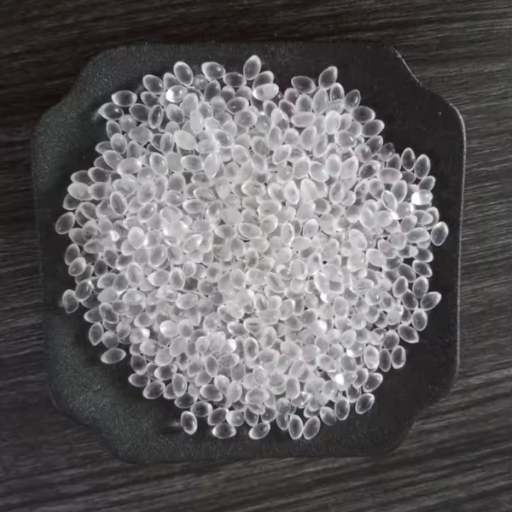
A typical soft TPE for an adult product is styrene-ethylene-butylene-styrene (SEBS) blended with a process oil, a filler such as mineral or calcium carbonate, plus pigment and sometimes fragrance. The oil is what makes it soft and flesh-like. It is also what makes it smell, and what migrates to the surface over time as the material ages.
That oil loading is the key variable. A formulation carrying a lot of oil feels wonderful in the hand and degrades faster. A leaner formulation feels firmer and lasts longer. Two products both labeled “TPE” can behave completely differently.
Quality TPE formulations generally do not require phthalates, unlike plasticized PVC. That is a genuine advantage and worth stating clearly.
But “TPE” is also a broad enough term that a poorly documented product can hide behind it. The material name is a starting point, not an assurance. What separates a good TPE product from a bad one is documentation: a batch-linked certificate of analysis, a safety data sheet for the raw material, and migration or volatile organic compound testing that matches the target market.
We covered the additive picture in detail in our article on whether TPE sex toys are safe, including what each document actually proves.
Where TPE is the correct choice: this is the part most comparisons get wrong. TPE is not a compromise you settle for. For some products it is the better engineering answer, provided the formula is documented.
Daniel, who runs a small brand in the Netherlands, spent most of 2023 trying to force a silicone spec onto a low-cost external product. The numbers did not work.
Moving that one component to a documented TPE, while keeping silicone on the body-contact surface, let him hit his price target without cutting the safety story. The lesson was not that TPE is better. It was that material choice should follow the product, not the marketing.
Jelly and PVC: the category to treat with most caution
PVC is rigid on its own. To make it soft enough for a toy, manufacturers add plasticizers, and that is where the concern begins.
Plasticizer molecules sit between PVC polymer chains and stop them from packing tightly, which is what makes the material flexible. They are not chemically bonded to the plastic. Over time, under heat, friction, or contact with oils, they migrate out of the material and onto the surface. That is the oily film Priya noticed.
Phthalates are the best-known class of plasticizer used this way. Several are restricted in children’s products. In the United States, the Consumer Product Safety Improvement Act caps eight phthalates at 0.1% in children’s toys. There is no equivalent federal limit for adult toys, which is the regulatory gap that makes documentation matter so much here.
What the 2023 material study actually found. A 2023 study published in Microplastics and Nanoplastics examined a small set of commercially available sex toys and identified their materials using ATR-FTIR spectroscopy. The sample included PVC, PDMS, PET, and rubber-blend products.
The authors reported phthalates in the tested products, with the PVC and jelly-type items exceeding US and EU phthalate limits. Concentrations reported in prior analyses of such products have run in the tens of percent by weight.
Read that carefully, because it is often overstated. The study shows that some products on the market are unsafe and unverified. It does not show that all soft toys contain phthalates, and it says nothing about TPE as a category. Anyone who uses it to condemn every non-silicone toy is misreading it.
Why jelly resists identification. With silicone you can ask for the cure system. With TPE you can ask for the compound specification. With jelly there is nothing to ask for, because the word does not correspond to a specification.
That is why the honest advice for jelly and PVC is not “clean it better.” It is to treat it as a category where you cannot verify what you have, and to keep it away from internal use.
If you want the sustainability side of this material, our analysis of the environmental impact of PVC and jelly toys covers production, disposal, and recycling. This article stays on the safety question.
How to Tell Which One You Have
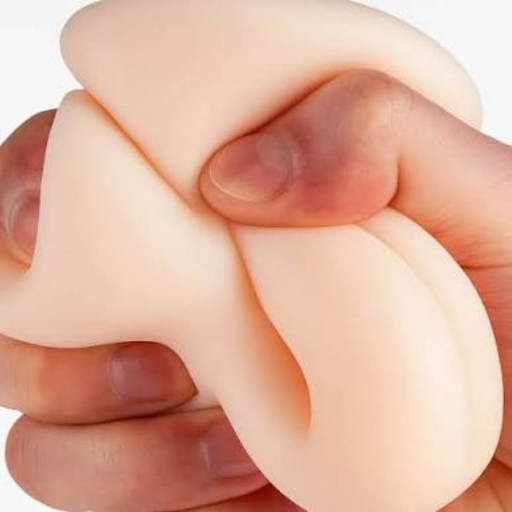
These are screening shortcuts, not lab tests. They can point you in the right direction. They cannot certify a material.
- Read the label for the word “jelly.” If it says jelly, assume plasticized PVC until someone shows you a material declaration. The word is a signal that no material was named.
- Try the pinch and release test. Pinch a thick section and let go. Silicone springs back cleanly. TPE often leaves a faint mark or recovers slowly. Jelly tends to feel tacky and may retain the indentation.
- Check for surface oil over time. A toy that develops a persistent slick film after a few months is losing plasticizer or process oil. That is a material-aging signal, not a cleaning failure.
- Smell it. A strong chemical or plasticky odor that does not fade after washing is worth taking seriously. Odor alone does not identify a hazard, but it is a reason to ask for documentation.
- Ask for the paperwork. A safety data sheet, a material declaration, and a batch-linked certificate of analysis. A supplier who cannot produce these has told you what you need to know.
Skip the flame test. It circulates widely online and produces false results in both directions. It is not a substitute for spectroscopy, and it is a good way to ruin a toy you were trying to identify.
If you want the full set of methods, including what actually distinguishes a real silicone claim from a relabeled TPE one, our guide to testing a toy for real silicone walks through each test with its failure modes.
Which Material for Which Use
Once you can tell the three apart, the decision gets simpler. Match the material to the job rather than to a ranking.
| Product type | Sensible default | Notes |
|---|---|---|
| Insertable toys | Platinum-cure silicone | Non-porous, sterilizable, long life |
| Shared toys | Platinum-cure silicone | Cleanability is the deciding factor |
| External stimulators, soft-feel | Documented TPE or silicone | TPE is often the better value here |
| Short-lifespan or novelty items | Documented TPE | Accept the shorter life and say so on the pack |
| Anything labeled jelly | Treat with caution | Avoid for internal use |
For brands, the material decision has a second layer: what you can prove. A silicone claim you cannot document is a liability. A TPE spec with a full test file is a defensible product.
Want a second opinion on a material spec before you commit to tooling? Talk to our materials team about what your product actually needs.
Frequently Asked Questions
Are jelly sex toys safe?
Not reliably, and not verifiably. “Jelly” is a marketing term rather than a material, usually applied to plasticized PVC. Some jelly products have been found to exceed phthalate limits in testing. Because the label does not name a material, you cannot confirm what you have without a lab test.
Is TPE safer than jelly?
Generally yes. Quality TPE formulations typically do not require phthalates, while PVC and jelly products often rely on plasticizers. But TPE is a family of blends, so safety depends on the specific formula and on whether the supplier can document it. Ask for the material declaration rather than trusting the label.
Is silicone always better than TPE?
No. Silicone is the safer default for insertable, shared, or long-life products because it is non-porous and can be sterilized. For soft-feel external products at lower price points, a documented TPE is often the more sensible engineering choice. The better material depends on the product, not on a universal ranking.
What is the safest sex toy material?
Platinum-cure silicone is the safest common material for body-contact products. It is non-porous, chemically stable, and can be sterilized when the product has no electronics or bonded components. Borosilicate glass and 316L stainless steel are also non-porous and sterilizable, though they suit a narrower range of products.
Do all jelly toys contain phthalates?
No, and that is the wrong question to ask. The issue is that you cannot tell from the label. Testing has found phthalate exceedances concentrated in PVC and jelly-type products, but the finding applies to the products tested, not to every item sold under that word. Absence of evidence is not evidence of a safe material.
Is “body-safe” a regulated term?
No. “Body-safe,” “non-toxic,” and “medical-grade” have no single enforceable definition for finished adult toys in most markets. The standards that do exist, such as ISO 3533:2021 for sex toy design and safety and the FDA regulation on repeated-use rubber articles, define scope and test methods rather than certifying a finished product. Treat the phrase as a claim to verify, not a guarantee.
Conclusion
The comparison is less symmetrical than it looks. Silicone and TPE are real materials you can specify, test, and document. Jelly is a word on a box.
If you take one thing from this, make it the documentation question. A supplier who can produce a safety data sheet, a material declaration, and a batch-linked certificate of analysis is selling you a known quantity. A supplier who cannot is selling you a feeling.
For anything insertable or shared, platinum-cure silicone remains the safer default. For soft-feel external products, a documented TPE is a sound choice, and we would rather say that plainly than pretend otherwise. What neither material can survive is a vague label.
If you are choosing materials for a product line, start with our breakdown of how TPE and silicone compare across feel, cost, and manufacturing, then bring your spec to a supplier who will answer the documentation questions in writing.