
Dual-density silicone sex toys are built by bonding two silicones of different firmness into one seamless piece: a soft outer shell over a firmer inner core. The soft layer delivers a skin-like surface. The firm core keeps the toy stable and shape-holding.
That combination is why dual density feels more realistic than a single-firmness product, and why it costs more to make. It’s also why it’s harder to make well. This guide explains how dual-density silicone is engineered, which Shore hardness pairings work for which products, why the layers sometimes separate, and how to spec and verify a dual-density line with a manufacturer.
Analysts track the global adult toy market as a multi-billion-dollar category growing steadily through the next decade (Fact.MR), and realism is one of the premium segments pushing it.
Dana spent $89 on a dildo the listing called dual-density. Three weeks in, she noticed a visible seam down the shaft and water trapped between the outer skin and the inner core. The product wasn’t a fake. It was a badly bonded dual-density toy, and the layers had begun to delaminate.
That failure mode is the whole story of dual density. Two firmness zones can make a product feel remarkable, or they can ruin it, depending on how well they’re engineered at the factory.
Most of what you’ll find about dual-density silicone sex toys is product copy that markets the feel. Little of it explains the construction, the Shore pairings, the tooling, or the quality control.
Here’s the manufacturer’s version, so you can decide whether dual density belongs in your line and how to get it made properly. New to the category? Start with our guide to silicone sex toys for the material and product-type basics.
Sourcing a realism line now? Talk to us about validating the construction on a sampling run.
Key Takeaways
- Dual density means two silicones of different firmness bonded into one seamless piece. A soft outer shell (often Shore 00-20 to 00-40) sits over a firmer core (often Shore 10A to 30A).
- Density is not the same as hardness. Density describes how many firmness zones a toy has and where they sit; hardness is the durometer value of each zone.
- The manufacturing method is a two-stage cast around a removable core: pour the soft outer layer, cure, extract the core, pour the firm inner layer, then cure and demold.
- The biggest quality risk is delamination. If the two silicones don’t bond cleanly, the shell can separate and trap moisture, so bond integrity is the test that separates a real OEM partner from a trading company.
- Dual density is a premium decision. It adds a second material, more complex tooling, and longer cycle times, so it pays off for realism-focused lines and rarely for budget launches.
What Is Dual-Density Silicone?
Dual-density silicone is a two-layer construction in which a soft platinum-cured silicone shell is bonded over a firmer silicone core, producing one seamless toy with a plush surface and a supportive interior. It’s a construction technique rather than a material, so the same base chemistry can be poured at two firmness levels. In short: a soft outer layer, firm core.
That definition matters, because “dual density” gets used loosely. Some brands mean the classic soft-shell-over-firm-core build. Others mean a softer head and a firmer shaft, where firmness changes along the length rather than from the outside in.
Both are legitimate. Both are also engineering problems, because any time you join two silicones, you have to make them stay joined.
Density is not the same as hardness
The two words get used interchangeably, and it causes expensive misunderstandings. Hardness is a measurable material property: the Shore durometer value of a given silicone, read to the ASTM D2240 standard. Density, as the toy industry uses the term, describes how many firmness zones a product has and where they sit. Blissfull Creations explains it well, comparing a multi-zone toy to a mattress with different comfort layers.
The distinction changes what you order. Brief a factory on hardness and you’re specifying a material grade. Brief it on density and you’re specifying a design with at least two materials and a bonding step.
For the durometer side, our guide to Shore hardness silicone sex toys covers the scales in detail. This article stays on construction.
Dual density vs single density
Single density means one firmness throughout, which forces a compromise. Go soft and the toy feels comfortable but floppy and unstable. Go firm and it holds its shape but feels unforgiving. Dual density splits the difference by giving each job to a different layer.
| Factor | Single density | Dual density |
|---|---|---|
| Feel | One firmness edge to edge | Soft, skin-like surface over a supportive core |
| Structure | Uniform, either floppy or rigid | Shape-holding core with a plush outer layer |
| Tooling | One material, simpler mold | Two materials, core design, longer cycle time |
| Cost | Lower | Higher |
| Best for | Budget launches, simple insertables, beginner lines | Realistic lines, premium positioning, packers, strokers |
If realism isn’t central to your positioning, single density delivers a quality product for less tooling money. If it is, dual density is the differentiator customers can actually feel.
Why dual density silicone sex toys feel realistic
Dual density silicone sex toys feel lifelike because of how the two layers divide the work. The soft outer shell compresses under pressure, so it feels yielding and skin-like. The firm inner core resists bending, so the toy keeps its form and transmits pressure instead of folding away.
Realism isn’t only about softness, though. Shape, surface detail, and color do a lot of the work, which is why a realistic silicone dildo pairs an anatomically sculpted form with a skin-tone or marbled finish on top of the density engineering. Where dual density pulls ahead is the combination: a plush exterior with a stable interior reads as flesh in a way a single firmness can’t easily copy.
There’s a functional benefit too. A firm core keeps a toy usable in a strap-on harness, where a floppy product would buckle.
That’s why dual density is often paired with harness-compatible and strapless designs, alongside flared bases for anal safety. The layers aren’t just a feel upgrade. They’re a structural decision.
How Dual Density Silicone Sex Toys Are Made, Step by Step
Here’s the detail most product pages skip. Dual-density silicone sex toys are produced with a two-stage cast around a removable core. Manufacturers vary in their tooling, but the sequence below is the common method. For a factory’s walkthrough of turning a sketch or 3D file into a finished toy, the Newtop Silicone process guide is a useful reference.
- Design and requirements. You supply the shape, the target outer and inner firmness (with the scale stated), surface detail, base safety features, and color direction.
- 3D modeling and prototype master. The factory refines the concept in CAD, checking wall thickness, core placement, and demoldability, then produces a physical master by 3D printing or CNC machining for your approval.
- Tooling. The approved master becomes a negative cavity mold, designed around a removable metal core that will sit inside the part.
- Outer pour. The soft platinum-cured silicone is mixed, degassed to remove air, and poured into the mold around the core.
- First cure and core extraction. Once the outer layer cures, the metal core is removed, leaving a central cavity.
- Inner pour. The firmer silicone is poured into that cavity to form the core of the finished toy.
- Final cure, demold, and QC. The part is cured, removed from the mold, finished, and inspected, with the durometer of both layers checked and the bond reviewed.
Why the timing and tooling are hard
Two things make this harder than a single-pour cast. The first is timing. The outer layer has to cure enough to hold its shape when the core comes out, but not so much that it won’t bond to the inner pour. Get that window wrong, and you either distort the shell or create a weak interface.
The second is tooling. A removable core has to release cleanly without tearing the soft silicone, and the cavity has to vent so trapped air doesn’t leave voids.
That’s why dual density costs more and runs longer cycles. It uses two materials, needs a more elaborate mold, and produces more scrap while a factory dials in the process.
Some plants pursue the same two-firmness result through co-molding, or LSR two-shot tooling instead of a two-stage pour, and which route fits depends on the material system and the geometry. Weighing molding routes? Our guide to how silicone toys are molded compares LSR injection with compression casting.
Why Dual-Density Layers Delaminate (and How to Prevent It)

Delamination is when the soft shell separates from the firm core, creating a gap or seam that traps moisture. It’s the failure mode in Dana’s story, and it’s the single most important quality question in dual-density manufacturing.
The causes are usually process-related, not material-related. Common triggers include two silicone formulations that don’t bond to each other, an outer layer that cures too fully before the inner pour, a contaminated interface, release agent left where the layers should meet, or a shell too thin to stay attached under flex. Any one of these can produce a toy that looks perfect on arrival and starts separating weeks later.
Prevention is a manufacturing discipline. It’s also the reason to work with a factory that builds the toy rather than just sells it:
- Formulation compatibility. The two silicones should be chosen as a bonding pair, not two unrelated grades.
- Controlled cure windows. The inner pour has to happen while the outer surface is still receptive to bonding.
- Clean interfaces. No stray release agent or handling contamination between pours.
- Adequate wall thickness. The shell needs enough material to grip the core through repeated flexing.
- Bond verification in QC. Physical inspection and, where appropriate, bond-strength checks before a batch ships.
How to tell a toy is genuinely dual density
- The listing states a distinct outer and inner hardness, with the scale named.
- The manufacturer describes a bonding step, not just “two layers.”
- A COA documents the durometer of both silicones.
- The surface shows no seam or void at the core boundary.
- The supplier answers cure-window and bond-test questions in specific terms.
When you evaluate a supplier, this is the question that reveals the most. Ask how they prevent delamination and how they verify the bond. A manufacturer with a real process will explain cure timing and inspection in specific terms. A middleman will talk about the product rather than the process.
It’s also worth confirming that your supplier’s materials carry proper biocompatibility evidence, which our medical-grade silicone sex toys guide explains.
Not sure whether your design needs dual density, or how to verify the bond? Talk to our team about a sampling run before you commit to tooling.
Shore Hardness Pairings for Dual Density Silicone Sex Toys
The single most useful spec you’ll write is the combination of outer and inner hardness. The shell determines surface feel; the core determines whether the toy holds its shape. Every value needs its scale stated, because Shore 00 and Shore A aren’t interchangeable.
| Product type | Outer (shell) | Inner (core) | Why this pairing |
|---|---|---|---|
| Realistic dildo | Shore 00-20 to 00-30 | Shore 10A to 20A | Plush skin-feel over enough structure for harness use |
| Super-soft / fantasy dildo | Shore 00-20 | Shore 00-50 to 10A | Maximum squish with just enough body to stand |
| Packer or STP | Shore 00-20 | Shore 10A to 15A | Soft exterior for realism, firmer core for positioning |
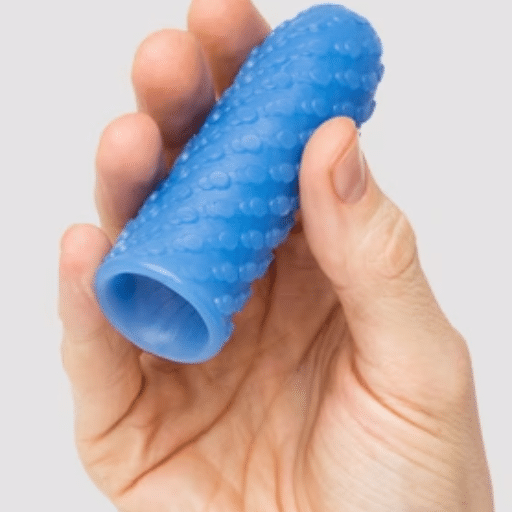
| Stroker or masturbator sleeve | Shore 00-20 to 00-30 | Shore 10A to 20A | Soft internal texture over a firm grip section |
| Posable or bendable design | Shore 00-20 to 00-30 | Bendable metal core | Soft surface with stay-put positioning |
Treat these as market-derived starting points, not fixed recipes. A thicker toy feels firmer at the same Shore rating, and the exact numbers depend on geometry, wall thickness, and the feel the brand is chasing. Uncover Creations and Tantus both publish useful reference ranges, and your factory should help you translate them into a spec for your dual-density silicone sex toy.
Triple density and multi-zone designs
Triple density takes the same idea further, layering three or more firmness zones into one product. Makers who sell it describe a softer zone where sensation matters most and firmer zones for structure, so a single toy can feel different along its length.
The engineering cost compounds with each layer, because every pour adds another bonding interface, more tooling, and a longer cycle. It’s a real technique with real customers. It’s also a premium line decision rather than a starting point.
Dual density versus a posable core
Dual density and posable cores solve different problems, though some designs combine them. Dual density is about feel: a soft surface over a supportive interior. A posable core is about position: a bendable element that lets a toy hold a curve.
If your selling point is realism, dual density does the work. If it’s adjustable positioning, a bendable core does. Offering both in one product is possible. It changes the internal structure, and therefore the mold, so raise it early.
Which Products Benefit Most from Dual Density
A realistic silicone dildo is the classic case, and the dual-density silicone dildo is what most brands mean by a premium realism SKU. Our custom silicone dildo manufacturing guide covers the product-category side. Packers and STP devices benefit too, because a soft exterior with a firm core reads as natural while still holding position.
A dual-density masturbator or stroker sleeve uses the same trick. Premium strap-on and strapless designs gain stability from the core, and sculptural pieces use it when a plush surface over controlled structure is the point.
There’s a clear case against it, too. If you’re launching a budget line, a simple insertable, or a product whose appeal is shape, color, or surface texture rather than feel, single density is the better use of your development budget. Dual density is a positioning decision as much as a technical one. Make it deliberately, not because the term sounds premium.
Cost, Tooling, and MOQ Reality for Dual-Density Lines
Dual density sits at the higher end of silicone manufacturing costs, and it’s worth understanding why before you budget. You’re paying for a second material, a more complex mold built around a removable core, a longer cycle time with two pours and two cures, higher scrap rates while the process is dialed in, and more inspection effort at the end. None of that is waste. It’s the cost of a construction that fails if any step is rushed.
Tooling is the largest line item, and published ranges are broad because geometry drives everything. As planning figures rather than quotes, typical full custom adult-toy tooling commonly runs from about 15,000to15,000to50,000, and advanced injection tooling climbs above $50,000 (VF Pleasure). Dual-density projects usually sit at the upper end of whichever tier your shape requires, because of the core design and the extra processing. Budget a buffer above the first quote for revisions and certification, and treat every figure as quote-dependent.
Per-unit cost is a separate lever. It falls as volume rises and depends on the silicone grades you choose, the toy’s size, and the number of features. A low-MOQ trial order always costs more per unit than a large production run, which is normal and expected.
Lena ran into this on her first premium line. She wanted dual density on three SKUs at once and nearly committed to tooling for all of them. Instead she ran a single dual-density hero product at a low MOQ, sold through it in eight weeks, and used the margin to fund the second mold.
That staging approach is why low-MOQ adult toy manufacturing matters for dual density specifically. You can prove the concept, confirm the feel, and validate the price point before you commit to a second material and a more expensive mold across your whole range.
How to Brief and Verify a Dual-Density Manufacturer

A clear brief gets you an accurate quote, and the right questions get you a partner who can actually build the product. Send your factory a spec sheet that covers these items:
- Dimensions. Target length and girth, with acceptable ranges.
- Firmness. Outer and inner Shore values, with the scale stated for each.
- Construction. Dual or triple density, and any softer or firmer zones you want placed.
- Features. Suction cup, flared base for anal safety, harness compatibility, or a cavity for a bullet vibrator.
- Color, finish, and branding. Solid tone, skin tone, gradient, or marbling, plus logo and packaging requirements.
- Compliance and commercials. The markets you plan to sell into, the certifications you need, your target price, order volume, and launch date.
Then verify the answers rather than accepting them:
- Is this genuinely two bonded layers? Ask them to describe the process, not just confirm the feature.
- How is the bond tested? You want a specific QC answer, not reassurance.
- Can they document both layers? Request a certificate of analysis that states the durometer of each silicone, plus batch traceability.
- What are the mold ownership and exclusivity terms? Get it in writing before you pay for tooling.
- What certifications apply? Material biocompatibility evidence such as ISO 10993 or FDA 21 CFR 177.2600 food-contact compliance, plus CE and RoHS for EU access, and ISO 3533:2021 as the emerging sex-toy design and safety standard.
- What’s the realistic lead time? Two pours and two cures add time, so treat a surprisingly fast estimate as a warning sign.
Your supplier should also be able to explain how the material reaches body-safe standards. Our silicone sex toy certifications guide covers what to ask for, and it’s worth knowing that in the United States many adult toys are sold as novelties. Adult toys are generally not FDA-approved medical devices, so keep any health claims modest and material-focused.
FAQ
What is dual density silicone?
Dual density silicone is a construction where two silicones of different firmness are bonded into one seamless piece, a soft outer shell over a firmer inner core. The soft layer provides a skin-like surface and the firm core provides structure.
Dual density vs single density: what’s the difference?
Single density uses one firmness throughout, so it feels either soft and unstable or firm and rigid. Dual density assigns each job to a layer, pairing a plush exterior with a supportive core, and costs more to tool and produce.
Do dual-density toys delaminate?
They can, if the two layers don’t bond cleanly. Delamination happens when formulations are incompatible, the outer layer cures too far before the inner pour, or the interface is contaminated. A manufacturer that controls cure timing and verifies the bond prevents it.
What Shore hardness should a dual-density toy use?
Common pairings run from a Shore 00-20 to 00-30 outer shell over a Shore 10A to 20A core, though makers vary the values by product and geometry. Always state the scale, because Shore 00 and Shore A aren’t interchangeable.
Are dual-density silicone toys body-safe?
Yes, when both layers are verified platinum-cured silicone backed by test reports. Look for non-porous, phthalate-free material and documented biocompatibility testing. “Medical-grade silicone” describes the raw material grade, not a government approval of the finished toy.
Conclusion
Dual-density silicone sex toys come down to a handful of decisions. Define density and hardness separately, so your brief is unambiguous. Choose outer and inner Shore values that match your product type, and state the scale every time.
Then decide whether realism is central enough to your positioning to justify a second material, a more complex mold, and a longer cycle. Verify the one thing that makes or breaks the product: how the two layers bond and how the factory proves it.
Dana’s seam was preventable, and that’s the point. Dual density rewards brands that ask process questions, and it punishes brands that treat it as a label. Get the engineering right and you get a product customers can feel the difference in. For the full material and product-category picture, see our complete guide to silicone sex toys.
If you’re ready to build one, a low-MOQ OEM/ODM partner makes the first step affordable. Joyflick offers ISO-certified production, medical-grade body-safe materials, six-stage inspection with a defect rate below 0.2%, private molding and branding support, and trial orders starting at just 300 units, with custom production lead times of roughly 15 to 30 days. Whether you want a single dual-density hero product or a full realistic range, request a quote, and your roadmap from concept to shelf can begin this quarter.