Platinum silicone beats bioplastics for any adult toy that touches the body, and the gap has not narrowed in 2026. Bio-based plastics like PLA and PHA are promising, but they still lack the softness, moisture resistance, certifications, and durability that intimate products demand. They work fine as rigid external shells. They cannot replace silicone for insertables.
That verdict comes from the factory floor, not a marketing department. At Joyflick, we have manufactured millions of devices across both material families. We have watched brands chase the “100% biodegradable vibrator” headline, then face returns, surface degradation, and certification roadblocks a few months later. We have also helped other brands build platinum silicone lines that sell for a decade without a single material-related complaint.
Daniel, a founder we met in early 2025, learned this the hard way. His startup promised a compostable line of massagers, and pre-orders sold out fast. Eight months in, customers started sending photos of sticky, discolored shells, and his return rate climbed past 20%. He rebuilt the line around platinum silicone with a plant-based outer shell, and returns dropped to normal levels. His story is not unusual. It is the pattern we see whenever bio-based plastics are used beyond their limits.
This guide lays out the technical reality. You will learn how these materials compare on body safety, durability, manufacturing feasibility, cost, and true sustainability. You will also see when bioplastics genuinely make sense, and when platinum silicone is the only responsible option. If you are evaluating materials for a new product line, read the comparison table first, then dig into the sections that matter for your use case.
Key Takeaways
- Platinum-cured silicone is non-porous, hypoallergenic, and sterilizable up to 200C, with established ISO 10993 biocompatibility testing and FDA food-contact compliance. No bioplastic holds comparable credentials for intimate use.
- Bio-based plastics (PLA, PHA) degrade in moist, warm conditions, and the only two commercial adult toy materials, BioFeel and Biolene, are rigid external housings only. The soft, insertable parts in those same toys are still silicone.
- The durability paradox decides the sustainability argument: one platinum silicone toy lasting 10 to 15 years generates less waste than three to five bioplastic replacements, even if the bioplastic fully composts.
- Bioplastics require complex drying and narrow processing windows, while platinum silicone runs on mature liquid silicone rubber (LSR) molding with full Shore hardness control from 00-10 to 80A.
- Real “biodegradable” disposal needs industrial composting, which most buyers never reach. Without it, a so-called compostable vibrator ends up in a landfill, which makes greenwashing claims the bigger risk.
What Is Platinum-Cured Silicone?
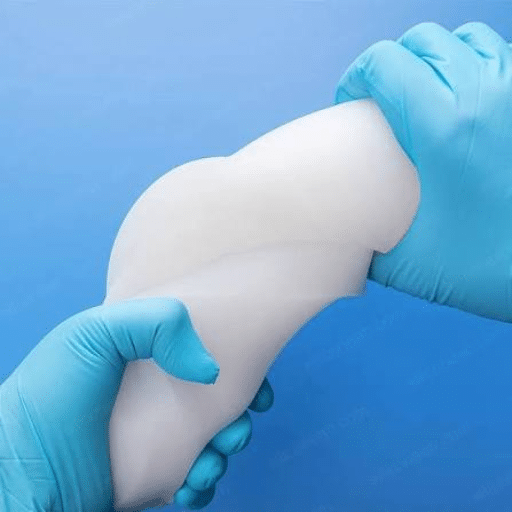
Platinum-cured silicone is a high-purity rubber that uses a platinum catalyst during curing. The addition-cure reaction releases no toxic byproducts, which makes it cleaner and more stable than cheaper tin-cured silicone. For intimate products, that chemistry translates into a material that is non-porous, hypoallergenic, and free of phthalates, latex, and plasticizers.
It also stays chemically inert from about minus 60 degrees Celsius to 200 degrees Celsius. That range means a user can boil it, bleach it, or steam it to sanitize, and it will come out unchanged. Retailers routinely point out this sterilizability, and it is one reason medical-grade silicone became the default standard for body-contact toys. Our guide to medical-grade silicone sex toys digs deeper into the grades and testing behind the label.
The material spans a wide Shore hardness range. At Joyflick, we work with formulations from Shore 00-10, which feels like soft tissue, up to Shore 80A, which is firm and rigid. Most premium toys use dual-density construction: a firm inner core around 20A to 30A for structure, wrapped in a soft outer layer at 5A to 8A for comfort. No current bioplastic can deliver that level of engineering.
Certification is where silicone separates itself. Reputable manufacturers test to ISO 10993 biocompatibility and USP Class VI, and many formulations meet FDA food-contact criteria under 21 CFR 177.2600. A clarification matters here: the FDA does not approve adult toys as a category in the US. When a manufacturer says “FDA-compliant,” they mean the material itself meets the agency’s food-contact standards, which is a meaningful, verifiable claim. Bioplastics, as you will see, offer none of this for intimate use. For a full breakdown of what these labels mean, see our guide to silicone sex toy certifications.
What Are Bioplastics in Adult Toys?
Bioplastics are polymers made from renewable biomass such as corn starch, sugarcane, or cellulose instead of petroleum. The two most common types are PLA (polylactic acid) and PHA (polyhydroxyalkanoate). Both can be injection molded, and both are marketed as biodegradable under industrial composting conditions.
Two proprietary materials dominate the adult toy conversation. BioFeel, developed by Blush, is a plant-based bioplastic that Blush says contains at least 35% non-petroleum plant matter. It is used in the Gaia Eco line of budget vibrators and bullets. Biolene, developed by Womanizer, is described as about 70% natural material derived mostly from corn starch. It forms the housing of the Womanizer Premium Eco.
Here is the detail most marketing skips: neither BioFeel nor Biolene is used for soft, insertable components. Both are rigid external shells. The contact head, buttons, seals, motor, and electronics inside those products remain conventional silicone and electronics. So the honest description of an “eco” vibrator is a bioplastic shell wrapped around a mostly conventional device.
The base polymers have real limitations for intimate products. PLA softens around 55 to 65 degrees Celsius, is brittle, and undergoes hydrolytic degradation in moist environments. Body heat and humidity can accelerate that breakdown. PHA is more flexible but hygroscopic, meaning it must be dried aggressively before molding, and it has a narrow processing window. Neither material is available in soft, flexible durometers. That single fact excludes them from most insertable applications before any other argument begins.
Platinum Silicone vs Bioplastics: Head-to-Head Comparison
The table below summarizes the full comparison. It is designed to be scanned and cited by sourcing teams.
| Factor | Platinum Silicone | Bioplastics (PLA/PHA and blends) |
|---|---|---|
| Body safety | Non-porous, hypoallergenic, no plasticizers | Rigid grades are typically non-porous; no intimate-use certification |
| Softness | Shore 00-10 to 80A, full range | Rigid only, no soft formulations |
| Sterilization | Boil, steam, bleach safe to 200C | Heat sensitive, cannot be boiled |
| Durability | 10 to 15 years with care | Months to a few years; designed to degrade |
| Moisture resistance | Excellent, hydrophobic | Weak; hydrolytic breakdown in damp conditions |
| Temperature range | About -60C to +200C | PLA softens at 55 to 65C; PHA degrades above 204C |
| Manufacturing | Mature LSR molding, fast cycles | Complex drying, narrow windows, slower cycles |
| Raw material cost | Mid to high | PLA low, PHA higher (market dependent) |
| Total cost of ownership | Lower for premium due to low returns | Higher when returns and shorter life are factored |
| Certifications | ISO 10993, USP Class VI, FDA food-contact | Food-contact grades exist; no intimate-use credentials |
| End of life | Durable; specialized recycling only | Biodegradable only in industrial composting |
| Commercial adoption | Dominant standard | Two proprietary products, rigid shells only |
What about the “100% biodegradable” claims?
Many brands describe bioplastic toys as biodegradable, and the word does heavy lifting. Biodegradability is not a property that activates in a home compost bin or a landfill. PLA and PHA require sustained industrial composting conditions, specific temperatures, moisture, and microbial activity. Without that infrastructure, they behave much like conventional plastics and persist for years. For deeper context on what biodegradable materials actually promise, our guide to biodegradable sex toy materials walks through the full range of claims.
Body Safety: The Non-Negotiable Factor
For anything designed for intimate contact, body safety is a prerequisite, not a feature. Platinum silicone clears the bar on every level. Its non-porous structure means bacteria, mold, and viruses stay on the surface and wash away. It is chemically inert, so it does not react with water, oils, lubricants, or cleaners. It will not leach plasticizers because it contains none.
Bioplastics are a more complicated story. Rigid PLA housings are typically smooth and non-porous, which is why external shells like the Gaia Eco body are considered safe to handle and easy to clean. The risk appears when bio-based polymers are pushed beyond rigid, external use. PLA can develop micro-porosity and surface pitting as it hydrolyzes. In a warm, damp environment, the same chemistry that makes it compostable makes it reactive.
Consider the work of an independent product safety consultant we have partnered with in Berlin. In 2024, he ran a simulated body-condition aging test on a bioplastic prototype for a client. After three months at body temperature and humidity, the material’s Shore hardness had shifted noticeably, and spectroscopy flagged byproducts that were not in the original formulation. His report concluded that the material was performing exactly as designed: it had started to break down. The client moved the project to platinum silicone.
That result should not be read as “bioplastics are toxic.” They are not. The correct reading is that they are engineered for breakdown, and breakdown is the wrong property for a product meant to survive repeated use. For external-only, rigid components, the risk is manageable. For anything insertable, it is unacceptable.
What certifications should you require?
Ask any supplier for documentation, not adjectives. For platinum silicone, look for ISO 10993 biocompatibility test reports, USP Class VI data where relevant, and FDA food-contact compliance for the specific formulation. Confirm RoHS and REACH compliance for electronic and material components. Our silicone sex toy certifications guide explains each mark and how to verify it.
For bioplastics, ask whether the specific grade holds any biocompatibility testing for prolonged skin or mucous membrane contact. In our experience, the answer is no for every commercially available intimate-use grade. That gap alone should decide most sourcing decisions.
Durability and the Lifecycle Paradox
The adult toy industry has a waste problem that bioplastics do not solve. The problem is premature disposal. A toy that is replaced every year or two because it degrades creates more total material, packaging, and shipping than a toy that lasts a decade. This is the durability paradox, and it flips the intuition behind “biodegradable is greener.”
Platinum silicone routinely lasts 10 to 15 years with normal care. It does not yellow, turn sticky, or lose elasticity. We have tested production samples from 2015 batches and measured no meaningful change in tensile strength or elongation at break. Users can sanitize it hundreds of times.
Bio-based plastics are engineered for the opposite outcome. Their biodegradability is a selling point for packaging and food service, but it is a flaw for a durable good. PLA begins losing structural integrity within months in humid conditions. PHA lasts longer but still degrades faster than a conventional plastic. The promise of “compost your vibrator” loses its appeal when you realize the message is really “your vibrator will compost itself, whether you want it to or not.”
Here is the lifecycle math. A 200-gram platinum silicone toy that lasts 12 years produces about 16.7 grams of material waste per year. A bioplastic toy of the same weight lasting two years produces 100 grams of material waste per year, before you count the extra manufacturing energy, shipping, and packaging across six replacement cycles. Even if the bioplastic fully composts, the total footprint of six purchases outweighs one durable product. This is why the most credible eco brands in the industry now market durability and repairability rather than compostability.
Manufacturing Feasibility: What the Factory Floor Says
Material choice dictates tooling, cycle times, yield rates, and quality control. These two material families demand fundamentally different production lines.
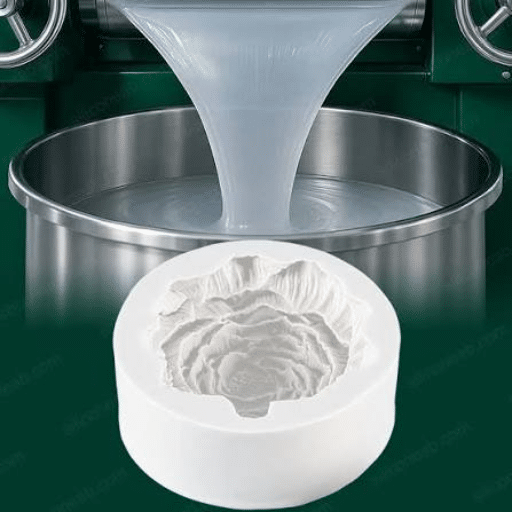
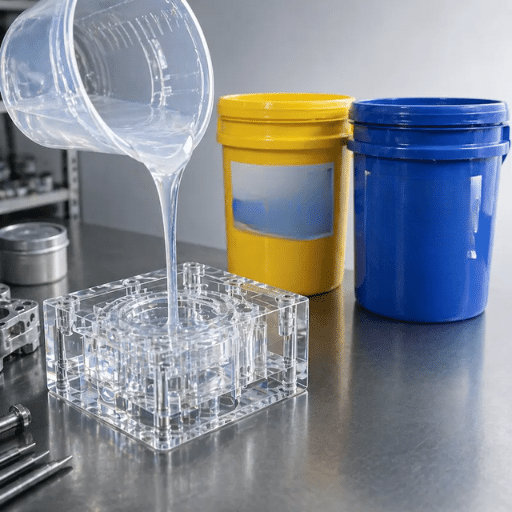
Platinum silicone for adult toys is usually processed as liquid silicone rubber, or LSR. The two-part liquid is injected into heated molds at roughly 120 to 165 degrees Celsius, with cure times from about 30 seconds to 3 minutes depending on geometry. LSR flows into complex molds, supports overmolding for dual-density parts, and produces consistent surface finishes. We cover the process in depth in our guide to liquid silicone rubber sex toys.
The main challenge with LSR is cure inhibition. The platinum catalyst is poisoned by sulfur, nitrogen, and phosphorus compounds, so molds must stay free of certain release agents, and the line cannot be cross-contaminated with tin-cured silicone or rubber. We manage this with dedicated clean room zones and full material traceability.
Bioplastics present a different set of challenges. PLA has a narrow processing window and is brittle, which restricts wall thickness and geometry. PHA is more flexible but hygroscopic; it must be dried to very low moisture levels before molding, and any absorbed humidity can ruin a batch. Both run slower and cool longer than conventional plastics, which raises per-unit cost. Neither supports soft formulations, so they cannot produce an insertable part at any Shore value below about 40A. There is no bioplastic dildo or plug in commercial production, and there is a reason.
If you are selecting Shore hardness for a silicone product, our guide to Shore hardness for silicone sex toys maps durometer values to real-world feel. That design freedom simply does not exist in bio-based polymers today.
The Real Cost Comparison
Raw material price tells only part of the story. PLA resin is inexpensive, often well under $ 2.50 per kilogram, and PHA costs more, historically in the 2.50 per kilogram, and PHA costs more, historically in the 4 to $6 range. Platinum silicone raw material sits in a broad middle band depending on grade and hardness. But raw material is the smallest line item in a molded product’s economics.
Processing shifts the balance. LSR molding is mature and optimized, with high yield rates and fast cycles. Bioplastic processing needs slower injection speeds, longer cooling, frequent equipment adjustment, and strict moisture control. Warping and sink marks push up scrap on PLA. Humidity-affected PHA batches may be discarded outright. Those factors push effective bioplastic part costs toward or above silicone equivalents.
Then come the hidden costs. Elena, the sustainability director at a mid-size European brand, launched a bioplastic bullet vibrator in 2024 with ambitious messaging. Within eight months, customer service logged a 23% return rate. The complaints were consistent: discoloration, surface roughness, and a sticky texture during normal use and storage. The brand recalled the line, rebuilt it in platinum silicone, and now sells durability as its environmental story. Return rates like hers are the downstream cost that never appears on a material invoice.
For entry-level, rigid, external products, bioplastics can genuinely win on price. A budget vibrator housing in PLA competes hard against ABS or silicone. For mid-market and premium products, total cost of ownership favors platinum silicone, because reliability eliminates warranty claims and brand damage. If you are planning a premium line, our analysis of medical-grade silicone sex toy cost walks through realistic per-unit economics.
Sustainability: Claims vs. Disposal Reality
This is where the marketing gets loudest, and the truth gets hardest to find. Let us separate what bioplastics actually deliver from what their packaging implies.
Biodegradability requires industrial composting. Blush markets BioFeel as compostable, and some retailer FAQs cite a commercial composting window of roughly 47 to 90 days. Blush’s own product FAQ has also stated that under composting conditions the shell can take about two to three years to break down. Those numbers are inconsistent, and the honest takeaway is that disposal is slow, facility-dependent, and not something a home composter can handle. On top of that, used sex toys are treated as biohazards, so most composting and recycling facilities will not accept them at all. In practice, a large share of “compostable” vibrators still end up in landfill, where they persist like any plastic.
Polymer chemist Dr. Love-Ese Chile, who studies biodegradable plastics, has warned that new materials are often brought to market with real “complexities and challenges” still unresolved, and that those deserve consideration before products are marketed as green. Her point applies squarely to this industry, where the label often outruns the science. For a wider look at misleading environmental claims, our guide to greenwashing in the sex toy industry covers how to audit them.
The most thoughtful design response so far comes from Womanizer. The Premium Eco uses Biolene for its rigid housing, but the contact nozzle is still silicone, and the product is built to be disassembled with a replaceable rechargeable battery. Womanizer is transparent that the material biodegrades only under controlled industrial conditions, not during normal use. That is an honest, engineering-led version of an eco product: repairable, modular, and clearly communicated. It is also a design that keeps the bioplastic shell away from the body. We think that is the right template if you want to use bioplastics at all.
Sustainability in adult toys should therefore be judged across the full lifecycle, not at the moment of disposal. A durable silicone toy with a replaceable battery and a clear end-of-life path outperforms a short-lived bioplastic toy that was compostable in theory and landfilled in practice. For more on choosing materials with the whole lifecycle in mind, see our guide to sustainable materials for adult toys.
What about BioFeel and Biolene specifically?
BioFeel is the more affordable option, used in budget vibrators where it keeps price points down. It is rigid, smooth, and transmits vibration well. Biolene appears in a premium device where the brand invested heavily in modular design to offset the housing’s shorter life. Both deserve credit for pushing the industry forward. Neither is a substitute for silicone on any soft or body-contact surface. Treat them as complementary options for rigid external housings, not replacements.
Which Material Should Manufacturers Choose?
The decision framework is simpler than the marketing makes it look.
Choose platinum silicone when:
- Any component is insertable or has direct, prolonged body contact
- You need softness, flexibility, or dual-density construction
- You target mid-market or premium price points
- You need ISO 10993, USP Class VI, or FDA food-contact documentation
- Durability and low return rates drive your brand promise
- You sell into regulated markets or medical-adjacent channels
Consider bioplastics when:
- The part is an external-only, rigid housing
- You compete at the extreme budget tier where material cost dominates
- Your positioning is explicitly eco-focused and your audience accepts the trade-offs
- You have a credible plan for industrial composting and take-back logistics
- The component is non-structural and easy to replace
Avoid bioplastics when:
- The product is insertable or has soft body-contact surfaces
- You promise durability or longevity
- You need intimate-use certification
- The device is stored or used in humid conditions
- A single quality failure could damage a young brand
For most Joyflick clients, the answer is platinum silicone for the core product and bioplastics for packaging or rigid external elements where appropriate. That hybrid gives you a defensible sustainability story without compromising safety or performance.
Ask our materials team: we will review your product spec and tell you honestly which material belongs on every component.
Conclusion
Platinum silicone and bioplastics are not true competitors. They are materials built for different jobs. Silicone is engineered for safety, durability, and performance under demanding body contact. Bioplastics are engineered for renewable sourcing and eventual breakdown, which suits disposable and short-lifecycle products.
The industry has tried to force a competition because sustainability sells. The chemistry does not support it. A bioplastic that degrades in moist conditions is not a greener choice for an insertable toy. It is a liability with a marketing budget.
Make the responsible call. Use platinum silicone on anything that touches the body. Reserve bioplastics for rigid external shells, packaging, and non-structural parts where their limits are acceptable. Build your sustainability story on durability, repairability, and honest end-of-life guidance rather than material substitutions that compromise safety.
At Joyflick, our ISO-certified production and materials science team help brands make these calls with real data from real production runs. Whether you are developing a first platinum silicone line, exploring a hybrid strategy, or testing bioplastic shells for external housings, we can take you from concept to certification with low MOQs starting at 300 units.
Ready to choose the right material for your next product? Contact Joyflick today to discuss your requirements with our engineering team.
Frequently Asked Questions
Is bioplastic safe for sex toys?
For rigid, external housings, some bioplastics such as BioFeel are body-safe to handle and clean. For insertable toys, no commercial bioplastic currently offers the softness, moisture resistance, and biocompatibility certification required for intimate contact. Platinum silicone remains the only broadly certified choice for body-contact parts.
Are bioplastic vibrators actually biodegradable?
Only under industrial composting conditions, and only if they reach such a facility. Most are not home-compostable, and used sex toys are often rejected by composting and recycling centers as biohazards. In practice, many bioplastic vibrators still end up in landfill.
What is BioFeel made of?
BioFeel is Blush’s proprietary plant-based bioplastic, stated to contain at least 35% non-petroleum plant matter. It is used for rigid external housings in the Gaia Eco line. It is not used for soft or insertable components.
What is Biolene made of?
Biolene is Womanizer’s bioplastic described as about 70% natural material, mostly corn starch. It forms the housing of the Womanizer Premium Eco. Womanizer states it biodegrades only under controlled industrial conditions, not during normal use.
Can you sterilize a bioplastic sex toy?
No. Bioplastics like PLA and PHA are heat-sensitive and cannot be boiled or steamed like platinum silicone, which is sanitizable up to about 200C. This limits their use to external housings with simple cleaning.
Why is platinum silicone considered the safest sex toy material?
Platinum-cured silicone is non-porous, hypoallergenic, and free of phthalates, latex, and plasticizers. It resists moisture and chemicals, can be sterilized, and is backed by ISO 10993 biocompatibility testing and FDA food-contact compliance. Those properties make it the default for insertable and body-contact toys.
Do bioplastic toys degrade in the body?
No. The rigid bioplastic shells used in products like the Gaia Eco and Womanizer Premium Eco will not break down during normal use. Their biodegradability requires sustained industrial composting conditions that the human body does not provide.
Is a bioplastic toy cheaper than a silicone toy?
PLA raw material is cheaper than platinum silicone, so budget rigid housings can cost less. But total manufacturing cost is often similar once slower processing and scrap are included, and shorter product life plus higher return rates can make bioplastics more expensive over a product’s full lifecycle.