
The adult toy market worldwide will reach $71.12 billion by 2035. The growth rate of BDSM accessories exceeds 8% CAGR, which makes it grow faster than all other market sectors. Every brand that tries to meet this demand faces one major obstacle because authoritative information about custom nipple clamp production remains inaccessible.
Most sourcing guides treat nipple clamps as an afterthought to vibrators and dildos. The method requires metalwork knowledge because it needs to understand which mechanical details and compliance requirements function as essential elements for successful clamp development and production.
At Joyflick, we manufacture OEM and ODM adult products for brands worldwide. Entrepreneurs have asked us the same questions since we started our business. Which factory should I choose? What is a realistic MOQ for metal clamps? What steps do I need to take to create a screw-adjustable mechanism? What methods should I use to ensure my products pass through customs?
The guide provides solutions for every inquiry. The session will provide complete details about creating a product that starts as an idea and ends as a market-ready item. Manufacturers need to know which types of clamps exist in the industry. You will understand the materials and certifications that matter. The document includes actual minimum order quantities and price information for each business development phase. The study identifies which regional centers perform best in producing various clamp types. The study will teach you the quality control methods that safeguard your investment.
What Are Nipple Clamps? A Manufacturer’s Product Overview
Nipple clamps function as pressure-based devices that create temporary blood flow restrictions to increase sensitivity and arousal. They function as essential tools for both BDSM and sensation play, but their popularity reaches beyond extreme bondage practices. The term “nipple clamps” receives about 9,140 searches every week from Amazon US customers, which shows a persistent interest in the product.
The product landscape needs to be understood by manufacturers and retailers because it serves as a foundation for their business operations. The production of clamps requires different levels of difficulty because of their complex design elements, which result in different profit margins for each product category.
Tweezer / Slider Clamps
These consist of two thin bars joined by a sliding metal ring. Moving the ring closer to the tip increases tension. They are the easiest clamp style to manufacture, require minimal tooling, and appeal strongly to beginners. Margins are moderate but volume potential is high.
Alligator / Screw-Adjustable Clamps
Shaped like small clothespins, these feature rubber-coated tips and a central thumbscrew for micro-adjustments. They are the most versatile style and a safe choice for first-time buyers. Manufacturing complexity is slightly higher due to the screw mechanism and rubber tip assembly.
Clover / Butterfly Clamps
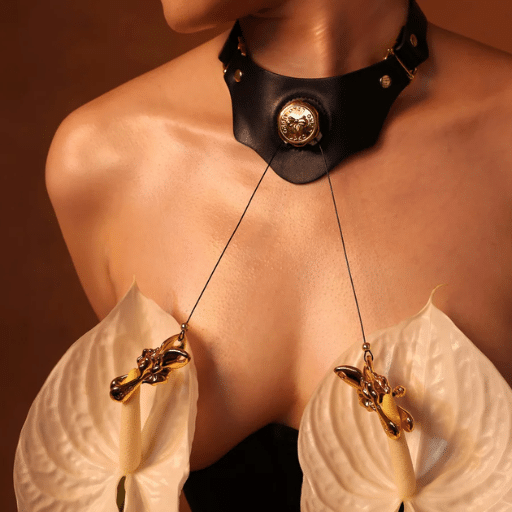
Also known as Japanese clover clamps, these apply pressure through pivoting plates that tighten further when pulled by a chain. They are non-adjustable and deliver intense pressure, making them popular in advanced BDSM play. Metalworking precision is critical here.
Magnetic Clamps
Two small but powerful magnets pinch the nipple between them. The pressure is completely non-adjustable and can be surprisingly intense. These require high-grade neodymium magnets and precise housing design.
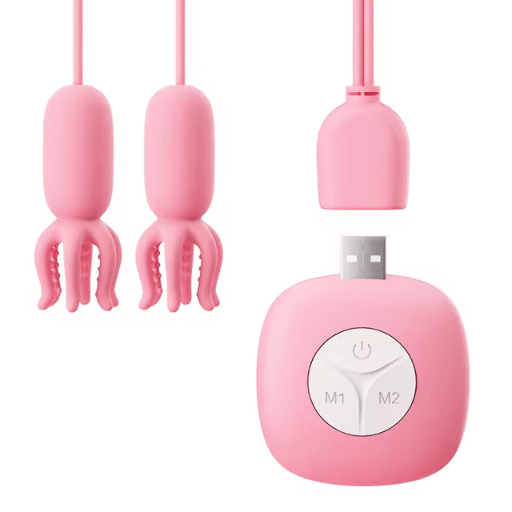
Vibrating / Smart Clamps
These combine traditional clamping with vibration, remote controls, or app connectivity. They command the highest retail prices and the strongest margins, but manufacturing involves electronics integration, battery sourcing, and additional compliance testing. Learn more about this category in our guide to vibrating and smart nipple clamp manufacturing.
Suction-Based Nipple Toys
Technically not clamps, these use vacuum pressure to draw blood into the nipple and increase sensitivity. They are often recommended as a beginner-friendly warm-up product and are simpler to manufacture than mechanical clamps.
If you want a deeper breakdown of how each type performs in retail, see our complete product guide for manufacturers and retailers.
Custom Nipple Clamp Manufacturing Models: OEM, ODM, and Private Label
Before you contact a factory, you need to decide how much customization you want. The three primary manufacturing models are OEM, ODM, and private label. Each suits a different business stage, budget, and risk tolerance.
OEM Nipple Clamps: Full Custom Design
The OEM contract requires you to deliver all necessary design specifications and technical documents, including designs, specifications, and technical drawings. The factory produces exactly what you specify. The business model works best for established brands that have their own unique products and for retailers who want to create distinct product identities.
Through OEM nipple clamp manufacturing, you can create your own unique nipple clamp mechanisms, which include a custom screw thread and a patented tension system, an exclusive chain length, and a proprietary magnetic housing. The trade-off requires more money at the beginning, but it extends the time needed to complete projects.
Typical OEM MOQs for nipple clamps: 1,000 to 3,000+ units.
Lead time: 30 to 60 days after sample approval.
Best for: Brands with established cash flow and a clear design vision.
ODM: Modify Existing Factory Designs
The Original Design Manufacturing process requires factories to possess existing clamp designs and molds. You select a base model and request modifications: custom colors, adjusted dimensions, branded packaging, or minor feature changes like adding a bell or crystal charm.
The ODM process enables customers to receive products that match their requirements while remaining within predefined time limits. The customer receives a distinctive product, which they can access without needing to pay for complete mold creation. Joyflick provides ODM services, which enable brands to establish customized product lines within 15 to 30 days while spending less money than they would need for OEM operations.
Typical ODM MOQs for nipple clamps: 500 to 1,000 units.
Lead time: 15 to 30 days.
Best for: Growing brands ready to invest in differentiation but not yet prepared for full OEM tooling costs.
Private Label Nipple Clamps: Logo and Packaging Only
Private label nipple clamps offer the fastest path to market. You select a stock product from the factory’s catalog, add your logo, and customize the packaging. The product itself remains unchanged.
This model is perfect for startups testing demand or content creators building a merchandise line. The risk is lowest, but so is differentiation. You are competing on branding and marketing rather than product uniqueness.
Typical private label MOQs for nipple clamps: 100 to 500 units.
Lead time: 7 to 15 days.
Best for: Startups, influencers, and entrepreneurs validating a new brand.
A Note on Negotiating MOQs
Experienced sourcers on Reddit and industry forums report that factory-listed minimum order quantities are open to negotiation. Manufacturers will accept 100 to 200 units for a first private label order when you approach them as a dedicated long-term partner who needs to test market conditions. The essential requirements for success include professional communication combined with a comprehensive growth strategy.
Joyflick specializes in manufacturing adult toys with low minimum order requirements. Our company provides minimum order requirements starting from 300 units, which allows businesses to begin operations without incurring high capital expenses. Our team assists customers in selecting the appropriate model for their needs, whether they require private-label speed or OEM exclusivity.
If you are just starting, our guide on how to start a private label nipple clamp brand walks through the full entrepreneurial journey.
Materials and Safety Standards in Custom Nipple Clamp Manufacturing
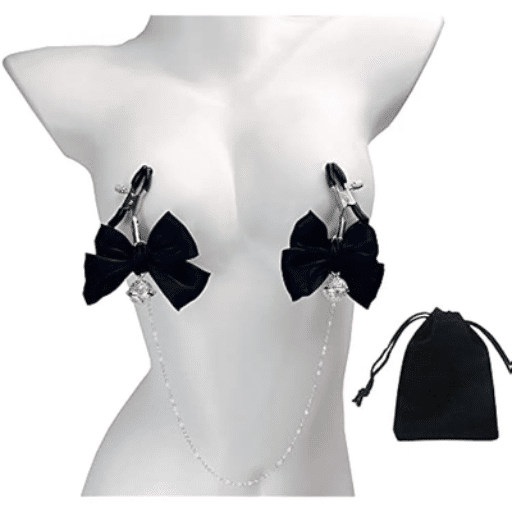
Material selection is not a detail you outsource to the factory and forget. The metals, coatings, and plastics used in nipple clamps come into direct contact with sensitive skin. A poor material choice leads to allergic reactions, tarnishing, negative reviews, and in the worst cases, liability claims.
Medical-Grade Stainless Steel (304 / 316)
Stainless steel is the gold standard for metal clamps. Grade 304 is durable, rust-resistant, and widely available. Grade 316 offers superior corrosion resistance and is often marketed as “medical-grade” or “surgical-grade” steel.
Manufacturing note: If you choose plated or chrome-finished clamps, verify that the plating is nickel-free. Nickel allergies are common, and a nickel-plated clamp can cause skin irritation or blistering.
Liquid Silicone and Food-Grade Silicone
Silicone is used for vibrating clamp housings, soft tips, and lasso-style loops. Platinum-cured liquid silicone is the industry standard for body safety. It is non-porous, odorless, hypoallergenic, and heat-resistant.
Red flag: Avoid suppliers offering PVC or “jelly rubber” at lower prices. These materials are porous, can harbor bacteria, and often contain phthalates. Reddit sourcers consistently warn that cheap materials lead to chargebacks and compliance failures.
ABS Plastic and TPE
ABS plastic is rigid, non-porous, and commonly used for vibrating clamp casings and battery housings. TPE (thermoplastic elastomer) is softer and more flexible, sometimes used for comfort pads. While TPE is skin-safe when properly formulated, it is more porous than silicone and less durable over time.
Chrome-Plated Iron
Budget metal clamps are often made from iron with a chrome or silver plating. This keeps unit costs low but introduces risks: the plating can chip or wear off, exposing the base metal to moisture and causing rust. If you target the budget segment, invest in thicker plating and include care instructions.
Essential Certifications
Every market has its own compliance requirements. Here are the certifications you should verify before placing a bulk order:
- CE Marking: Required for products sold in the European Union.
- FDA Registration: Ensures safety standards for the U.S. market.
- RoHS Compliance: Restricts hazardous substances like lead, cadmium, and mercury in metals and electronics.
- ISO 9001: Demonstrates that the manufacturer follows standardized quality management processes.
- REACH Compliance (EU): Regulates chemicals and substances of very high concern.
- UN38.3 (for vibrating clamps): Required for lithium battery transportation.
For a deeper technical dive, see our manufacturer’s guide to nipple clamp materials and safety certifications.
Nipple Clamp Design and Mold Development
Nipple clamp manufacturing sits at the intersection of metalworking, mechanical engineering, and ergonomics. Unlike silicone toys, which rely primarily on pour molding or injection molding, clamps often require precision springs, screw threads, and hinge mechanisms.
From Sketch to CAD
Every nipple clamp design project begins with a manufacturable 3D model. You can provide hand sketches, reference photos, anatomical measurements, or existing CAD files. Our engineering team at Joyflick then refines the design for ergonomics and manufacturability.
Key design considerations for clamps include:
- Contact pressure distribution: Thin tips focus force on a small area (more intense). Wide tips spread pressure (more comfortable).
- Nipple size accommodation: Adjustable mechanisms work across a broader range of anatomy than fixed designs.
- Chain and attachment points: If your design includes a connecting chain, weight, or decorative element, the anchor point must withstand repeated tugging without deforming.
- Draft angles and parting lines: For molded components like silicone tips or plastic casings, the mold must allow clean release without tearing the material.
Prototyping the Mechanism
Before cutting production molds, we recommend building functional prototypes. For mechanical clamps, this often means CNC-machined metal components or 3D-printed plastic prototypes that test the fit and tension.
Typical prototyping timeline for clamp mechanisms: 2 to 4 weeks.
Sample cost: 50to50to300 per unit depending on complexity and materials.
Mold Types and Costs
The mold strategy depends on your expected volume and the materials involved:
Metal Injection Molds (Steel):
Best for high-volume production of plastic or silicone components. These molds are CNC-milled from hardened steel and can last for millions of cycles. However, the upfront cost is significant.
- Mold cost for clamp mechanisms: 500to500to3,000+ per design.
Silicone Pour Molds (RTV):
Used for small-batch silicone parts like comfort tips or vibrating clamp housings. These are lower cost but wear out faster.
- Mold cost for small silicone parts: 200to200to500.
When to Invest in Custom Molds
If you are launching a private label line with an existing factory design, you can skip mold development entirely. If you are creating a proprietary adjustable mechanism or an exclusive shape, custom molds are essential for protecting your design and maintaining consistency.
For a step-by-step walkthrough of the design process, read our article on custom nipple clamp design and mold development.
MOQ, Pricing, and Production Timelines
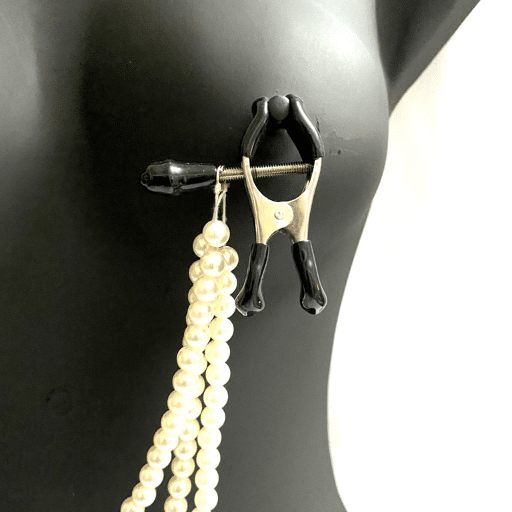
One of the most common questions we hear about custom nipple clamp manufacturing is: “How many units do I need to order?” The answer depends on your customization level and the clamp type. Here is a transparent breakdown based on current factory capabilities and market benchmarks.
MOQ by Customization Level
| Customization Level | Typical MOQ | Lead Time | Best For |
|---|---|---|---|
| Logo only (private label) | 10 to 100 units | 7 to 15 days | Testing demand |
| Packaging custom | 500 units | 15 to 25 days | Brand building |
| Color/material change (ODM) | 500 to 1,000 units | 15 to 30 days | Product differentiation |
| Full custom design (OEM) | 1,000 to 3,000+ units | 30 to 60 days | Proprietary products |
Wholesale Nipple Clamps: Cost Per Unit by Clamp Type
| Clamp Type | Private Label (500 pcs) | ODM (1,000 pcs) | OEM (3,000+ pcs) |
|---|---|---|---|
| Basic metal (tweezer/alligator) | 2to2to4 | 3to3to6 | 2to2to5 |
| Clover / magnetic | 3to3to6 | 5to5to10 | 4to4to8 |
| Vibrating / smart | 8to8to15 | 12to12to22 | 10to10to18 |
These figures include manufacturing and standard packaging. Custom retail boxes, instruction inserts, and premium finishes (rose gold, black nickel) add 0.50to0.50to2.00 per unit depending on volume.
Production Timeline Breakdown
Sampling: 5 to 7 days for existing designs; 2 to 4 weeks for custom prototypes.
Production after sample approval:
- 1 to 500 pieces: 7 to 15 days
- 500 to 2,000 pieces: 15 to 25 days
- 2,000+ pieces or custom molds: 30 to 45 days
At Joyflick, we maintain fast turnaround times with standard products delivered in 7 to 15 days and custom orders in 15 to 30 days. Our ISO-certified production and six-stage inspection process keep defect rates below 0.2%.
For startups concerned about capital, our dedicated article on nipple clamp MOQ and pricing for startups breaks down negotiation strategies and cost-saving tips.
Regional Manufacturing Hubs: Where Nipple Clamps Are Made
China dominates global adult toy manufacturing, producing an estimated 70% of the world’s sex toys. But not all regions specialize in the same products. Choosing the right hub can mean the difference between premium quality and disappointing results.
Guangdong Province (Shenzhen, Guangzhou, Dongguan)
Specialization: Electronics-integrated products, premium metalwork, and smart devices.
Guangdong is the leading hub for custom nipple clamp manufacturing, especially vibrating and app-connected models. Factories here have deep expertise in motor sourcing, Bluetooth modules, battery integration, and PCB assembly. The region also produces high-end metal clamps with precise finishing. Proximity to Hong Kong makes international shipping fast and efficient.
Best for: Vibrating clamps, smart clamps, premium stainless steel designs, and brands needing rapid prototyping.
Zhejiang Province (Yiwu, Ningbo)
Specialization: Small accessories, low-MOQ orders, and fast turnaround.
Yiwu is famous for its massive wholesale market and flexible small-batch production. If you need 100 to 500 units of a basic metal or chain-connected clamp with custom branding, Yiwu factories can turn orders around quickly. The trade-off is that quality consistency can vary more than in Guangdong.
Best for: Private label startups, dropshipping suppliers, and budget-friendly mechanical clamps.
Jiangxi and Hebei Provinces
Specialization: Cost-effective metal and textile-based production.
These inland provinces offer lower labor costs than coastal hubs. Factories here excel at producing basic metal clamps, leather-strap hybrids, and BDSM kit components at competitive prices. Lead times are slightly longer due to logistics, but unit costs are among the lowest.
Best for: High-volume budget orders, kit bundling (clamp + collar + cuff sets), and price-sensitive markets.
Sialkot, Pakistan
Specialization: Surgical-grade stainless steel and artisanal metalwork.
While China dominates volume, Sialkot has carved out a niche in high-grade surgical steel products and intricate metal designs. Pakistani manufacturers are smaller in scale but often produce exceptional quality for niche luxury and fetish markets.
Best for: High-end surgical steel clamps, custom jewelry-grade finishes, and artisanal BDSM metalwork.
Strategic Sourcing Advice
Many successful brands do not rely on a single factory or region. A common strategy is to source vibrating clamps from Guangdong, mechanical clamps from Yiwu, and packaging materials from a specialized printer near the primary assembly factory. This hybrid approach balances innovation, cost, and supply chain resilience.
Advanced Manufacturing: Vibrating and Smart Nipple Clamps
The fastest-growing segment in nipple clamp manufacturing is not mechanical at all. It is electronic. Vibrating and app-connected clamps command retail prices 2x to 3x higher than basic metal designs, and consumer demand is accelerating.
Motor Integration and Vibration Modes
Most vibrating nipple clamps use small DC motors or bullet vibrators housed in silicone casings attached to the clamp arms. Manufacturers typically offer 3 to 10 vibration patterns, controlled by a button on the device or a separate remote.
Key engineering decisions include:
- Motor placement: Inside the clamp tip for direct stimulation, or in the clamp body for gentler, diffused vibration.
- Power source: Replaceable button batteries (cheaper, shorter life) vs. rechargeable lithium-ion (premium, longer life, higher upfront cost).
- Waterproofing: IPX4 (splash-resistant) is standard; IPX7 (submersible) requires more complex sealing and adds cost.
Bluetooth and App Connectivity
Smart clamps with Bluetooth or Wi-Fi connectivity allow users to control intensity, patterns, and duration through a smartphone app. Some models enable long-distance partner control, a feature that became especially popular after 2020.
From a manufacturing standpoint, app connectivity requires:
- A Bluetooth Low Energy (BLE) chip integrated into the clamp or remote.
- Firmware development and app development (often handled by the factory’s electronics partner).
- FCC certification in the U.S. and CE-RED certification in the EU for radio equipment.
Battery Compliance and Logistics
Any product containing a lithium battery must comply with UN38.3 testing for safe transportation. Your factory should provide:
- Material Safety Data Sheets (MSDS)
- UN38.3 test reports
- Proper battery labeling for air freight
Failure to provide these documents can result in customs seizures, shipping delays, and platform restrictions on Amazon and other marketplaces.
Why Smart Clamps Deserve Attention
The smart and vibrating clamps combine with their higher margins to demonstrate the ongoing development of technology-based intimate products. Consumers today consider app connectivity and remote control and rechargeable battery systems as essential features. Brands that invest in this category early will establish themselves as leaders during the upcoming market expansion.
At Joyflick, our R&D team specializes in integrating smart technology into adult toys. With 50+ patented technologies and ISO-certified production, we help brands develop app-connected nipple clamps that combine innovation with quality. Learn more in our dedicated guide to vibrating and smart nipple clamp manufacturing.
Packaging and Branding for Custom Nipple Clamp Manufacturing
Packaging is often the easiest and most cost-effective way to differentiate a private label product. It is also a compliance issue. A poorly labeled outer carton can cause customs delays, platform rejections, and angry customers.
Custom Packaging Options
OPP Bags (Minimum):
Clear plastic bags with a hang hole. MOQs are low (often 500 to 1,000 units), but they offer minimal brand presence.
Branded Retail Boxes:
Custom-printed cardboard boxes with your logo, product image, and care instructions. This is the standard for e-commerce brands. MOQs typically start at 500 units.
Premium Presentation Boxes:
Rigid boxes with magnetic closures, foil stamping, or embossed logos. These elevate perceived value and work well for luxury or gift-oriented brands. MOQs start at 1,000 units and costs run 1.50to1.50to4.00 per box.
Branding on the Product Itself
For metal clamps, common branding methods include:
- Laser engraving: Permanent and precise; works on stainless steel and chrome-plated metals.
- Metal plates: Small branded plates riveted to the clamp body or chain.
- Silk-screening: Used on silicone components or plastic housings.
Discreet Shipping Requirements
One lesson seasoned sourcers emphasize: always confirm that the factory uses neutral outer cartons for shipping. Some factories accidentally print adult-related wording or product images on the shipping box, which creates problems at customs, with dropshipping partners, and with customers expecting privacy.
Your packaging brief should specify:
- No explicit imagery or language on outer cartons.
- Generic product descriptions on shipping labels (e.g., “metal accessories” or “personal care products” where legally permitted).
- Proper HS codes and commercial invoices to avoid customs holds.
For creative packaging ideas and unboxing strategies, explore our article on custom packaging and branding for nipple clamps.
Quality Control and Factory Vetting
The search for a factory that produces custom nipple clamps is simple to complete. The success of a business depends on its ability to find a trustworthy factory that produces high-quality products. The following protocol represents actual sourcing methods that entrepreneurs used to grow their adult toy businesses into profitable enterprises.
Verify It Is a Real Factory
Trading companies are middlemen. They charge markups, offer less customization control, and sometimes misrepresent product capabilities. Here is how to spot a real factory:
- Check the business type on Alibaba or Made-in-China. Filter for “Manufacturer/Factory” rather than “Trading Company.”
- Request a video call via WeChat or WhatsApp. Ask for a live tour of the production floor, not a polished showroom. Real factories will walk you past stamping machines, assembly lines, and quality control stations.
- Ask technical questions. A real factory can explain their mold process, material grades, and testing protocols in detail. A trading company will give vague answers.
Order Samples First
This is non-negotiable. Product photos rarely match the actual item, especially for softer silicone grades and plated metals. Order samples from at least three competing factories. Test for:
- Tension strength and adjustability
- Weld quality and plating durability
- Silicone softness and odor
- Battery performance (for vibrating clamps)
Inspection Before Final Payment
Never wire 100% of the payment upfront. The standard structure is 30% deposit, 70% before shipping. For trusted long-term partners, some brands negotiate 30/40/30 (remaining 30% after inspection).
For larger orders, hire a third-party inspector in the factory city. In Shenzhen or Guangzhou, this typically costs 100to100to150 and includes:
- Inline production checks
- Random sampling from the finished batch
- Packaging and labeling verification
One entrepreneur who scaled to $15,000 per month reported that attending the Canton Fair and meeting suppliers face-to-face “cut defect rates in half.” If you are serious about scaling, trade shows like eroFame (Germany), ANME (USA), and the Canton Fair (China) are worth the investment.
Red Flags to Avoid
- Hesitation to provide certifications or lab test reports
- Prices that seem too good to be true (usually indicate inferior materials)
- Refusal to allow a video factory tour
- Demands for 100% payment upfront on a first order
- Inability to explain their quality control process
At Joyflick, we welcome factory tours and video verification. Our ISO-certified production and six-stage inspection protocol maintain a defect rate below 0.2%, giving our partners confidence in every shipment.
Frequently Asked Questions
How do I know if an Alibaba supplier is a real factory or a trading company?
The “Business Type” filter needs to be checked for “Manufacturer/Factory” selection. The production floor requires a live video tour which you need to request through WeChat or WhatsApp while you should ask technical questions about their mold process and material grades. Trading companies provide vague answers but real factories provide detailed responses.
What is the minimum order quantity for custom nipple clamps?
Your desired customization level will determine the minimum order quantity requirements. The minimum order quantity for logo-only private label orders starts at 10 units and goes up to 100 units. The minimum order quantity for packaging customization starts at 500 units. The minimum order quantity for full OEM custom designs ranges from 1,000 to 3,000 plus units. If you establish yourself as a long-term partner many factories will reduce their initial order minimums.
What certifications do nipple clamps need for US and EU sales?
The EU market requires both CE marking and REACH compliance as essential product certification requirements. The US market requires you to check both FDA registration and RoHS compliance for all metal and electronic components. The UN38.3 battery testing along with FCC certification for Bluetooth connectivity becomes necessary when your clamps produce vibrations.
How long does it take to manufacture custom nipple clamps?
Sampling takes 5 to 7 days for existing designs or 2 to 4 weeks for custom prototypes. The production timeline after sample approval begins with a 7 to 15 day period which applies to 1-500 units followed by a 15 to 25 day duration for 500-2,000 units and extends to 30 to 45 days for 2,000+ units or custom molds.
Can I start with fewer than 500 units?
Yes. Many factories accept 100 to 200 units for a first private label order if you communicate professionally and explain your growth plan. Joyflick requires emerging brands to meet a minimum order quantity of 300 units for their products.
How much does a custom nipple clamp mold cost?
Mold expenses for mechanical clamp components range from 500 to 3,000 depending on production volume and material requirements and design complexity. The cost of silicone pour molds used for small parts starts at 200 and goes up to 500.
Conclusion
Custom nipple clamp manufacturing is not a generic offshoot of the adult toy industry. It demands specialized knowledge of metalwork, mechanical engineering, materials science, and regional sourcing. The brands that succeed are the ones that treat it as a distinct discipline — not an afterthought.
Here are the five takeaways that matter most:
- Match your manufacturing model to your business stage. Startups should test demand with private label. Growing brands should differentiate through ODM. Established players should protect their IP with full OEM.
- Never compromise on materials. Medical-grade stainless steel, platinum-cured silicone, and nickel-free plating are not luxury upgrades. They are baseline requirements for customer safety and brand longevity.
- Choose your manufacturing hub strategically. Guangdong for tech and premium metal, Yiwu for low-MOQ speed, Jiangxi for budget volume, and Sialkot for surgical steel artistry.
- Invest in packaging and discreet shipping from day one. A beautiful unboxing experience builds brand equity. A poorly labeled carton builds customs problems.
- Verify everything. Samples first. Video factory tours. Third-party inspections. Negotiated payment terms. These steps separate thriving brands from cautionary tales.
At Joyflick, we partner with brands at every stage of growth. Whether you are launching your first 300-unit private label order or scaling a proprietary smart clamp line, our ISO-certified production, 50+ patented technologies, and customer-centric OEM/ODM services give you the expertise and flexibility to succeed.