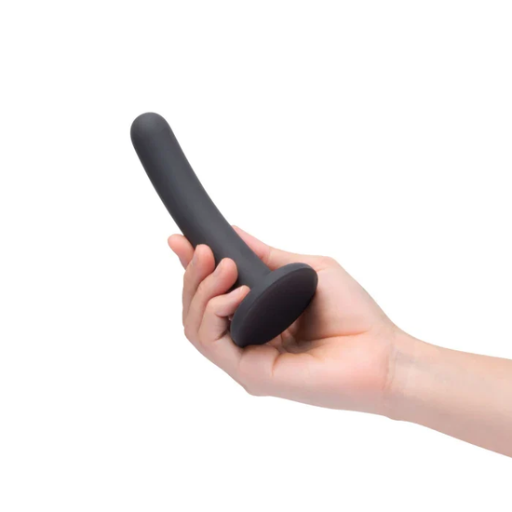
You can repair a silicone sex toy only when the damage is cosmetic and sits on a surface that never enters the body. A cut or tear on or near an insertable area should not be glued. Replace the toy. Silicone can be bonded with a silicone-specific adhesive, but the seam leaves a crevice, and no consumer adhesive is approved for internal contact.
A reader we’ll call Nadia bought a silicone dildo in March. Six months later, she found a 4 mm nick near the base, where the toy meets the suction cup. She reached for super glue. It cured hard, cracked within a week, and left a rough bead she could feel with a finger.
The nick was in a spot that never enters the body. That mattered more than the glue did.
This guide separates the two questions most repair pages blur. Can silicone be bonded? And does the bonded seam belong inside a body?
If you’re sourcing rather than fixing, ask our team to review the design before you commit to a spec.
Key Takeaways
- Cosmetic damage on a non-insertive surface can sometimes be bonded. Damage on or near an insertable surface should be replaced.
- Silicone is a thermoset with low surface energy. It won’t melt or heat-weld, and ordinary glue bonds poorly to it.
- A silicone adhesive needs a clean, roughened surface and 24 hours of full cure. Surface-dry isn’t cured.
- Super glue, hardware sealant, TPE glue and epoxy are wrong for silicone.
- A repaired seam inside a toy can’t be cleaned reliably. That, not adhesive strength, drives the insertive rule.
How to Repair a Silicone Sex Toy: The Short Answer
Silicone can be repaired with a silicone adhesive, but only on a non-insertive surface, and only when the edges close without a gap. A tear in a shaft, canal or orifice rim can’t be repaired safely. The seam traps lubricant and skin cells where a wash can’t reach.
Two questions decide every case. Can the material be bonded cleanly? And will the repaired surface go inside a body? If the answer to the second is yes, stop.
Can you repair a silicone sex toy? Sometimes. The location decides.
That rule is stricter than most repair guides, and it’s the one that matters. A toy isn’t a doll. The repair that rescues a cosmetic tear on a thigh isn’t the repair you want on a surface that contacts mucous membranes.
Why Silicone Is Hard to Repair
Silicone is a thermoset, not a plastic
Silicone rubber is cross-linked. Once cured, the network can’t be melted or re-formed. That’s what separates it from TPE, which is thermoplastic and can be softened, fused and heat-welded. A TPE tear closes with heat; a silicone tear can’t.
A household iron will char it before it fuses. The material difference is covered in TPE vs silicone sex toys.
Low surface energy defeats ordinary glue
Silicone has low surface energy, so liquid adhesives don’t wet it well. A glue that grabs plastic, metal or skin has little to hold onto here. Cyanoacrylate, the chemistry behind super glue, is the usual first attempt and the usual failure.
A 2024 study in the Journal of Industrial and Engineering Chemistry found baseline cyanoacrylate adhesion to silicone was low, and that bond strength only became useful after surface modification or chemical pretreatment. A primer can help; a tube of ordinary super glue is not that.
A cut is a starting point for a tear
Silicone stretches well but tears more easily than people expect. Typical tear strength runs roughly 20 to 50 kN/m depending on grade and test die.
A cut edge is a stress riser. Every pull concentrates force at the end of the cut, and the tear walks forward. Thin orifice rims, sharp molded corners and seams at a hard plastic base are where this happens first. It’s also why a repair that only bridges the visible cut reopens in the same place.
Which Damage Can Be Repaired?
Use location first and damage second. If you’re looking up how to fix a torn silicone sex toy, start there. The same 5 mm cut is a cosmetic problem on a base and a replacement case in a canal.
| Damage | Location | Verdict | Why |
|---|---|---|---|
| Small nick, no missing material | Base, handle, exterior | Cosmetic repair may work | Edges close, seam stays outside the body |
| Cut or tear in the shaft | Any insertive surface | Replace | Seam sits inside the body and can’t be cleaned |
| Torn orifice rim or canal | Insertive opening | Replace or contact the maker | Thin edge, high flex, highest hygiene risk |
| Split where silicone meets a plastic base | Non-insertive joint | Case by case | Depends on the plastic; silicone adhesive may not bond ABS |
| Delamination of a dual-density layer | Shaft or shell | Replace | The bond failed across an area, not a line |
| Crack reaching a core, motor or wire | Anywhere | Replace | Internals are exposed |
| Sticky or tacky surface | Anywhere | Replace | Chemical degradation, not mechanical damage |
| Missing chunk or open gap | Anywhere | Replace | Edges can’t be brought together |
| Repeat tear at the same spot | Anywhere | Replace | The stress point was never resolved |
| Large cosmetic tear on a doll’s skin | Non-insertive | Professional repair or careful DIY | Different thickness, different stakes |
Repairs work on lines, not areas. They work outside the body, not inside it. And they work when two edges meet, not when material is missing.
The Insertive Rule: Why a Repaired Seam Is a Hygiene Risk
A bonded seam is a crevice. Even a good bond leaves a micro-channel at the bond line and often a slight ridge where adhesive squeezed out. On a handle, that’s cosmetic. Inside a toy, it’s a cleaning problem you can’t solve.
Silicone is non-porous, which is one of its best properties. A seam undoes that locally. Lubricant, skin cells and moisture collect in the channel, and a wash moves over it rather than through it. The repair can look fine and still be the least cleanable part of the toy.
Industry repair guidance converges on one standard: a repaired channel must be fully cured, closed, smooth and cleanable before use. Most home repairs fail at “smooth” or “cleanable.”
ISO 3533:2021, the voluntary international standard for products in direct contact with genitalia and the anus, addresses materials, cleaning and user information. It’s a design standard, not a repair protocol, but the logic applies: a surface that can’t be cleaned is a design failure, and gluing a seam into one makes it worse.
There’s a second trap. Many toys sold as silicone are TPE, TPR or a blend. TPE is porous, so a tear in it can’t be made hygienically clean even with a perfect bond.
Before any repair, confirm what you own. How to tell if a sex toy is real silicone covers the tests and their limits.
The rule, stated plainly: if the damaged surface enters the body, replace the toy. If it doesn’t, a cosmetic repair may be reasonable.
The Adhesives That Work, and the Ones That Don’t
The one family that bonds silicone
Silicone bonds with a silicone adhesive. Smooth-On Sil-Poxy is a useful reference: a one-component adhesive that works with tin- and platinum-cure silicones, with a 5-minute pot life, 1-hour handleable time and 24-hour full cure.
Cured, it’s Shore 40A, 750 psi tensile and 750% elongation, flexible enough to move with a toy rather than crack off it. It bonds some plastics, but the maker lists urethane, not ABS, so a silicone-to-ABS joint isn’t a sure thing.
One caveat matters more than the specs. The maker calls the cured adhesive skin safe, but says not to apply it to skin in liquid form and labels the product industrial. Skin safe isn’t approval for internal contact, which is why this article doesn’t recommend adhesive repair inside a toy.
Cure inhibition is real
Platinum-cure silicone won’t cure properly in contact with certain contaminants. Dow’s technical FAQ lists amines and amides, sulfur compounds, tin salts, phosphorus compounds and some solvents as inhibitors. The result ranges from a sticky surface to a mix that never sets.
A surface carrying mold-release residue, an unevaporated solvent or contamination can leave the adhesive permanently tacky. A repair that feels dry after an hour and tacky the next day isn’t cured. It never will be.
What fails, and why
| Adhesive | Bonds silicone? | Problem | Verdict |
|---|---|---|---|
| Silicone adhesive (addition cure) | Yes | Needs clean surface and 24 hours | The only suitable family |
| Super glue (cyanoacrylate) | Poorly and unpredictably | Brittle, cracks, hard bead | Don’t use |
| Hardware silicone sealant | Weakly | Releases acetic acid while curing, not for body contact | Don’t use |
| TPE repair liquid | No | Formulated to soften TPE, not bond silicone | Don’t use |
| Two-part epoxy | Poorly | Rigid seam on a flexible part, cracks | Don’t use |
| Hot glue | No | Low strength, softens with warmth | Don’t use |
| Silicone caulk (bathroom/kitchen) | Weakly | Not structural, not body-safe, acetic or neutral cure | Don’t use |
A note on hardware sealant. Acetoxy-cure silicone releases acetic acid as it cures. Safety data sheets classify the curing agent as corrosive and irritating, and at least one construction sealant data sheet says it isn’t suitable for medical applications. It’s designed to seal a bathroom, not to sit against mucosa.
How to Repair a Silicone Toy Safely (Cosmetic Damage Only)
This procedure is for a non-insertive surface: a base, a handle, a doll’s exterior, a decorative area. It’s the only silicone sex toy repair this guide endorses. Don’t use it on a shaft, canal or rim.
- Assess the damage. Check depth, missing material, and whether the edges meet when pressed together. If there’s a gap, stop.
- Confirm the material. A repair on TPE, TPR or a blend isn’t this repair. If you’re unsure, treat it as non-silicone.
- Clean and dry. Wash with mild, fragrance-free soap and warm water, rinse, and dry completely. Adhesive won’t bond to a damp surface. The full routine is in how to clean silicone sex toys.
- Run a patch test. Put a dot on a hidden area and leave it 24 hours. It should cure hard, not tacky, and grip. This catches cure inhibition before you commit.
- Roughen and wipe. Use 400 to 600 grit lightly on both faces, then remove dust and oil with isopropanol and let it evaporate. Don’t use acetone; it can leave residue and attack nearby plastics.
- Apply thin and press. A thin layer on both faces, pressed together, beats a thick blob. Hold or clamp for 5 to 10 minutes, then leave it undisturbed.
- Cure for 24 hours. Full cure, not handleable. Keep it warm and dry.
- Inspect before use. The seam should be smooth, closed and dry. Run a clean finger along it. A lip, gap or tackiness means the repair failed. Don’t use it.
If the area flexes hard, watch the repair for a week. A seam that reopens means the stress point is the problem, and the toy should go.
Ready to compare materials? Our body-safe materials guide explains how silicone grades, hardness and cure affect tear resistance.
Vibrators, Motors and Charging Ports
Electronics usually push the answer toward replacement.
Sealed vibrators. Opening a waterproof body to reach a motor or board breaks the seal, and you can’t restore the IP rating at home. Water then reaches the electronics. Don’t open a sealed unit.
Battery compartments and contacts. These are user-serviceable. Remove the battery, inspect for corrosion, clean the contacts with isopropanol and a soft brush, dry fully, and fit a fresh battery. Never wash the compartment.
Swollen or hot batteries. Stop immediately. A swollen lithium cell is a fire risk. Isolate it from flammable material and dispose of it through a battery recycling point, not household waste.
Motor and wiring faults. A grinding motor, a dead button or a frayed wire inside a sealed body isn’t a home repair. Replace the toy.
When to Replace Instead of Repair
Replace rather than repair if any of these is true:
| Trigger | Why repair stops there |
|---|---|
| Damage on or near an insertable surface | The seam can’t be cleaned reliably |
| Material is missing, or the edges don’t meet | Adhesive can’t bridge a gap |
| The crack reaches a core, motor, wire or battery | Internals are exposed and unsafe |
| The same spot has torn twice | The stress point was never resolved |
| The surface is sticky, chalky or discolored | This is degradation, not a cut |
| The toy was sold as silicone but behaves like TPE | Porous material stays contaminated |
A sticky surface is degradation, not a cut, so no adhesive fixes it; why do sex toys melt explains why. A repeat tear is a design or use problem. And how long do sex toys last gives expected service life by material.
Silicone Sex Doll Repair Is a Different Job
Doll guides are the bulk of what ranks here, and for a doll owner they’re a reasonable start. The skin is thick, most of the body is non-insertive, and a scar is cosmetic rather than a hygiene issue.
The best separate TPE from silicone chemistry, reject super glue and household sealant, treat joint failures as mechanical, and send orifice tears to manufacturer support.
A doll offers a large, thick, mostly flat surface where a patch can sit. A handheld toy has a thin wall, a small radius and constant flex. The insertive rule applies to both, and it’s stricter for the toy.
A doll owner we’ll call Chris repaired a 3 cm cosmetic tear on a thigh with a silicone adhesive and a backing patch. It held. When the same doll later tore at an orifice rim, he sent photos to the maker instead of reaching for the tube. That was the right split.
For Brands: Designing Toys That Need Fewer Repairs
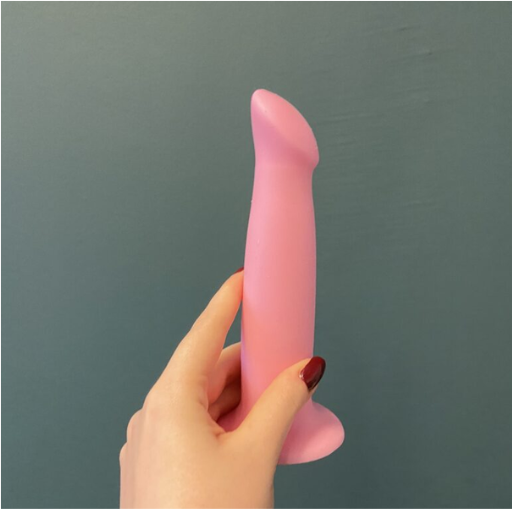
Most “it tore” tickets are customer complaints. Read them as specification signals.
Wall thickness at the rim. Thin walls tear first. Specify a minimum and test under repeated stretch, not just at demold.
Radius, not a corner. Sharp internal corners concentrate stress; a radius spreads it. That’s a mold-design decision made long before the first complaint.
Molded base versus bonded base. A silicone body locked around a plastic base outlasts one relying on an adhesive bond. If a bond is unavoidable, specify the substrate and test it wet.
Cure and mold release. Incomplete cure lowers tear strength, so the cure schedule belongs in the process spec with a check that confirms it. Release agent left on a bond area will weaken it.
What to specify. Tear strength by ASTM D624, elongation, durometer for each zone, and the bond line for dual-density parts. Dual-density silicone sex toys explain why that interface is the quality question.
What to print on the care card. Cleaning, drying, storage, and an honest repair policy. ISO 3533:2021 treats user information as part of the product.
A brand owner we’ll call Ben ran a dual-density line that started delaminating at eight weeks. His returns team was gluing samples to test a fix. The real answer was upstream: the outer layer had cured too far before the inner pour, so the bond never formed. No adhesive would have saved it.
Talk to our team about reviewing wall thickness, bond lines and cure specifications before your next production run.
FAQ
Can torn silicone be repaired?
Sometimes. A cosmetic tear on a non-insertive surface can be bonded if the edges close and the seam stays smooth and cleanable. A tear in an insertable area should not be repaired; the seam can’t be cleaned reliably.
What glue can I use on a silicone sex toy?
A silicone-specific adhesive such as Sil-Poxy is the only family that bonds silicone reliably. Super glue, epoxy, hot glue, TPE repair liquid, and hardware sealant are the wrong chemistry.
Is a repaired silicone toy safe to use?
Only if it’s non-insertive, fully cured, smooth, closed and cleanable. A repair inside the body isn’t safe even if it looks good, because the bond line traps material a wash can’t reach.
Can I use super glue or hardware-store silicone?
No. Super glue bonds silicone poorly and cures brittle, leaving a hard bead that cracks. Acetoxy-cure hardware sealant releases acetic acid while curing and isn’t intended for body contact.
Can you repair a silicone vibrator?
Usually not. A sealed body can’t be opened and resealed at home. A battery compartment can be cleaned and refitted, and contacts wiped. A motor, board or sealed battery fault means replacement.
Why did my silicone toy split at the base?
The base is where two materials and two stiffnesses meet, so it concentrates stress. A bonded silicone-to-plastic joint, a thin wall or a sharp corner fails there first. That’s a design issue, not user error.
Conclusion
How to repair a silicone sex toy comes down to two questions. Can the material be bonded cleanly, and will the repaired surface go inside a body? If yes to the second, replace it. If no, a silicone adhesive, a clean roughened surface and a full 24-hour cure can rescue a cosmetic nick.
The limits are worth repeating. Silicone won’t melt back together. Super glue and hardware sealant are the wrong tools.
Surface-dry isn’t cured. And a seam that can’t be cleaned isn’t a repair, however strong the bond.
Most tears are decided before the toy reaches the drawer. Wall thickness, radius, cure and bond line set the odds. Brands that specify those details get fewer “it split” tickets, and customers get toys that last long enough to need cleaning rather than gluing.
If you’re planning a silicone line and want the tear risk designed out early, start with a design and material review.