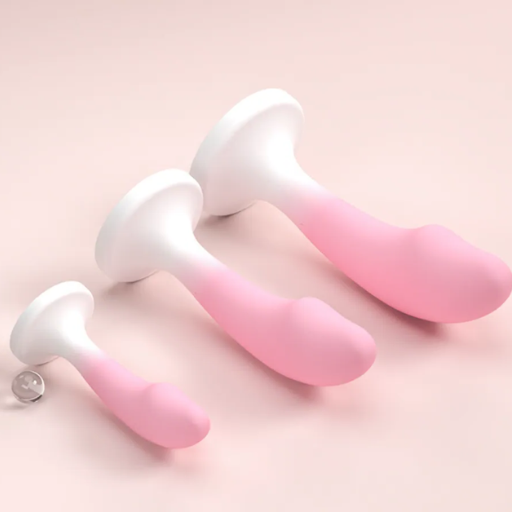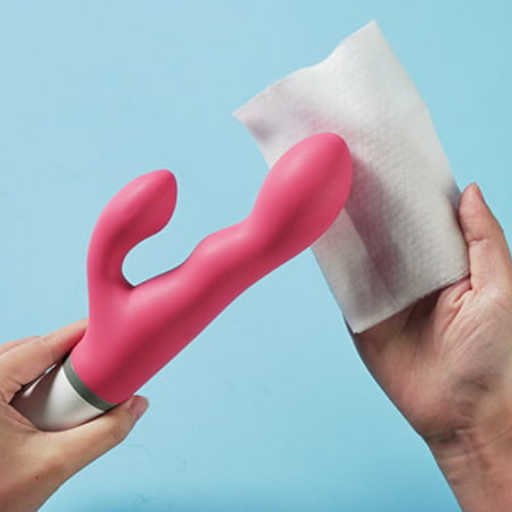
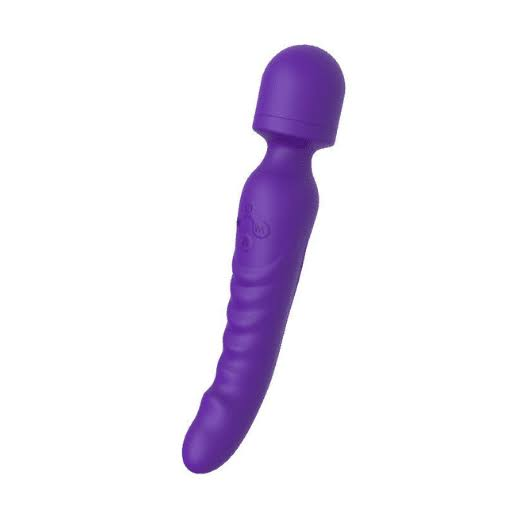
TPE sex toy manufacturing starts with an SEBS-based compound blended with white oil, colorant, and stabilizers, which is then formed by injection molding or casting. Hardness, wall thickness, and geometry decide which forming route a factory uses. Tooling, process control, and batch documentation decide whether the finished product survives its first year on the shelf.
Two factories can open the same 25 kg bag of TPE pellets and ship very different products. One produces a soft, skin-like sleeve that holds its shape and generates almost no returns. The other produces a toy that turns tacky within months, bleeds oil inside its retail box, and comes back through support at a rate that wipes out its unit-cost advantage.
The difference is rarely the material label. It’s the formula, the mold, and the process window.
That distinction matters because “TPE” is a family of blends, not a single recipe. Buy it as a commodity and you’ll get commodity outcomes.
We’re Joyflick, an OEM/ODM manufacturer that compounds, molds, and inspects TPE products for brands selling in more than 50 countries. This guide to TPE adult toy manufacturing walks you through the factory, from pellet to packed carton, then covers the commercial layer brands actually need: tooling, MOQ, cost stack, defect prevention, quality control, and supplier vetting.
Key Takeaways
- TPE sex toys are made from SEBS-based compounds formed by injection molding for firmer, hollow, or detailed parts, or by casting for ultra-soft parts.
- Hardness and wall thickness usually decide the process; order volume and finish requirements decide the tooling.
- Raw-material MOQ is measured in kilograms (often around 500 kg), while finished-goods MOQ is measured in pieces (commonly 100 to 300 for private label).
- Most TPE quality failures trace back to formulation and process control, not the material category.
- TPE is reprocessable in controlled industrial streams. It’s not automatically kerbside recyclable or biodegradable.
TPE Sex Toy Manufacturing: The Short Answer

How are TPE sex toys made? TPE sex toys are made by compounding SEBS with white oil and additives, then forming the blend by injection molding for firmer, hollow, or detailed parts, or by casting for ultra-soft parts. Parts are cooled, demolded, trimmed, assembled, inspected, and packaged. Formula, mold design, and process control determine feel, durability, and defect rate.
The full flow runs in one direction: formulate, compound, dry, prepare the mold, form, cool, demold, trim, assemble, inspect, and pack.
Six variables decide how that flow is configured for your product: hardness, wall thickness, geometry, order volume, surface finish, and target market. Get those on the table before you discuss price. A quote without them is a guess dressed up as a number.
Want the process and MOQ mapped to your specific product? Request a TPE manufacturing consultation before you commit to tooling.
What Is TPE and Why It Fits Sex Toy Manufacturing
TPE stands for thermoplastic elastomer. It behaves like plastic when heated and like rubber when cooled, which is why it can be molded at speed and still feel soft in the hand. In adult products, the base is usually SEBS.
The category matters commercially, and TPE sex toy manufacturing is a major reason the material holds share. The global adult toy market is projected at roughly $35.7 billion in 2026, growing around 8.3% a year through 2036 according to Fact.MR estimates. TPE holds a meaningful share because it delivers realistic softness at a manufacturable price.
SEBS plus oil: the formulation behind the feel
SEBS is styrene-ethylene-butylene-styrene, a block copolymer. Formulators blend it with white or paraffin oil, colorant, and small amounts of stabilizers and processing aids.
Oil loading drives softness. More oil means a softer compound. Ultra-soft grades may run high oil ratios and need a low-molecular-weight, narrow-distribution SEBS to hold that oil without bleeding.
This is why two products labeled TPE can feel completely different. The label tells you nothing about hardness, oil migration, or safety. Ask for the grade, the oil type, and the loading percentage, then verify them on a body-safe materials specification.
Consider what happened to Elena, a founder who launched a soft-touch line in early 2025. Her first supplier quoted the lowest per-unit price and described the material only as “premium TPE.” By month six, customers were reporting a tacky surface, and one distributor returned 400 units.
The compound had a high oil load with poor oil retention. A second supplier reformulated around a low-oil-bleed SEBS grade and validated the mold with a first-article inspection. Returns on the next run fell to near zero, and the higher material price never showed up in her margin.
TPE vs TPR vs silicone: manufacturing implications
TPR is often SBS-based. It’s cheaper, more prone to discoloration, and generally weaker in tensile and tactile performance. The market uses “TPE” and “TPR” loosely, so confirm the actual chemistry before you compare quotes.
Silicone is a thermoset. It cures into a fixed network and can’t be re-melted. TPE is thermoplastic, so it can be re-melted and reprocessed.
That single difference shapes the factory. Silicone needs vulcanization and slower cycles. TPE runs faster cycles and its scrap can often be reground, which lowers effective material cost at volume.
Hardness ranges and what they mean for process
Adult-toy TPE commonly spans Shore 00 to about Shore 30A. Very soft grades, roughly Shore 00 to 15A, can be difficult to injection mold reliably because feeding and plasticizing become unstable.
Hardness affects feeding, shrinkage, demolding, tear strength, and the choice between injection and casting. Treat a spec-sheet number as a starting point, not a guarantee. Hardness can drift between batches and across positions in the same mold, so validate it on finished parts.
The TPE Sex Toy Manufacturing Process, Step by Step
Here is the sequence a TPE sex toy molding process follows on the factory floor. Details vary by grade and product, but the order doesn’t.
1. Formulation and compounding
The compounder blends SEBS, oil, colorant, and stabilizers, then runs the mix through a twin-screw extruder and pelletizes it. Compounding temperatures commonly fall around 140 to 180°C, depending on the grade.
This is the stage where quality is designed in. Ask for the exact grade and the formulation documentation, not a generic TPE claim.
2. Oil pre-dispersion and drying
Ultra-soft compounds may need oil pre-dispersion or swelling for several days before molding, so the oil fully absorbs into the SEBS. Skip it and the oil finds its way to the surface later.
Pellets are also dried before processing, commonly around 70 to 80°C for one to two hours, grade-dependent. Moisture is a direct cause of bubbles and voids.
3. Mold preparation
Cavities are cleaned and polished, release agent is applied where needed, venting is checked, and the mold is preheated when the process requires it.
Gate type, runner balance, draft angle, ejection, and cooling layout are decided at the design stage. A good mold can’t rescue a bad part design, and no process tweak will fix a poorly vented cavity.
4. Forming: injection molding vs casting
Injection molding uses a closed mold with controlled melt and mold temperatures, packing, and cooling. TPE injection molding sex toys works best for firmer grades, hollow or thin-walled parts, detailed components, and higher volumes. Typical barrel temperatures sit around 130 to 200°C with mold temperatures around 20 to 35°C, grade-dependent.
Casting pours molten compound into an open mold, then cools and demolds it. It suits ultra-soft, thick, or large parts where feeding and plasticizing are unreliable. One factory example cites roughly 1.5 hours of cooling for thick cast parts, but that’s process-specific, not universal.
Overmolding and two-shot molding place soft TPE over a rigid core such as PP or ABS. Two-shot gives a stronger bond at a higher tooling cost. This is common for handles, vibrator bodies, and dual-density designs.
5. Cooling, demolding, and trimming
Cooling time depends on wall thickness. Demold carefully to avoid deformation, then trim flash and gate marks and finish the surface.
Rushing this step shows up later as warping, sink marks, or dimensional drift, which is why experienced factories protect the cooling window instead of trimming it.
6. Assembly, finishing, and packaging
Caps, motors, electronics, or rigid cores are assembled. The unit is inspected, powdered or surface-treated where specified, and packed for shipment.
Final inspection should cover appearance, dimensions, hardness, tackiness, and function. Anything skipped here becomes a customer complaint or a return.
Injection Molding vs Casting: Choosing the Right Route
The process decision isn’t a preference. It falls out of hardness, geometry, volume, and finish.
| Factor | Injection molding | Casting or pouring |
|---|---|---|
| Best hardness range | Firmer TPE; some soft grades with careful setup | Ultra-soft TPE, roughly Shore 00 to 15A |
| Geometry | Hollow, thin-wall, detailed, high-precision parts | Thick, large, or simple-cavity parts |
| Tooling | Steel or aluminum mold, higher upfront cost | Often lower-cost molds, more manual handling |
| Cycle time | Fast and repeatable | Slower; cooling and demolding dominate |
| Labor per unit | Lower at volume | Higher; more manual steps |
| Scrap and rework | Generally more controllable | Bubbles and trimming can raise scrap |
| Best volume | Medium to high | Low to medium, trials, very soft products |
| Typical products | Vibrator components, rings, hollow sleeves, overmolds | Soft sleeves, realistic dildos, thick ultra-soft parts |
Start with hardness and wall thickness. Then weigh volume, finish requirements, and tooling budget. TPE dildo manufacturing and TPE masturbator manufacturing often land on opposite sides of this table: the dildo may be cast for softness, while a hollow masturbator sleeve may be injection molded for repeatability.
Never pick a process from a supplier’s equipment list alone. The right question is which process holds your tolerance at your volume, not which machine the factory happens to own.
Ready to move from spec to sample? Request a TPE sample and a costed quote built around your target hardness and geometry.
Tooling, MOQ, and Amortization

Tooling is where a TPE sex toy manufacturing quote either makes sense or quietly stops making sense.
How mold cost spreads across volume
Mold cost is fixed, so it amortizes across your order. A 6,000toolcosts6,000toolcosts20 per unit across 300 units but only $0.60 per unit across 10,000 units. That’s illustrative math, not a quoted price, but the shape of the curve is real.
At low volume, tooling dominates the per-unit number. At high volume, material and labor take over.
TPE Sex Toy MOQ: Raw Material vs Finished Goods
These are different animals, and confusing them causes most early sourcing mistakes.
Raw TPE compound commonly lists a MOQ around 500 kg from material suppliers, with custom colors or special grades often higher.
Finished-goods MOQ varies widely. Private-label programs are commonly quoted around 100 to 300 units per model, while some trading listings show as few as 1 to 10 pieces. Confirm SKU-level terms in writing, including reorder quantities.
This is where Marcus, a founder we worked with, learned an expensive lesson. He compared three unit quotes for a custom TPE dildo and chose the lowest. After paying, he discovered the tooling was single-cavity, the mold belonged to the factory, and the reorder minimum was 5,000 units.
His “cheap” quote locked him into a volume he couldn’t sell. A second quote with a slightly higher unit price included a two-cavity mold, a written mold-ownership clause, and a 300-unit reorder path. At his actual volume, the second quote was the cheaper option.
Lead times and sampling
Plan around these directional windows:
- Raw material: about 5 to 8 working days, supplier-dependent.
- Sampling: typically 7 to 10 days, and custom tooling plus first-article approval adds time.
- Bulk OEM/ODM production: commonly 15 to 30 days after sample approval, depending on complexity and quantity.
Put every one of those dates in the purchase order. Verbal lead times have a way of stretching.
The Real Cost Stack of TPE Sex Toy Manufacturing
Raw material is one line in a longer bill. A manufacturing cost stack looks more like this.
| Cost component | Direction | What drives it |
|---|---|---|
| TPE compound and oil | Low relative to silicone | Grade, hardness, oil loading, color, order volume |
| Tooling amortization | Varies | Mold complexity, cavity count, steel vs aluminum, volume |
| Labor and finishing | Moderate to high for soft parts | Trimming, demolding, assembly, powdering, inspection |
| Scrap and rework | Process-dependent | Bubbles, flash, sink marks, oil bleed, yield |
| Testing and compliance | Fixed plus per batch | COA, SDS, RoHS, REACH, phthalate and migration testing |
| Packaging and freight | Market-dependent | Retail packaging, inserts, carton size, shipping mode |
The material line is where TPE wins most clearly, and it’s the line most buyers fixate on. That focus is also where budgets go wrong. A unit that molds cheaply but fails inspection, bleeds oil, or returns at a high rate costs more than the quote suggests.
Defect rates tell the story. Industry norms commonly cited sit around 15 to 20 percent for budget manufacturing and 2 to 3 percent for premium manufacturing. TPE’s reprocessable scrap softens the blow, but labor, machine time, and rework don’t disappear.
For the full total-cost-of-ownership and retail-margin comparison, see our guide to TPE vs silicone sex toy cost. This section stays on the factory side of the equation.
Quality Control in TPE Sex Toy Manufacturing: Six Common Defects
Most TPE failures are predictable. Here is the defect library we use on the floor.
| Defect | Typical cause | Process fix | Prevention |
|---|---|---|---|
| Sink marks and shrinkage | Insufficient packing, thick sections, short cooling, poor gate design | Increase hold pressure and time; extend cooling; balance runners | Design uniform wall thickness; validate shrinkage, roughly 1.6 to 2.0% for some 0A grades |
| Bubbles and voids | Moisture, trapped air, volatiles, over-fast injection | Dry material; vacuum degas; slow injection for thick parts; improve venting | Control oil pre-dispersion; specify drying and venting at design stage |
| Flash at mold seams | Excessive pressure, poor mold fit, insufficient clamping | Reduce injection and packing pressure; service the mold | Maintain a mold schedule and run first-article inspection |
| Oil bleed and tackiness | High oil loading, poor SEBS and oil compatibility, insufficient dispersion | Adjust formulation; improve compounding; move to a low-oil-bleed grade | Lock the oil grade and loading; test exudation after aging |
| Yellowing or discoloration | Excessive melt temperature, long residence time, incompatible additives | Lower temperatures; purge the barrel; review colorant and stabilizer | Control the process window; check incoming material |
| Delamination on overmolded parts | Poor bond to the rigid core, contamination, incompatible materials | Clean inserts; optimize melt and mold temperature; use a compatible TPE grade | Pair materials and run bond testing at sample stage |
A per-batch inspection should cover:
- Appearance and surface finish
- Dimensions and assembly fit
- Durometer, or hardness
- Tackiness and oil exudation
- Tear and compression set
- Batch traceability
If a supplier can’t show you those records, you’re buying hope rather than a controlled process.
Certifications and Supplier Vetting for TPE Toys
Compliance language is where sourcing conversations get sloppy, so here is what the common documents actually mean.
What TPE documents actually prove
A COA is a batch-specific certificate of analysis. Check that the grade on the COA matches the grade used in your product.
An SDS covers safe handling and composition information. It’s not a finished-product safety certificate.
RoHS and REACH declarations show restricted-substance compliance. They aren’t proof that a finished toy is safe for every use.
A phthalate-free or halogen-free declaration is formulation-specific. Confirm the scope and the test method.
FDA 21 CFR 177.2600 is a material-compliance reference for repeated-use rubber articles. It’s not FDA approval of a finished sex toy.
ISO 3533:2021 is the design and safety standard for sex toys. Confirm the lab’s scope and certification pathway rather than treating the number as a badge.
ISO 9001 certifies a quality-management system. It’s not a product certification.
For a broader walkthrough, read our guide to adult toy certifications.
Red flags in a TPE supplier
Choosing a TPE sex toy manufacturer comes down to documentation and consistency. Watch for:
- Missing lot or batch numbers
- Vague “body-safe” language with no test scope
- Hardness that shifts between samples and bulk
- Undocumented colorants or fragrance
- Refusal to share test reports or allow a factory audit
- Quotes that omit tooling ownership, rework responsibility, or reorder MOQ
Any one of these is a reason to slow down. A refusal to share reports or allow an audit should end the conversation.
A five-step factory verification checklist
- Match the material grade to the product’s hardness, contact area, and use case.
- Request batch-linked COA and SDS, plus RoHS, REACH, and phthalate declarations.
- Confirm the forming route and process window in writing.
- Validate prototypes at the target wall thickness and texture, not just pellets.
- Commission independent lab testing when entering a new market or changing suppliers.
Priya, a procurement lead for a European brand, ran this checklist on a factory visit in 2025. The supplier’s sample felt right, but the COA listed a different SEBS grade than the one quoted. The mold also had no documentation for cooling channels.
She walked away, tested two alternatives, and chose a factory that could match batch records to molds. Her first production run cleared customs without a compliance hold, which the earlier supplier couldn’t have guaranteed.
TPE vs Silicone Manufacturing: When TPE Is the Right Choice
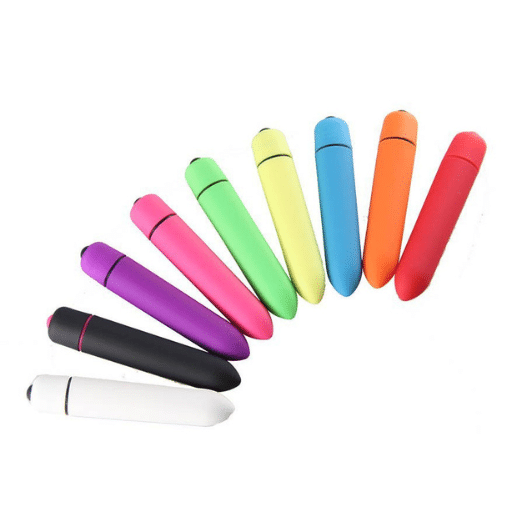
TPE is cheaper, softer, faster to compound, and reprocessable. Silicone is more inert, more heat-resistant, and easier to position as a premium material.
Choose TPE when softness and realism matter, unit cost is tight, speed to market is short, and the formula is documented. It’s also the stronger route for high-volume soft parts where silicone’s cure time and waste would dominate the cost stack.
Choose silicone when hygiene, heat resistance, longevity, and low return exposure justify a higher unit cost and a premium retail tier.
Silicone processing is a separate discipline with its own tooling and cure science. For the decision-level comparison, start with our guide to TPE vs silicone sex toys.
How Joyflick Manufactures TPE Products
We source and quote both TPE and platinum-cured silicone, and we recommend based on your product brief, target price, and market rather than defaulting to one material.
Our TPE work covers private molding, custom hardness and colors, branding, and packaging. For private label TPE sex toys and custom TPE sex toys, we start with your hardness and geometry targets, then select the forming route and tooling accordingly.
Quality runs through the whole line. Our production holds ISO 9001 certification with a defect rate below 0.2 percent, six-stage inspection, and third-party testing through partners such as SGS and TUV. We supply CE, FDA, and RoHS documentation to support multi-market distribution.
A 300-unit trial MOQ keeps the amortization math workable for new brands. Standard products ship in 7 to 15 days, and custom orders in 15 to 30 days depending on complexity.
FAQ
How are TPE sex toys made?
TPE toys are made by compounding SEBS with white oil and additives, then forming the blend by injection molding or casting. Parts are cooled, demolded, trimmed, assembled, inspected, and packaged.
Is TPE injection molded or cast?
It depends on hardness and geometry. Firmer, hollow, or detailed parts are usually injection molded. Ultra-soft, thick, or large parts are often cast because feeding and plasticizing become unreliable.
What is the MOQ for custom TPE sex toys?
Finished-goods MOQ commonly runs 100 to 300 units per model for private label, while raw TPE compound often starts around 500 kg. Confirm SKU-level terms, reorder quantities, and tooling ownership in writing.
How much does TPE sex toy manufacturing cost?
There is no single number. Cost stacks raw compound, tooling amortization, labor, scrap, testing, packaging, and freight. Raw material is usually the smallest part of the story at low volume.
How long does TPE sex toy production take?
Sampling typically takes 7 to 10 days. Bulk production commonly runs 15 to 30 days after sample approval, depending on complexity and quantity.
What certifications should I request from a TPE factory?
Ask for batch-linked COA and SDS, plus RoHS, REACH, and phthalate declarations. Confirm the test scope. FDA 21 CFR 177.2600 is a material reference, not finished-product approval.
Why do TPE toys get sticky or bleed oil?
Oil bleed comes from high oil loading, poor SEBS and oil compatibility, or insufficient dispersion. A low-oil-bleed grade, better compounding, and aging tests are the fix.
Can TPE toys be recycled?
TPE is reprocessable in controlled industrial streams, so factory scrap can often be reground. It’s not automatically kerbside recyclable or biodegradable.
Is TPE safe for sex toys?
Safety depends on the formulation, not the TPE label. The SEBS grade, oil grade and loading, pigments, additives, and process control all matter. Request full documentation and independent testing.
Can TPE be overmolded onto ABS?
Yes, TPE can be overmolded onto rigid cores such as ABS or PP. Bond strength depends on material pairing, insert cleanliness, melt and mold temperature, and whether the process is two-shot or insert molding.
Conclusion
TPE sex toy manufacturing is a formula, process, and tooling decision, not a commodity purchase. Hardness and geometry pick the forming route. Volume and finish pick the tooling. Documentation and process control decide whether the product holds up after it ships.
The cheapest quote often hides something: a single-cavity mold, a factory-owned tool, a loose oil load, or a defect rate that shows up only at volume. Add tooling, scrap, testing, and returns to the unit price, and the picture changes. That is why TPE sex toy manufacturing deserves the same diligence as any other production process.
If you’re planning a TPE product, talk to the Joyflick team before you commit to a mold. We’ll review your brief, sample the right hardness, quote the process honestly, and help you build a line that holds its margin from the factory floor to the retail shelf.